
AI news ·
AI helps networks manage themselves, but humans stay in charge
AI is shifting network management from manual troubleshooting to automated, predictive operations, with carriers targeting level 4 autonomy on the TM Forum's 0-to-5 scale. Experts say humans will stay accountable for strategic decisions while AI handles routine monitoring and self-healing tasks.
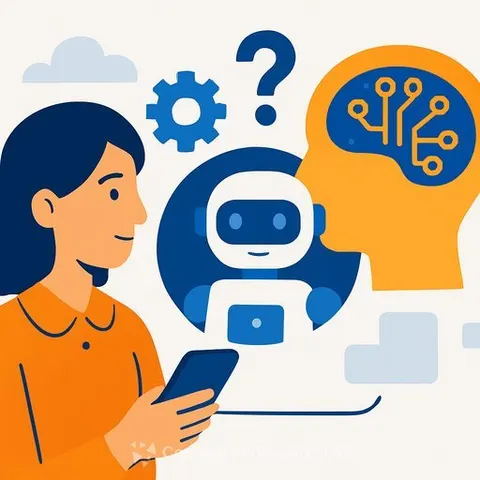
AI is shifting network management from manual troubleshooting to automated, predictive operations. Network teams can now correlate signals across previously siloed systems, prioritize the most critical problems, and in some cases resolve them without human intervention. The open question for CIOs is how far this autonomy will go - and whether the network itself becomes intelligent, or simply the tools managing it become smarter.
"The network is not the brain; it's the nervous system," said Paolo Canale, Americas consulting telecommunications sector leader at EY. "It's a decentralized intelligence, which we're seeing all these network operators exercise."
AI "brings the network alive" in a way that mimics a nervous system, Canale said. The technology can examine data and alerts from across the network, prioritize problems, and automate some actions. It also connects increasingly intelligent domains, including edge infrastructure, cloud platforms, and AI applications.
Roz Roseboro, senior principal analyst at research firm Omdia, argues that much of the change is happening in the tools used to manage networks, rather than in the network itself. "It's the tools that [communications service providers] are using to manage the network. That's what's changing - the OSS [operating support systems]. The people who are managing the network now have smarter tools," she said.
Faster, more responsive network management
AI's ability to draw on information from across network systems is making management more responsive. The network remains a utility moving data from point A to point B, but with AI it is "more responsive than before because it can take in more information than it could before," Roseboro said.
AI agents can identify and access data across disparate systems, such as billing and service systems, to find information about router usage. "Now inventory is becoming like the system of record, and everything looks to that to see if it can execute what you asked it to do. And doing that in real time. It's being able to do things faster and at scale … with an agent, you can just say, 'go do it' and they can make that happen," Roseboro said.
Some of the underlying network intelligence isn't new. Technologies such as Cisco NetFlow and Juniper JFlow have long provided analytics on network events, said Brian Washburn, chief analyst at Omdia. AI connects information from disparate network management systems at an accelerated rate, he said. "Now with the magic of AI, we can start stitching some of that together, especially for enterprises that have bought a dozen different [network management] systems."
AI also makes it easier for IT to interact with network systems. Washburn cited IT teams using natural language processing to request a price quote for a new fiber connection rather than placing an order with a human representative. Roseboro said natural language processing lets CIOs "ask questions of the network and … correlate more types of information than before" and use that information strategically.
Technologies supporting a smarter network
Digital twins are one technology supporting smarter network management. AT&T recently announced it is "essentially mirroring the network with virtual reality in order to quickly identify and correlate outages," Canale said. The AT&T Geo Modeler is a GenAI system that can simulate and predict network coverage to prepare for incidents that might affect network availability, such as a cell tower going offline during a storm.
Self-X capabilities take this evolution further, with network functions operating with less human intervention. Self-X refers to a "family of capabilities such as self-monitoring, self-healing, self-optimizing and eventually self-planning," Canale explained. If a cell site becomes congested, for example, the network can automatically redirect traffic or adjust configurations to maintain service quality.
"Over time, we expect networks to move beyond reaction. Instead of waiting for problems to occur, they will predict demand spikes, anticipate failures before they happen, redesign capacity plans, and continuously optimize themselves with minimal human intervention. The ultimate vision is a network that learns from every event, continuously improves and manages much of its own operation," Canale said.
A related concept, Zero X Experience, describes what greater network autonomy means for customers: maintenance and service delivery that requires little or no customer intervention. Canale gave the example of a retailer preparing for Black Friday. "In a Zero-X experience, the network recognizes the upcoming demand pattern, proactively allocates additional capacity, continuously optimizes performance during the event, and returns resources afterward without human involvement. The customer never opens a ticket, never waits for approval and may not even realize the optimization occurred."
AI is also breaking down silos between business support systems (BSS) and operating support systems (OSS), Canale said. "Where AI is coming together, it's really breaking all these silos and creating an open ecosystem that can quickly connect right from the BSS to OSS."
How far can network autonomy go?
Canale said AI is making the network more intelligent at the same time the network is supporting the evolution of AI. "It's almost like a two-way transformation. On the one hand, AI is making networks certainly more predictive, adaptive and increasingly autonomous for sure. But at the same time, AI is placing new demand on the network. There is much more demand on latency, moving data, security, resilience, costs and so on."
Routine operational activities are the best candidates for autonomous operation, Canale said. These include detecting and resolving network incidents, dynamically adjusting configurations, optimizing routing and traffic flows, predicting equipment failures, provisioning services, managing routine security responses, and forecasting demand.
Areas that will continue to require a human in the loop include "major architectural decisions, strategic investments, regulatory considerations and business trade-offs," Canale said. "A useful principle is that AI should increasingly make operational decisions, while humans remain accountable for strategic decisions."
Roseboro echoed that the network will never be fully autonomous, as that would be "too risky." Communication service providers are aiming for level 4 automation for most network processes, she added. The TMForum's Autonomous Network levels taxonomy ranks from 0 to 5, with level 4 being a "Highly autonomous network" that can "perform closed-loop management of service-driven and customer experience-driven networks via AI modeling and continuous learning."
Canale likened the transformation to the introduction of autopilot in aviation. The human pilot wasn't eliminated, but the "role evolved from continuously operating the aircraft to overseeing increasingly sophisticated systems and intervening when necessary." He added: "I believe networking is heading in a very similar direction: fewer people managing individual devices, and more people orchestrating intelligent systems that manage themselves."
Why this matters for managers
For CIOs and IT managers, the shift means network teams will spend less time on routine monitoring and troubleshooting and more time on strategic oversight. As networks take on operational decisions, managers will need to upskill on AI governance, data quality, and business outcome management. Any network change that could interrupt service for customers will likely still require human sign-off, so the manager's role becomes one of accountability and judgment - not device-level administration.
Managers overseeing network teams should start building AI fluency now, both for themselves and their staff. Structured training can help: the AI Learning Path for Network Engineers covers the technical foundations, while the AI Learning Path for IT Managers addresses the governance and oversight questions that come with more autonomous systems.