
AI news ·
AI image generators depict large cities more accurately than smaller towns, Virginia Tech study finds
AI image generators produce accurate, recognizable images of major cities but generate generic results for smaller towns. The gap comes down to training data-larger cities simply have more photos and media online.
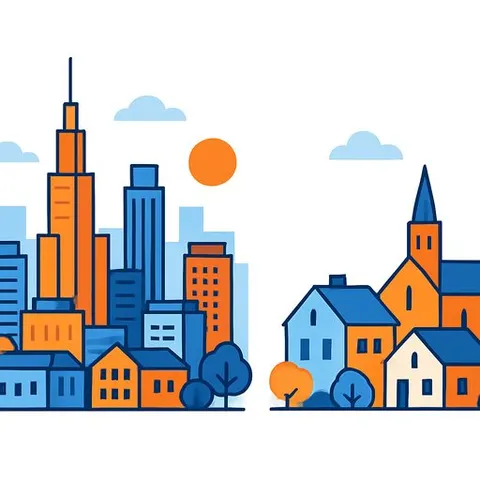
AI image generators produce better results for large cities than small towns
Researchers at Virginia Tech found that artificial intelligence image generators create more realistic and recognizable images of major cities than smaller communities, revealing a geographic bias in how these systems represent places.
The study tested OpenAI's DALL.E 2 on four locations: Blacksburg, Richmond, and Virginia Beach in Virginia, plus Washington, D.C. When asked to generate images of larger cities, the system produced recognizable landmarks and distinctive features. Images of Blacksburg came back generic and missing defining characteristics.
The team surveyed 129 residents about how realistic the AI-generated images were and whether they captured each city's identity. Long-term residents were more critical of the images than newer arrivals, suggesting people with stronger local knowledge spot inaccuracies more readily.
Why smaller communities get overlooked
The root cause traces to training data. AI systems learn from vast amounts of online material, and larger cities have far more images, media coverage, and digital documentation available. Smaller towns don't have the same level of online representation.
The study noted that AI struggled most with landmarks and culturally significant features. In Blacksburg, for example, no AI-generated image included Hokie Stone on university buildings-a defining element of the city's identity.
Implications for design and planning
Generative AI tools are increasingly used in travel planning, urban design, marketing, and public communication. If smaller cities aren't well represented in training data, the images people see won't reflect the real identity of those communities.
As these tools become more common in professional settings, the gaps in representation matter. People rely on AI-generated content to learn about unfamiliar places, and biased outputs could reinforce uneven visibility between large urban centers and smaller communities.
Building better AI systems
The research highlights the need for more geographically comprehensive datasets and incorporating local perspectives into AI development. Without those changes, AI-generated imagery risks reinforcing existing disparities in how places are represented.
While AI tools can generate ideas quickly and expand access to design technologies, they have clear limitations. Understanding where systems fall short-and who gets left out-is essential for responsible deployment.
Source: Technology in Society, DOI: 10.1016/j.techsoc.2026.103360