
AI news ·
AI in Health Care: Promise, Trust, and the Roadblocks Ahead
Health care faces staff shortages and chronic disease challenges, prompting AI adoption despite data and trust issues. EU efforts seek to improve AI integration and transparency.
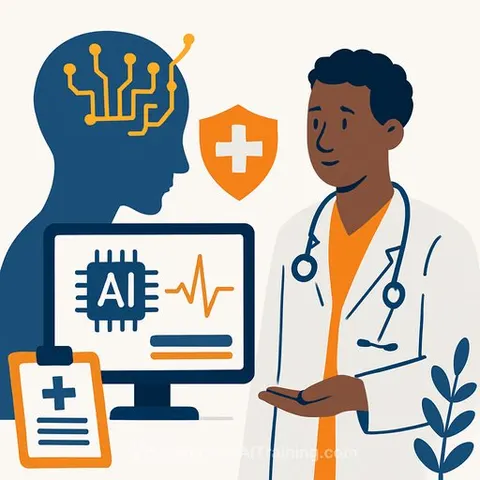
AI’s Future in Health Care
Health care systems face growing pressure from staff shortages and increasing chronic disease rates. In response, some policymakers are looking to artificial intelligence (AI) as a promising solution to improve health care delivery. At a recent forum hosted by the European Policy Centre in Brussels, experts highlighted AI's potential to transform the sector.
Big Promise, Big Problems
Despite AI's potential, significant challenges remain. Access to quality data and interoperability between systems are major hurdles, according to Hammad Shahid, head of Europe, Middle East, and Africa data strategy at Johnson & Johnson. Additionally, integrating AI tools into daily workflows for health professionals is complex. Regulatory obstacles add another layer of difficulty.
The European Commission is actively studying these issues. A forthcoming report will examine AI challenges and facilitators, aligning with concerns raised by industry experts. This reflects a growing awareness that without addressing these hurdles, AI’s impact will be limited.
The Trust Gap
Trust in AI among citizens and health workers is currently low. Building this trust requires coordinated efforts from regulators, industry players, and education initiatives targeting various stakeholders. The European Health Data Space (EHDS), an EU program creating a unified framework for health data sharing, is a key part of this effort.
By improving data access and fostering transparency, EHDS aims to establish a foundation where AI can effectively support health care needs. This approach may help close the trust gap and enable wider adoption of AI technologies.
Academics and AI in Research
A recent survey by Nature reveals mixed feelings among researchers about using AI to assist in writing and reviewing scientific papers. Around 70% of the 5,000 respondents agreed that generative AI tools can be ethically used for editing or translating text, though opinions differ on whether AI use should be disclosed in these cases.
When it comes to writing research papers, about 65% think AI use is appropriate in some circumstances, while 35% oppose it entirely. However, skepticism rises during the peer review process: 66% disapprove of AI involvement in initial peer review, citing privacy concerns and doubts about appropriateness.
Despite these attitudes, most researchers have not yet used generative AI for writing or reviewing manuscripts, though many remain open to doing so in the future. The survey’s global reach across career stages and sectors provides valuable insight, even if it is not fully representative.
Why It Matters
These findings come amid growing skepticism about the accuracy of biomedical research and AI-generated information. While AI tools could accelerate research publication, they also risk fueling distrust if not used transparently. Balancing AI's benefits with ethical considerations will be crucial to maintaining confidence in scientific outputs.
Small Bytes
The U.S. Food and Drug Administration (FDA) is advancing its regulatory approach for AI medical devices by employing predetermined change control plans. These plans allow manufacturers to pre-approve modifications, enabling faster updates and innovation without repeated regulatory delays.
To date, the FDA has approved 18 such plans for AI and machine learning-based medical devices, a significant increase from last year. This trend indicates a shift toward more flexible oversight that keeps pace with the rapid development of AI technologies.
Ariel Seeley, a former FDA attorney, explains that these plans let companies anticipate and get authorization for future tweaks, allowing real-time adjustments based on new data. This process helps companies bring safer, improved products to market more quickly.
Why It Matters
As the FDA refines its framework for AI and machine learning devices, health industry leaders watch closely. Regulatory delays can hinder innovation and impact business outcomes. Streamlined processes like predetermined change control plans may offer a practical solution to balance safety and speed.
For professionals interested in expanding their AI expertise in health care and research, exploring targeted educational resources can be valuable. Check out Complete AI Training’s latest courses to stay informed about AI applications in science and health sectors.