
AI news ·
AI in healthcare raises concerns about creating a two-tier system
AI could democratize healthcare or create a two-tier system where some patients get physician-led care and others rely on automated systems. The debate centers on whether AI expands access for millions facing long waits or becomes a lower-cost substitute for human expertise.
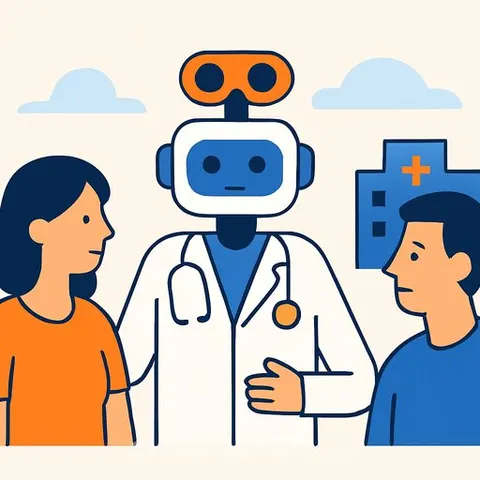
Artificial intelligence is moving from experimental technology to an active participant in healthcare, helping interpret medical images, summarise clinical records, identify drug candidates, and analyse genomic data. As these systems become more capable, a larger question is emerging: will AI democratise healthcare access, or create a two-tier system in which some patients receive traditional physician-led care while others are directed toward AI-mediated alternatives?
The debate gained renewed attention following discussion in the Journal of the American Medical Association (JAMA) about a possible future in which autonomous AI systems provide care with limited direct physician involvement. Critics have described such a future as an "economy class" version of medicine, raising concerns about quality, safety, and equity. Supporters argue that this characterisation misunderstands the reality facing millions of patients who already struggle to access timely healthcare.
The argument for democratisation
Supporters of AI-enabled healthcare point to an uncomfortable reality: healthcare access remains highly uneven. Patients in rural or remote regions often face lengthy waits for specialist consultations, and many communities continue to experience physician shortages. Access to genetics specialists, neurologists, and other highly specialised professionals can be particularly limited.
From this perspective, AI is not replacing a physician who is readily available. Instead, it may provide support where expert care is difficult or impossible to access. Advocates argue that technology can make expertise more scalable. If an AI system can reliably interpret information, identify relevant research, or flag potential risks, it could extend the reach of scarce medical specialists and shorten the time required to obtain useful information.
One field often highlighted as a potential success story is genomics. The interpretation of genomic data generates enormous volumes of information that can be difficult even for trained specialists to analyse efficiently. AI-powered systems are increasingly being developed to allow researchers and clinicians to interrogate genetic datasets using plain language queries rather than highly specialised bioinformatics tools. Companies such as Boston-based Bystro AI are pursuing this vision by applying large language models and computational analysis to genomic interpretation. The goal is not simply automation but making complex genetic information more accessible to researchers and, potentially, to patients.
Whether AI can drive democratisation is contentious, as AI lowers the barriers to using advanced tools while simultaneously concentrating power and resources among major tech corporations. For professionals working in healthcare, understanding both the potential and the limits of these systems matters - and Generative AI and LLM models are central to how these tools are being deployed in clinical settings.
The concerns about a two-tier system
Critics argue that the benefits of expanded access should not obscure significant risks. Healthcare differs from many industries because decisions directly affect patient safety. Misdiagnoses, inappropriate treatment recommendations, or failures to recognise complex clinical situations can have serious consequences.
Large language models remain susceptible to factual errors, incomplete reasoning, and so-called "hallucinations," in which systems generate plausible but incorrect information. Many scientists worry that healthcare organisations may adopt AI not primarily to improve access but to reduce costs. In such a scenario, wealthier patients might continue receiving physician-led consultations while other patients interact primarily with automated systems.
This possibility underpins the "economy class" analogy. The concern is not merely that AI exists, but that it could become a lower-cost substitute for human expertise rather than a supplement to it. There are also concerns about accountability. If an AI system makes an erroneous recommendation, who bears responsibility? The physician? The healthcare institution? The software developer? Regulatory frameworks continue to evolve, but questions about liability and oversight remain largely unresolved.
The middle ground: augmentation rather than replacement
Other experts believe the future will not involve a binary choice between human physicians and autonomous AI. Instead, AI may function most effectively as an augmentation tool. Under this model, clinicians remain responsible for diagnosis and treatment decisions, while AI performs tasks such as reviewing medical literature or identifying potential drug interactions.
This approach offers potential efficiency gains while preserving human oversight. In genomics, for example, AI may help identify variants of interest and summarise relevant scientific publications. However, the interpretation of clinical significance, communication of risk, and patient counselling would remain under the supervision of trained healthcare professionals. Supporters of this model argue that it captures the strengths of both humans and machines: AI contributes speed and scalability, while clinicians contribute judgment, contextual understanding, and ethical decision-making.
Genomics may become one of the most important testing grounds for healthcare AI. Genetic testing has become increasingly affordable, generating vast datasets that challenge traditional interpretation methods. A single whole genome sequence can contain millions of genetic variants, only a small proportion of which may have clinical relevance. The shortage of specialised geneticists and bioinformaticians has created bottlenecks in many healthcare systems. AI tools capable of rapidly searching genomic databases, scientific publications, and variant repositories could dramatically accelerate analysis.
Yet genomics also illustrates why human involvement remains important. Many genetic findings involve uncertainty. Variants may be classified as having unknown significance. Risk estimates may depend on family history, environmental exposures, and emerging research findings. Patients often require counselling to understand the meaning and limitations of results.
Why this matters for healthcare professionals
The debate raises a broader ethical question. Is some access to expertise better than no access at all? Consider a patient who waits nine months for a specialist appointment versus a patient who can immediately access an AI-assisted preliminary assessment. For many individuals, the comparison is not between AI and a physician. It is between AI and no meaningful guidance at all.
For healthcare professionals, this suggests that the most successful implementation of AI will depend on ensuring that automated systems are used to expand access while maintaining consistent quality standards across patient populations. Clinicians who understand how to work alongside AI tools - and how to evaluate their outputs critically - will be better positioned to guide how these systems are deployed in their own practice. That means learning where AI adds genuine value, where it falls short, and how to maintain accountability when automated systems are involved in care decisions.