
AI news ·
AI in UAE healthcare expands into cancer screening, remote diagnostics and patient monitoring
UAE hospitals in Abu Dhabi, Dubai, and Fujairah are integrating AI into cancer screening, patient monitoring, and remote diagnostics. The technology spans mammogram analysis, sepsis detection, and smart wards, extending specialist care to remote areas.
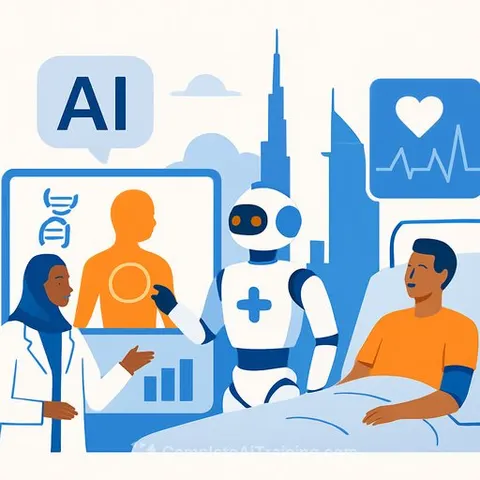
Hospitals across Abu Dhabi, Dubai, and Fujairah are integrating AI into cancer screening, patient monitoring, remote diagnostics, and early detection systems, marking a shift in how medical care is delivered in the UAE. The technology is being applied across multiple specialties, from mammogram analysis to post-operative follow-up, rather than being confined to one area of medicine.
In Abu Dhabi, AI-powered systems are analyzing mammograms to identify changes in breast tissue that may indicate disease. Hospitals are also introducing smart wards equipped with contactless sensors that monitor patients and assess their risk of falling. Algorithms can detect warning signs associated with sepsis, giving clinicians the chance to intervene before a patient's condition deteriorates significantly.
Remote diagnostics and specialist reach
Digital systems are extending specialist care beyond major hospitals. Connected diagnostic equipment in remote areas can conduct examinations and transmit audio and video to doctors in real time, enabling remote consultations. This approach is also reaching maternity and neonatal wards, where wireless foetal monitoring, systems for early detection of pregnancy complications, and smart sensors for premature babies are among the tools being deployed.
Beyond monitoring, Abu Dhabi is developing non-invasive treatments for liver tumours using focused ultrasound, expanding the role of advanced medical technology into treatment as well as care.
Emergency departments and paediatrics
Dubai hospitals have introduced wireless monitoring systems and digital triage tools in Accident and Emergency departments to flag serious cases faster and reduce waiting times. In paediatric medicine, brain-monitoring systems and predictive algorithms are being used to anticipate epileptic seizures and convulsions.
Fujairah is taking up capsule-based diagnostics, where patients swallow a small device that travels through the gastrointestinal tract and captures thousands of images, in some cases removing the need for conventional endoscopy. Post-operative monitoring systems are also being used to identify possible complications earlier.
Why this matters for healthcare professionals
For clinicians and medical staff, the practical takeaway is that AI is becoming a regular part of day-to-day workflows, not a distant experiment. Radiologists, nurses, and emergency doctors are now working alongside tools that flag risks, prioritise cases, and extend their reach into remote sites. The expanded capabilities in AI for Healthcare mean professionals who develop proficiency in these systems will be better positioned as hospitals continue to embed them across departments - from screening and emergency triage through to recovery.