
AI news ·
AI maps hidden ocean currents using satellite data as workforce skills gap widens
Scientists built GOFLOW, an AI that maps hidden ocean currents using existing satellite data-no new hardware needed. Better current maps could sharpen climate forecasts, aid fisheries, and improve shipping routes.
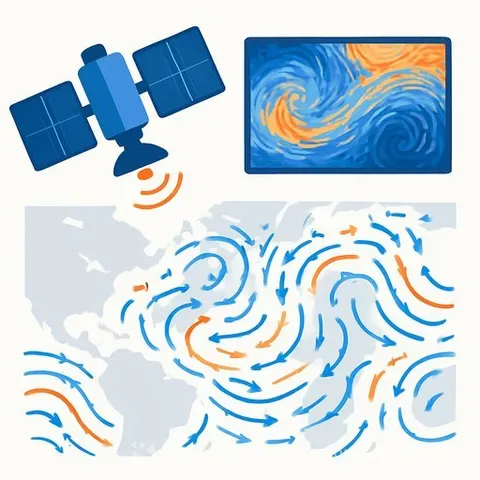
AI System Maps Hidden Ocean Currents Using Satellite Data
Researchers have developed an AI system called GOFLOW that transforms satellite images into detailed maps of ocean currents previously impossible to track. The system analyzes subtle temperature changes over time to detect current patterns invisible to traditional observation methods.
The breakthrough did not require new satellites or expensive infrastructure. Instead, scientists applied advanced AI models to existing satellite data, extracting insights that were already there but undetectable by conventional tools.
Why This Matters for Climate and Industry
Ocean currents regulate Earth's climate, distribute heat globally, and influence weather patterns. Better maps of these currents could improve climate predictions, weather forecasting, and marine ecosystem protection.
The applications extend beyond climate science. Fisheries could optimize routes. Agricultural planners could refine forecasts. Governments could strengthen disaster preparedness. Logistics companies could adjust shipping strategies based on current data.
The Real Problem: Skills, Not Technology
Discoveries like GOFLOW are becoming routine. AI is accelerating breakthroughs across medicine, energy, and other fields. But most organizations lack teams equipped to interpret AI outputs or build solutions from the insights.
Many companies adopt AI dashboards without understanding what they show. They become passive consumers rather than active users. Someone else built the model. Someone else maintains it. The organization simply reads the output.
This creates a dependency gap. The technology becomes powerful while human capability stalls.
What Professionals Need to Learn
AI literacy is no longer confined to data scientists. Marketers, operations managers, researchers, healthcare professionals, and policymakers all need to understand how AI works and what it cannot do.
For researchers specifically, this means learning how to evaluate AI results critically, identify where models might fail, and integrate AI insights into experimental design. AI Data Analysis Courses provide practical training in these skills. AI Research Courses address how AI transforms research methodologies and data interpretation.
The ocean current discovery illustrates the point. The algorithm is one piece. The ability to translate its output into actionable decisions is another. That translation requires trained professionals.
Structured Training Closes the Gap
Organizations need systematic AI education, not fragmented workshops. Programs designed for specific roles deliver practical skills that professionals can apply immediately.
Without this investment, organizations risk falling behind competitors who can leverage AI effectively. The technology itself will continue advancing. The question is whether your team can keep pace.