
AI news ·
AI music faces industry pushback as labels demand human creativity remains central
Universal, Warner and Sony-controlling over 80% of the recorded music market-are pushing AI-generated tracks off the charts and suing Udio over 30,000 allegedly stolen compositions. The fight over who gets paid for machine-made culture will set the rules for every creative industry.
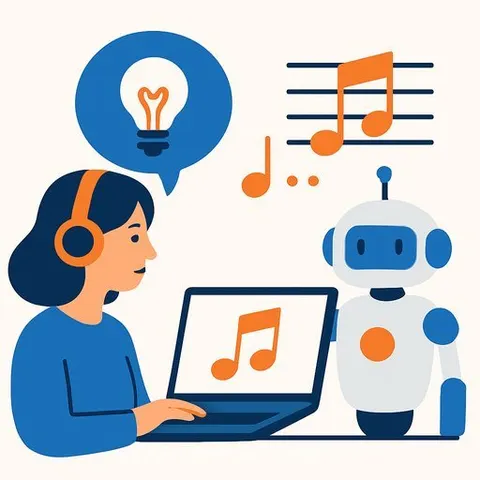
When Alan Turing asked whether machines could think, the question was theoretical. Eighty years later, the creative industries are asking a more urgent version: whether machines can perform - and what that means for the humans who used to do the work.
The stakes are concrete. Universal Music, Warner and Sony Music - the three labels that control more than 80 per cent of the global recorded music market - have asked the world's music charts to remove all AI-generated music. Sony has filed a lawsuit against the AI generator Udio, which it says took 30,000 compositions from YouTube to train its models without permission. The Recording Industry Association of America and the International Federation of the Phonographic Industry have joined the fight.
The dispute is not about technology. It's about whether the people who make culture get to decide how machines use their work.
Who gets to make a song
Anyone can now generate a complete song in a minute. The two largest AI music generators, Suno and Udio, work as text-based models, similar to ChatGPT. Type in a prompt - a 1970s rock ballad about unrequited love, with guitar, drums and a rough male vocal - and the track is finished. The model, trained on the frequencies of instruments and human voices, creates the song from digital noise. No musician is involved.
This has already produced real-world consequences. A fake band called The Velvet Sundown deceived millions of listeners on Spotify. These systems also use stream-boosting - algorithms that artificially play songs to push them up the charts and generate revenue.
Victoria Oakley, chief executive of IFPI, put the industry's position plainly: "As fans, we want to recognise the achievements of the artists who make the music we love, and it is right that charts continue to shine a light on artists whose creativity is at the heart of the music. When used properly and with permission, AI offers exciting opportunities to enhance creativity. These principles support such innovation, while ensuring that AI-produced tracks without authentic human input are not included in the charts."
The labels are not calling for a ban. They want a framework: AI systems must not train on protected compositions without a legal basis; authors and performers alone decide how their work is used and receive compensation if they agree; AI companies must disclose their training data; and the voice, likeness and style of performers cannot be imitated commercially without permission. Publishers have also introduced an inaudible digital watermark into musical works to prevent unauthorized scanning.
One proposal from Universal Music to Udio involves "walled gardens" - platforms where users could remix star catalogues, but the generated content could not be downloaded or leave the platform.
The same fight, across every creative field
Music is the most visible front, but the same dynamic is playing out across film, television, advertising and games. AI is now used in screenplay development, storyboarding, concept art, casting, location scouting, shot generation, face replacement, digital doubles, de-ageing and automatic lip-sync. From a large database of film material, AI can generate a new film that brings a deceased actor back to life or swaps one actor's face for another's.
The 2023 strikes by the Writers Guild of America and SAG-AFTRA halted Hollywood for months. One of the central demands was protection of actors' digital likenesses and regulation of AI in the industry.
Across all these categories, production has accelerated dramatically. But authors are not the ones who benefit - the overall volume of work has increased, while the share going to individual creators has not.
For writers and other creative professionals, the question is no longer whether AI can produce acceptable work. It can. The question is whether the legal system will treat machine-generated content as fundamentally different from human work - and whether creators will have a say in how their material is used. The music industry's push to keep AI-generated tracks off the charts is the first major test of that principle. The outcome will shape how every other creative field handles the same problem.
If you work in a creative field, this is not an abstract debate about technology. It's a dispute about the rules that will determine whether your work can be used to train the systems that compete with you. The recording industry has drawn a line: AI can be a tool, but it cannot replace the human at the centre of the work. Whether that line holds will depend on how consistently it is enforced across music, film, writing and every other creative industry. AI for Writers courses can help you understand the tools, but the legal framework is being decided now - and it will be applied to your work whether you participate in the conversation or not.