
AI news ·
AI or Human: Who Has the Edge in Asset Management’s New Intelligence Test?
AI transforms asset management by automating routine tasks and analyzing vast data for smarter decisions. Success lies in blending human judgment with AI’s data insights.
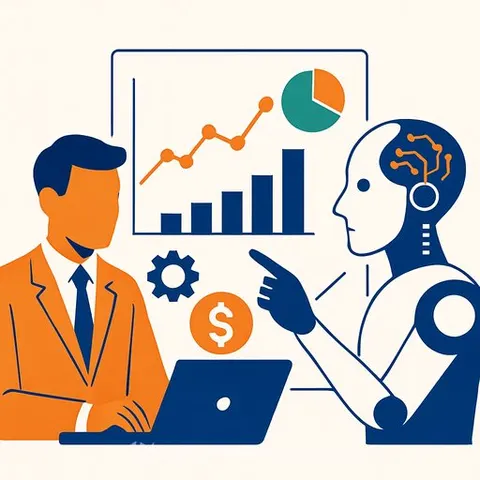
AI and Asset Management: A New Intelligence Test for Managers
Active asset management has quietly transformed over the last 25 years. What started with small improvements in operations has become a broad shift driven by technology. Artificial intelligence (AI) now plays a central role, challenging traditional roles, processes, and value creation.
From the early 2000s, when risk systems were siloed and relied heavily on spreadsheets, the industry has moved to integrated platforms. These platforms provide real-time analytics and visibility across asset classes. This evolution has increased both operational efficiency and portfolio resilience against market shocks.
How AI Changes the Asset Management Game
AI's unique ability to analyze vast amounts of unstructured data—such as earnings calls, news, social media, and web traffic—brings insights that were previously impossible to access at scale. This delivers faster, richer information that helps managers make smarter decisions.
Beyond insights, AI improves efficiency by automating routine tasks like trade routing and report generation. This frees portfolio managers and analysts to focus on high-value activities.
AI also offers powerful predictive capabilities. It can detect complex, non-linear patterns that human analysts might miss, leading to more sophisticated forecasting.
Another key impact is on research productivity. AI functions like an unlimited team of junior analysts, handling repetitive work and allowing senior staff to concentrate on strategy and critical thinking.
Balancing AI and Human Strengths
The question isn’t whether AI will replace humans, but how to combine their strengths effectively. AI excels at processing scale, recognizing patterns, and maintaining emotional discipline. It can analyze huge data sets without fatigue or bias from fear or greed.
Humans, however, bring essential qualities AI lacks: judgment, intuition, and adaptability. People understand context, such as geopolitical factors and corporate culture, and can assess credibility in ways algorithms cannot. Humans also communicate decisions clearly and build trust—something AI cannot do reliably.
- AI advantages: scale, pattern recognition, emotional discipline
- Human advantages: judgment, adaptability, communication
Both AI and humans innovate: AI learns and optimizes continuously, while humans contribute creativity and intuition. The future lies in combining these strengths to improve asset management outcomes.
What This Means for Managers
Managers need to understand how AI can enhance their teams. Automating routine tasks and expanding insight capabilities allows professionals to focus on strategic decision-making. It’s crucial to develop skills that complement AI’s strengths—such as critical thinking, judgment, and interpersonal communication.
For those interested in further developing AI skills relevant to management, exploring courses that focus on AI applications in finance and automation can be a valuable step. Resources like Complete AI Training offer a wide range of options tailored to different job roles and skill levels.
Ultimately, success will come from blending human insight with AI’s data-processing power—creating teams that are faster, smarter, and more resilient in a changing market environment.