
AI news ·
AI-powered lead routing helps growing businesses manage incoming customer inquiries
AI-powered lead routing directs new customer inquiries to the right person or department by analyzing contact details, replacing manual sorting as volumes grow. The system helps businesses avoid misrouted leads and duplicate outreach, though rules still require human monitoring and updates.
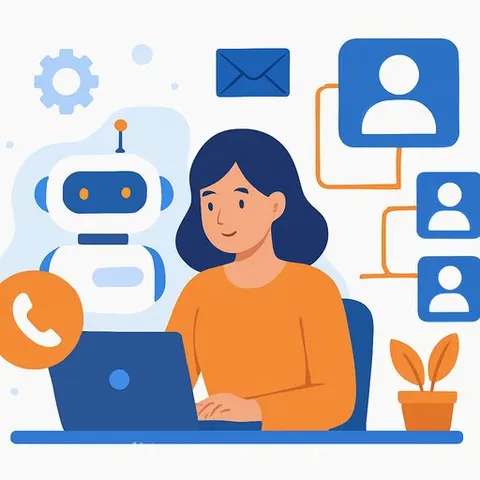
NEW ORLEANS - AI-powered lead routing is emerging as the next piece of customer communication technology that growing companies are adopting, as businesses increasingly rely on artificial intelligence to handle administrative tasks alongside marketing and customer service. The process directs new inquiries to the right person, department, or workflow based on information gathered at the moment of contact, adding an analytical layer to systems that traditionally relied on fixed rules like location, service type, or staff availability.
For growing companies, the problem becomes more visible as inquiry volume rises. A small business receiving a handful of leads weekly may distribute them manually. But increased advertising, website traffic, phone calls, and online forms eventually complicate the process. Without an organized routing system, information can sit in an inbox, reach the wrong person, or require manual review before getting to the employee who can act on it.
Generating leads is different from directing them
Lead generation captures an inquiry. Lead routing determines what happens after it arrives. The distinction matters in industries where inquiries vary widely. A roofing company might receive requests for residential repairs, commercial work, storm damage, and inspections. A law firm could field questions about car accidents, workplace injuries, and other legal matters. A medical practice may handle appointments, billing questions, and different treatment types. Each inquiry needs a different destination.
Automated systems can examine details like location, service requested, or urgency, then assign the lead to a specific employee, department, calendar, or follow-up workflow.
"Generating an inquiry is only the beginning of the process," said Brett Thomas, owner of Rhino Precision Marketing in New Orleans, Louisiana. "A business still has to determine what that person needs, collect the appropriate information and get that inquiry to the person capable of handling it. AI-powered routing helps organize that handoff without requiring someone to manually sort every incoming lead."
As companies apply AI for customer support, manual distribution becomes a bottleneck. Multiple employees sharing responsibility for prospects often means forwarding chains or unanswered duplicates. In some cases, more than one representative contacts the same person because ownership was unclear.
Automated routing removes that ambiguity. Systems may use straightforward rules - leads from a specific territory go to a specific rep, or certain services route to staff with related responsibilities. When several employees handle the same type of work, leads distribute among them. AI assists when routing decisions require analyzing conversation information rather than a single form selection.
Qualification before routing
Lead qualification is tightly connected to routing. Categories do not fit every inquiry equally. Some contacts want general information. Others need immediate assistance. Some fall outside the company's services entirely.
AI communication systems can collect preliminary information through website chats, text exchanges, or phone conversations before deciding the next step. That information helps categorize the lead. A ready prospect might be directed to an appointment calendar. A customer needing technical help routes to support. A billing question goes to administration. An inquiry from an out-of-service area follows a different path.
The intent is not removing people from the process. Automation organizes information before human judgment becomes necessary. "AI-powered routing helps organize that handoff," according to Thomas, "without the customer having to repeat basic information multiple times."
Routing around the clock
Inquiries don't pause outside business hours. Website forms, search ads, and online research run 24/7. AI systems can capture information during those periods and prepare inquiries for the appropriate next step. A lead arriving late at night can be categorized, entered into the CRM, and assigned for follow-up. Depending on the workflow, appointment scheduling or automatic informational responses may happen before employees return.
This broader approach aligns AI with marketing infrastructure - connecting discovery, communication, follow-up, and scheduling rather than treating each function as an isolated task. AI for marketing already assists with lead generation and campaign optimization; routing carries that definition through to the response phase.
Rules still need human attention
AI-powered routing depends on the rules and information behind it. Incorrect service categories, outdated employee assignments, or incomplete customer data can create routing errors. Systems require monitoring and updates as businesses change - new departments, territories, services, and staff responsibilities all affect routing decisions. Human review remains important for unusual or complicated inquiries that don't fit established categories.
The broader shift is using AI to handle repetitive organizational decisions while employees focus on conversations and situations requiring judgment. As AI integrates into websites, CRM platforms, phone systems, and marketing tools, lead routing becomes another example of automation touching daily operations.
Why this matters for managers
As customer expectations rise and teams stay lean, managers face an operational choice: let manual processes scale unevenly, or define systems that route inquiries before they cause friction. AI-based routing doesn't replace judgment - it ensures the right employee, department, or workflow receives each inquiry once, with context already attached.
For managers, the immediate takeaway remains specific: audit your current process for where leads stall or land with wrong owners. The question companies must answer is shifting, as it concerns not how many inquiries they generate but what happens to each one after it arrives.