
AI news ·
AI-powered virtual patient helps dentists practice communication and empathy
Dental residents used SOPHIE, an AI-powered virtual patient, to practice difficult conversations, with pilots showing increased confidence and more open-ended questions.
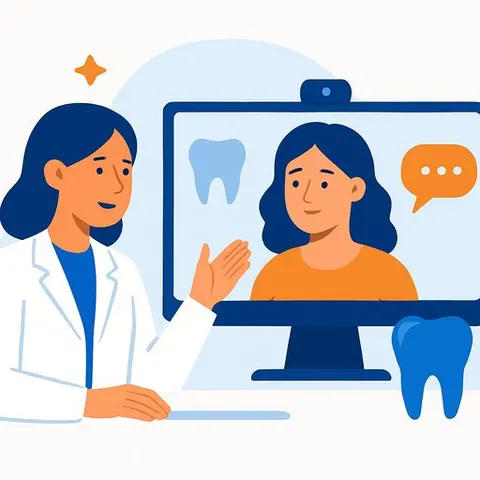
A University of Rochester collaboration has adapted an AI-powered virtual patient named SOPHIE to train dental residents in communication skills, allowing them to practice difficult conversations about patient fears and treatment concerns in a low-stakes environment. The technology, originally developed for physicians, addresses a persistent gap in clinical education: the need for repeated, realistic practice without the resource constraints of hiring trained actors.
"Fear, anxiety, uncertainty about a procedure, concerns or misconceptions about treatment can all shape a patient's experience," said Shasha Cui, EdD, MBA, assistant professor and education specialist at Eastman Institute for Oral Health (EIOH). "For dentists, providing excellent care requires more than technical expertise. It also requires knowing how to listen, explain complicated information clearly, recognize concerns and establish trust."
How the virtual patient works
SOPHIE-Standardized Online Patient for Healthcare Interaction Education-uses a three-dimensional virtual character that sees, listens, and responds to a clinician in real time through a standard web browser. Trainees can access the platform at their convenience and repeat scenarios as often as they need. That repeatability is critical when the skills being practiced are inherently difficult: recognizing anxiety, active listening, showing empathy, asking open-ended questions, and involving patients in decisions about their own care.
The training is organized around what the team calls the three E's: Empower, Empathy and Explicit. Residents try different conversational approaches, receive feedback, and practice again. Cultural differences and language factors also shape how patients perceive treatment, and the platform lets clinicians experience a wider range of patient interactions than would be feasible with live actors alone.
Results from the pilot
Residents who participated in the pilot at EIOH's Golisano Specialty Care Perinatal Dental Clinic reported increased confidence in handling challenging patient conversations. AI-generated measures suggested improvements in conversational balance and a greater use of open-ended questions. Prateek Daga, DDS, an EIOH resident in the program, said the tool helps address a practical pressure point: clinicians often have limited time to establish a relationship, and trust can be lost quickly if that connection isn't made.
"AI cannot replace empathy," said Ehsan Hoque, PhD, professor of computer science, "but it can provide an environment where clinicians can repeatedly practice the communication skills patients depend on-without the pressure of practicing for the first time during a real clinical encounter."
The multidisciplinary study, published in the Journal of Dental Education, brought together researchers from EIOH, the Department of Computer Science, and the Clinical and Translational Science Institute. It reflects the university's emphasis on team science-experts from different disciplines applying their knowledge to a problem none could address as effectively alone. For researchers working at the intersection of AI for Healthcare and professional education, the pilot demonstrates a model for scalable, simulation-based training that doesn't sacrifice the nuance of human interaction.
Why this matters for science and research professionals
The SOPHIE pilot illustrates a pattern that extends well beyond dentistry. When a research team takes a validated AI simulation tool from one domain-physician-patient communication about serious illness-and systematically adapts it to another, the real finding is in the adaptation methodology itself. For scientists and research leads building or evaluating AI training systems, the key takeaway is that repeatable, browser-based practice environments can produce measurable improvements in skills that are traditionally hard to teach at scale. The study's combination of self-reported confidence gains and AI-generated conversational metrics offers a template for assessing soft-skill training outcomes without relying solely on subjective evaluations.