
AI news ·
AI reshapes sales enablement with automation, personalization and predictive tools
AI now automates lead scoring, forecasting, and personalized outreach across sales teams of all sizes. Reps spend less time on admin work and more time closing deals.
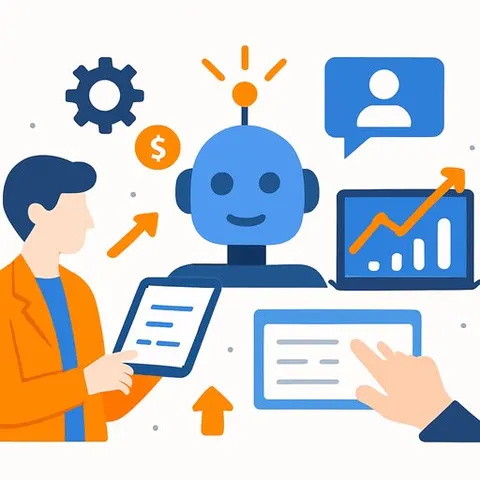
AI Is Reshaping How Sales Teams Work
Sales enablement-the strategies, tools, and processes that help sales teams sell more effectively-is undergoing fundamental change. Artificial intelligence now automates tasks, improves forecasting, and personalizes customer outreach at scale. What was once experimental technology reserved for large enterprises is now standard across companies of all sizes.
The shift reflects market pressure. Buyers expect faster responses, relevant communication, and data-driven experiences. Traditional methods built on manual processes and generic outreach no longer compete.
Why AI Matters for Sales Now
Modern sales generates enormous data: customer interactions, emails, meetings, CRM records, digital activity. Human teams struggle to analyze it efficiently. AI systems extract value from this information quickly.
AI helps sales organizations:
- Identify high-quality leads before they're obvious
- Predict which prospects will convert
- Personalize messaging at scale
- Automate scheduling, follow-ups, and CRM updates
- Improve forecast accuracy
- Optimize outreach strategy
The result: sales reps focus on relationship-building and closing deals instead of administrative work.
How AI Improves Sales Enablement
Lead Scoring and Prioritization
AI analyzes customer data and engagement patterns to rank prospects by conversion likelihood. Reps spend time on high-value opportunities instead of guessing.
Personalized Communication
AI-powered platforms recommend messaging, content, and outreach strategies based on individual customer behavior and preferences.
Sales Forecasting
Machine learning models analyze historical trends, pipeline activity, and market behavior to predict outcomes more accurately than spreadsheets.
Conversation Intelligence
AI tools listen to calls and meetings, identifying customer sentiment, objections, and buying signals. Managers get visibility into what works.
Workflow Automation
Scheduling, follow-ups, CRM updates, and reporting run automatically. Manual busywork disappears.
The Technologies Driving Change
Predictive analytics forecast customer behavior and deal outcomes. Natural language processing extracts insights from emails, chats, and calls. Generative AI drafts personalized emails, proposals, and presentations. Chatbots and virtual assistants handle routine customer questions and administrative tasks. Recommendation engines suggest relevant content and next steps based on customer history.
Real Benefits for Sales Teams
Automation frees reps from repetitive work, allowing focus on closing deals and building relationships. Personalized outreach and predictive lead scoring increase conversion rates. Data-driven insights help managers and reps make better decisions. Machine learning models provide clearer visibility into pipeline health and revenue projections. Faster response times and customized communication improve customer experience.
Implementation Challenges Are Real
Poor data quality undermines AI effectiveness. Systems depend on accurate, well-structured information. Garbage in, garbage out still applies.
Some sales professionals resist new workflows or fear automation will eliminate their roles. Training and clear communication about how AI supports-not replaces-human judgment helps.
Connecting AI tools with existing CRM systems, communication platforms, and workflows requires technical work. Privacy and compliance concerns demand careful data governance.
Successful implementation requires clear strategy, proper training, and strong data practices.
What's Coming Next
AI systems will deliver increasingly personalized experiences based on real-time behavior analysis. Entire portions of the sales cycle-outreach, scheduling, proposal generation-may become automated. AI coaching will offer real-time recommendations during customer conversations. Machine learning will become more accurate at forecasting deal outcomes and spotting risks. Voice and video analysis will measure tone, sentiment, and engagement during meetings.
Human Skills Remain Essential
Despite rapid advancement, relationships still drive sales. AI works best when it supports human decision-making, not replaces it.
Top sales professionals rely on emotional intelligence, negotiation skills, trust-building, strategic thinking, and relationship management. AI enhances these capabilities by eliminating administrative burden and providing better insights.
Choosing the Right Platform
Evaluate AI sales enablement tools on CRM compatibility, ease of implementation, analytics depth, automation features, security standards, scalability, and user experience. The ideal platform aligns with both operational goals and long-term digital strategy.
Learn more about AI for Sales and explore a learning path for sales representatives to build skills with these tools.
The Competitive Reality
AI-powered sales enablement platforms are becoming standard, not optional. Companies investing in these tools today will build stronger customer relationships and maintain competitive advantage. Those that wait risk falling behind in efficiency and customer experience.