
AI news ·
AI reshapes warehouse management from reactive tracking to predictive operations
Warehouses are shifting from reactive cost centers to predictive hubs by integrating AI into management systems. AI optimizes pick routes, re-slots inventory, and forecasts labor needs to prevent costly downtime.
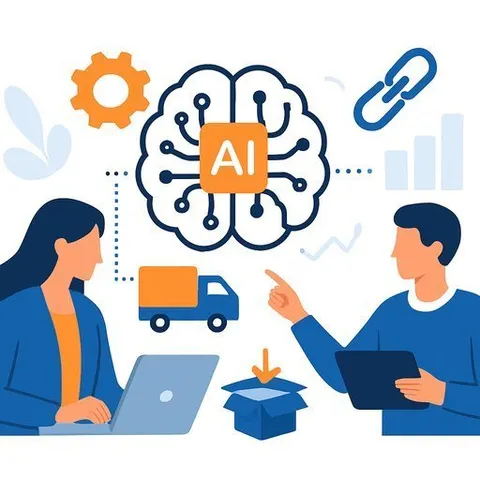
Warehouses are shifting from reactive cost centers to predictive operations hubs, and the mechanism driving that change is the integration of artificial intelligence into warehouse management systems. As customer expectations compress delivery windows and supply chains face persistent volatility, companies are using AI to forecast inventory needs, optimize labor, and prevent equipment failures before they trigger costly downtime.
A warehouse management system (WMS) is the software layer that governs receipt, putaway, picking, packing, and shipping. In smaller operations, spreadsheets and tribal knowledge can hold things together. In e-commerce logistics, that approach breaks down fast. When a WMS connects to AI algorithms, the warehouse stops responding to problems after they occur and starts anticipating them.
Inventory forecasting without the guesswork
The fundamental tension in warehousing is balance. Too much inventory ties up cash and burns storage space. Too little inventory triggers delays, lost sales, and customer churn. AI models ingest sales history, seasonal patterns, supplier lead times, and external demand signals to recommend precise order quantities and timing.
Research from the MIT Center for Transportation & Logistics has consistently shown that companies making better use of data build more resilient supply chains and recover from disruptions faster. That is where AI delivers the most practical value - converting raw data streams into specific procurement decisions.
Smarter picking, fewer errors
Picking remains the most expensive activity inside a warehouse. A single wrong item means a return, a complaint, and eroded trust. AI changes this in three concrete ways. It optimizes pick routes so workers move through the shortest possible path rather than crisscrossing aisles. It dynamically re-slots inventory, moving frequently ordered SKUs closer to packing stations. And it learns from order history, so recommendations grow more accurate as volume increases. In a facility with thousands of SKUs, these adjustments save hours every day.
The AI for Operations discipline covers exactly this intersection of predictive analytics and physical workflow optimization.
Labor planning meets real demand
Having goods in the right location is only half the equation. Managers need people in the right place at the right time. AI analyzes peak load periods, orders per hour, and average processing time per employee to build shift plans and task assignments that match actual demand curves. If orders consistently spike on Monday mornings, the system flags the pattern, and leadership adjusts staffing before the bottleneck forms. Workers then execute a clear plan instead of scrambling to put out fires.
Reports from the Stanford Institute for Human-Centered Artificial Intelligence emphasize that the most successful AI deployments do not remove humans from the process - they help people make faster, better decisions. In logistics, that distinction matters. Veteran warehouse staff still read the floor in ways software cannot, but now their judgment has serious analytical backing.
When software talks to hardware
The largest operational leap occurs when AI links directly to vertical lift modules, autonomous transport robots, and smart sorting systems. The WMS determines the optimal sequence in which items reach the operator, compressing order cycle times while reducing physical fatigue. The system also monitors machine performance and detects early signs of failure, allowing maintenance teams to intervene before a breakdown halts operations.
For supply chain professionals building these exact capabilities, the AI for Supply Chain Analysts learning path maps the skills required to connect predictive models with warehouse execution systems.
Why this matters for management
The warehouse is no longer an isolated node that receives and ships goods. It is becoming the information center of the business, connected to sales forecasts, transportation networks, and supplier data. Managers who treat WMS modernization as a pure IT project miss the strategic point. The real payoff is decision speed: knowing which orders are at risk before customers call, rebalancing inventory before stockouts hit, and deploying labor where the data says it is needed, not where habit puts it. Companies that close the loop between prediction and execution will deliver faster service at lower cost - and that advantage compounds with every planning cycle.