
AI news ·
AI Route Planning for 2025: Stress-Free Deliveries and Smarter Logistics
AI route planning uses real-time data to optimize delivery routes, cutting costs and improving speed. By 2025, it will be essential for efficient, eco-friendly operations.
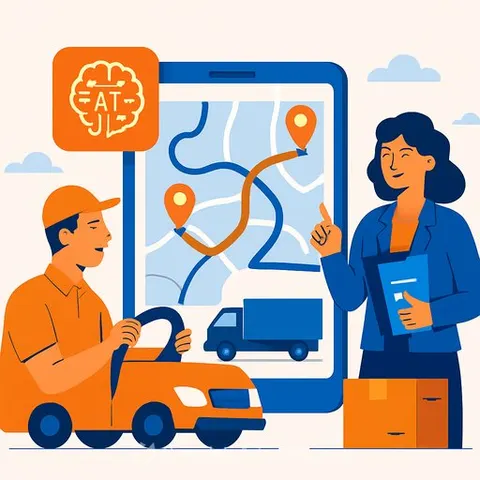
Managing deliveries isn’t as simple as entering an address into a GPS. Traffic, last-minute changes, vehicle issues, and tight time windows create challenges that require more than just guesswork. By 2025, AI-powered route planning will be essential for businesses wanting to streamline deliveries, save costs, and improve customer satisfaction.
What Is AI Route Planning?
AI route planning uses data—both historical and real-time—to find the most efficient delivery routes. Instead of relying on manual adjustments, it processes live information to quickly respond to delays or obstacles, helping businesses reduce fuel consumption, save time, and improve accuracy.
How Does AI Route Planning Work?
Think of AI as an always-on dispatcher that learns from data over time. It collects information on traffic, weather, delivery points, vehicle status, and more. Thanks to machine learning and IoT sensors, the system adapts routes instantly when conditions change, such as accidents or sudden weather shifts. Some advanced solutions even predict potential issues before they happen and adjust routes proactively.
Why More Businesses Are Adopting AI Routing
- Lower fuel and labor costs: Optimized routes reduce unnecessary miles and idle time.
- Faster, on-time deliveries: Real-time updates help keep deliveries on schedule.
- Reduced carbon footprint: Fewer miles mean fewer emissions.
- Improved customer experience: Accurate delivery windows and live tracking keep customers informed.
- Scalability: AI routing adapts as your business grows or faces seasonal demand.
Industries Benefiting from AI Route Optimization
- Delivery & Logistics: Companies like UPS save millions of miles annually by using AI.
- Field Services: AI assigns the best technician to jobs based on location and availability.
- Public Transportation: AI adjusts routes and schedules in real-time to improve service during peak hours.
- Retail & E-Commerce: AI manages warehouse shipments and delivery routes to meet customer expectations.
- Emergency Services: Ambulances and fire trucks use AI to find the fastest routes, saving critical time.
Essential Features in AI Routing Software
- Live route updates: Adjust routes instantly based on traffic and delivery changes.
- Multi-vehicle planning: Optimize routes across multiple drivers and vehicles.
- Demand forecasting: Predict busy periods and prepare accordingly.
- Integrations: Sync with fleet management, CRM, and order systems.
- Smart mapping: Consider terrain, construction, and local delivery rules.
Conclusion
By 2025, AI route planning will be a standard tool for businesses managing deliveries. It helps lower costs, speed up service, and reduce environmental impact without overloading your team. Whether your fleet has ten vehicles or ten thousand, adopting AI-driven routing software is a practical step toward more efficient operations. Taking this step will prepare your business to meet growing demands with less hassle.
For those interested in learning more about AI applications in operations and logistics, resources like Complete AI Training offer courses tailored to various skill levels and job roles.