
AI news ·
AI Sales Chaos in Vietnam Sparks Anxiety and Opportunity
AI is transforming automated sales in Vietnam, bringing efficiency but raising concerns over job security and ethics. Success depends on balancing technology with trust and skills.
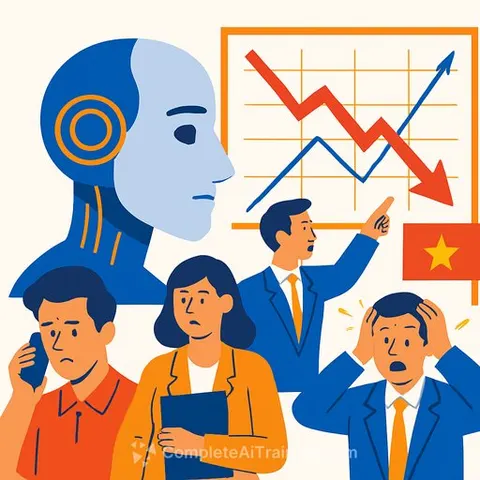
AI Hysteria: The Chaotic World of Automated Sales in Vietnam
Artificial Intelligence (AI) is reshaping automated sales in Vietnam, stirring both excitement and concern. Sellers face a turbulent adjustment period as AI tools promise greater efficiency but also bring uncertainty about job security and changing sales roles. The market is still figuring out how to balance AI's benefits with the challenges it introduces.
Current Landscape of Automated Sales
AI-driven sales systems are becoming more common, but their integration hasn't been smooth. Sellers report stress adapting to automated platforms, unsure of how reliable these systems are compared to traditional methods. The shift affects not only operations but also how customers experience sales interactions, which adds another layer of complexity.
Many vendors feel anxious about the future, worried about losing their positions or being replaced by algorithms. This tension is visible among the public, with debates around whether AI sales tools truly improve or hinder business performance.
What the Future Holds for AI in Sales
AI offers clear advantages in scaling operations and cutting costs. Automation can handle routine tasks such as customer inquiries or order processing, freeing salespeople to focus on higher-value activities. But implementation isn't without hurdles.
- Data privacy: Businesses must protect sensitive customer information in AI systems.
- Algorithm transparency: Understanding how AI makes decisions is critical to maintain trust.
- Ethical use: Avoiding biases and unfair practices in automated sales is essential.
Companies that engage openly with stakeholders and develop clear policies will be better positioned to manage these issues. Lessons from Vietnam’s experience can inform other markets preparing to adopt similar technologies.
Expert Views and Public Reactions
Industry experts offer mixed opinions. Some warn about potential job losses as AI takes over repetitive sales tasks. Others believe new, more skilled roles will emerge as technology changes the sales landscape.
Consumers are also split—while many appreciate faster service and convenience, others raise concerns about privacy and the impersonality of automated interactions. These differing views highlight the need for companies to strike the right balance between automation and human touch.
Key Takeaways for Sales Professionals
Businesses must stay agile in response to AI-driven changes. The rise of automated sales challenges traditional workflows and requires new strategies for workforce training and customer engagement.
Sales professionals should focus on developing skills that complement AI technologies. This includes data literacy, emotional intelligence, and strategic thinking. Embracing continuous learning can help them remain relevant and productive in an AI-augmented environment.
For those interested in developing AI knowledge applicable to sales, exploring specialized training programs can be valuable. Resources like Complete AI Training’s courses by job offer practical insights tailored to professionals navigating these changes.
Looking Ahead
AI’s role in automated sales will grow, bringing both opportunity and disruption. Firms that plan carefully, protect customer data, and prioritize ethical AI use will have an advantage. For sales teams, the key will be adopting a mindset of adaptability and continuous improvement.
The integration of AI with other technologies, such as the Internet of Things (IoT), promises smarter systems that could transform how sales are conducted. Staying informed and proactive is critical to leveraging these advances without being overwhelmed by the challenges.