
AI news ·
AI script readers match human feedback but lack the connections that launch careers
AI script readers now match human evaluations closely enough that platforms like The Black List struggle to reliably detect AI-generated coverage. Scriptbook, OnDesk, and Greenlight are already used by studios including Warner Bros and Sony, while the traditional reader path shrinks.
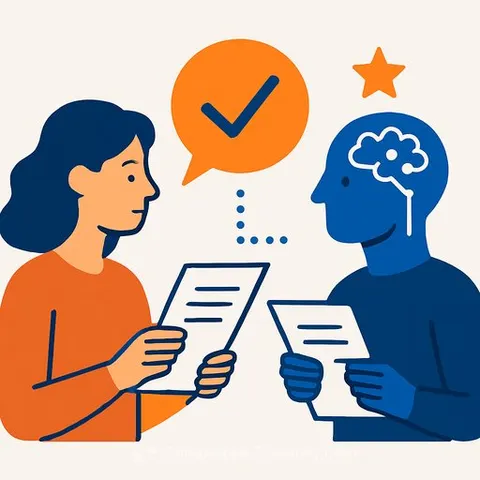
AI script-reading tools are offering Hollywood hopefuls detailed feedback on their screenplays in minutes, mimicking the work of human readers who have long served as the industry's entry-level gatekeepers. The rise of services like OnDesk, Greenlight AI, and Scriptbook has sparked fierce debate among union writers and contest organizers over whether an algorithm trained on human evaluations can truly replace professional insight-and whether some platforms are already using AI without disclosure.
The old doorways are closing
For decades, aspiring screenwriters broke into the business by working as readers-people paid to read scripts and write coverage. One WGA writer told CNET that turning down a reading assignment meant you would never get called back. That path is now competing with AI tools that promise the same service at a scale no human can match.
Scriptbook, which markets itself as "the original patented AI for screenplay analysis and box office prediction," helped kickstart the trend. Other services followed: OnDesk, Greenlight AI, Scriptreader.ai, AIScriptReader, PreScene, and Storyflow. Even general-purpose tools like ChatGPT, Gemini, and Claude can generate script notes with the right prompts.
The backlash has been loud. Unions, professional screenwriters, and film festival organizers are fighting to protect their work from tools trained on the same standards and formats they spent years mastering-potentially trained on their own scripts without consent. Most screenwriting contests explicitly ban AI in writing submissions, but few apply that same scrutiny to the people reading those submissions.
Man vs. machine: testing the feedback
To see how AI readers stack up, I wrote a feature-length script over a weekend-no AI involved-and submitted it to The Black List, a platform that uses only human readers and explicitly prohibits AI in evaluations. I then ran the same script through OnDesk and Greenlight, two popular AI script readers.
The results were eerily close. The Black List's evaluation flagged dialogue as "stilted" and functioning "primarily as a vehicle for spoken exposition." OnDesk wrote that "the dialogue often tells us what the scene already shows, with repeated speeches that explain rules and repeat insults." Both praised the script's "two-hander" structure in nearly identical language.
A second test with a different script produced similar parallels. Both the human reader and the AI tool noted that B-plot elements felt disconnected from the main plot, while the setting was a strength. The Black List called the plot "too thin for any of the characters or their storylines to develop." The AI tool said character work was "solid but limited" and dialogue was "often funny."
A WGA writer who has used both The Black List and AI tools like Greenlight, Claude, and ChatGPT described the initial results as "fairly remarkable." But patterns emerge with repeated use. "If you put a bunch of scripts through there, you start to see some patterns," the writer said. The biggest difference, they noted, was subjectivity-something the machine cannot replicate.
The detection problem
After noticing the similarities, I filed a support ticket with The Black List expressing suspicion of AI use. Lillian Beaudoin, the company's director of customer experience, said, "I can assure you we have systems in place to both detect the use of AI in evaluations and, most importantly, to help prevent its use in the first place." She added that readers cannot download the scripts they evaluate.
But Beaudoin also acknowledged a hard truth: "As I'm sure you know, AI text detection-particularly over short lengths of text-is far from accurate or consistent at this point." She noted that thousands of Black List evaluations have been shared across Reddit and other platforms, meaning "the Black List style has almost certainly been scraped into more than one LLM's training datasets."
The Black List's founder, Franklin Leonard, remains skeptical of AI's value for writers. "The notion that people would even want AI responding to their work seems to be based on an assumption that LLMs have been optimized to provide writers feedback that will improve their work," Leonard said. "I don't believe that's true." He added that if competitors adopt AI exclusively, "the Black List's human approach will beat them by a country mile."
Meanwhile, AI script-reading services like PreScene and Callaia list major talent agencies and studios-including Paradigm, Warner Bros, Sony, and Lionsgate-as clients who trust their products.
Why this matters for writers
AI script readers can produce feedback that sounds human because they are trained on human work. But an algorithm cannot pass your screenplay to an agent or recommend you for a writing gig. The traditional entry-level reader path is shrinking, replaced by tools that position themselves as gatekeepers. Writers looking to understand how these tools work-and how to compete with them-can explore AI Scriptwriting Courses that cover both the technology and its limitations. For those navigating the broader intersection of writing and artificial intelligence, resources on AI for Writers offer practical guidance on what machines can and cannot do.