
AI news ·
AI seller chat agents shift early sales conversations from forms to context-aware interactions
AI Seller Chat Agents now handle high-volume, repetitive early sales interactions so human sellers can focus on complex conversations. McKinsey research shows companies are moving beyond AI experimentation and embedding these systems directly into daily sales workflows.
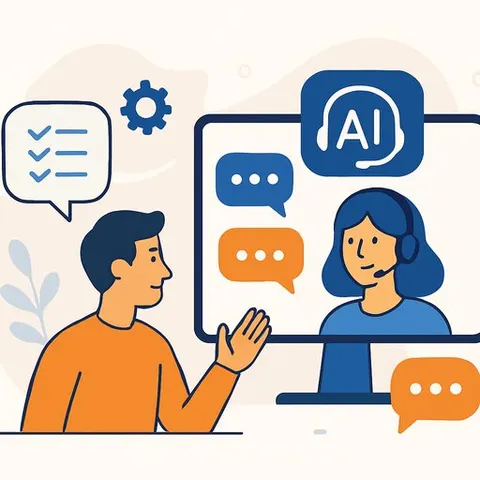
Buyers now expect immediate answers and relevant interactions across websites, email, and chat. Sales teams face pressure to manage more leads without spending hours on repetitive questions, and AI-powered conversational systems are starting to handle early sales interactions that once required a human representative.
An AI Seller Chat Agent combines conversational AI with sales-focused workflows. It can engage visitors, answer questions, qualify interest, and determine what should happen next. The technology does not replace salespeople. It shifts high-volume, repetitive interactions to AI so human sellers can focus on conversations where expertise and judgment matter most.
What separates an AI Seller Chat Agent from a basic chatbot
Traditional chatbots follow fixed menus and predetermined responses. They work for straightforward tasks but struggle with unpredictable questions. An AI Seller Chat Agent interprets natural language and uses conversational context to decide how to respond. When a visitor asks whether a platform works with their existing CRM, the agent can answer using approved product information and then ask a relevant follow-up about the visitor's current system.
If the conversation signals genuine buying interest, the agent collects qualification details and guides the prospect toward an appropriate next step. This makes the interaction part of the early sales journey rather than a dead end. The distinction matters for organizations with complex products or varied buyer journeys, where rigid chatbot scripts create friction instead of removing it.
How AI changes the first sales interaction
The first interaction with a potential buyer often determines whether a lead progresses or disappears. AI-powered conversations improve this stage through faster response times and more interactive engagement. Prospects receive initial answers without waiting for a salesperson. The agent asks questions based on what the prospect has already shared instead of forcing every visitor through the same form.
Conversations also reveal use cases, challenges, timelines, and existing tools that a basic form might miss. Someone researching general information can receive a different experience from someone actively comparing solutions. These capabilities give sales teams additional context for follow-up while making the first interaction more useful for the buyer. For sales professionals exploring this shift, AI for Sales training resources cover how conversational systems fit into broader sales workflows.
Where AI sales conversations fit into daily workflows
Website engagement is the most obvious application. A visitor asks about products, services, integrations, or pricing and receives an immediate response. Lead qualification becomes conversational rather than form-based. Instead of asking prospects to complete lengthy fields, businesses collect qualification information through natural back-and-forth exchanges.
Campaign engagement benefits when marketing generates inbound interest. An AI agent responds quickly and determines whether the person is researching or actively evaluating a solution. Product discovery is another opportunity. Buyers often know the problem they want to solve without knowing which solution fits. Conversational AI asks clarifying questions and directs them toward relevant information. Sales routing becomes more intelligent when the system uses conversation data to determine which representative or team should handle the opportunity.
McKinsey's recent B2B research shows companies moving from AI experimentation toward embedding AI into workflows. The shift suggests sales AI is becoming an operational capability rather than an isolated feature. Sales representatives who want to understand these tools in practice can explore the AI for Sales Representatives learning path, which covers lead qualification and CRM automation.
What businesses should evaluate before adopting AI sales tools
AI sales technology works best when introduced with clear objectives. Businesses should identify the specific conversations they want to improve rather than adopting AI because it is available. Knowledge quality is critical. An agent needs access to accurate, approved information about products, services, policies, and processes.
Integration with CRM platforms, calendars, knowledge bases, and other sales systems determines whether the technology becomes useful or remains disconnected. Human escalation paths should be clearly defined for complex questions, sensitive situations, or high-value opportunities. Measurement criteria matter too. Useful metrics include response time, qualified leads, meeting bookings, conversion rates, escalation rates, and seller time saved.
Why this matters for sales professionals
AI Seller Chat Agents change the division of labor in sales, not the need for salespeople. AI handles high-volume interactions, repetitive questions, information retrieval, and early qualification. Human sellers concentrate on discovery, strategic advice, negotiation, and complex decision-making. The practical result for a sales team is this: instead of treating every website interaction identically, sellers can prioritize opportunities where early conversations reveal strong buying intent. The technology creates continuity between buyer engagement and seller action, passing relevant context into the sales workflow before a representative ever picks up the phone.