
AI news ·
AI shifts hospitality sales from automation to strategic advantage
Hospitality sales teams using AI-assisted outreach saw response rates jump 20% and lead-to-opportunity conversion improve 10%, according to strategist Angela Murphy. The key, she says, is using AI to support-not replace-human-led relationship building.
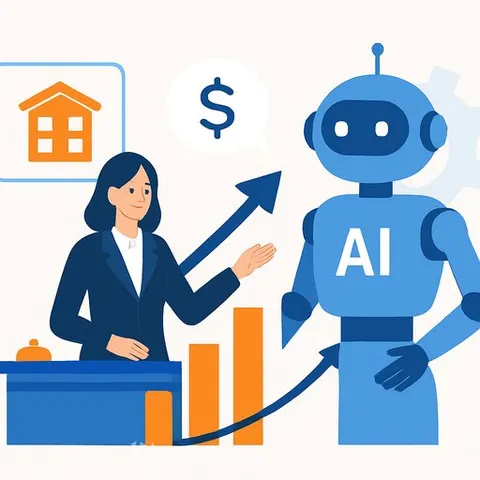
Hospitality sales teams are moving past the question of whether AI has a role in their work. The focus now is on how to use it well - and where it creates the most value without eroding the personal relationships that drive the industry.
According to Angela Murphy, a global commercial strategist with more than 20 years of hospitality leadership experience, the most effective approach today combines integrated tools across CRM, prospecting, and revenue platforms. AI-powered lead scoring, automation, and forecasting tools help teams prioritize opportunities and engage prospects at scale, while revenue platforms improve forecasting accuracy.
Murphy's experience leading commercial strategy across a major international hotel portfolio produced measurable results. When her team introduced AI-assisted outreach and CRM automation, response rates increased by 20%, lead-to-opportunity conversion improved by 10%, and the team generated incremental revenue growth during periods where speed and targeting mattered most.
"The best opportunities often come from using AI to support existing sales processes rather than replacing them," Murphy said.
Where AI delivers the fastest return
AI produces the strongest ROI in four areas: lead qualification, outbound personalization, forecasting, and RFP response automation. These functions directly improve conversion rates while cutting time spent on manual tasks.
In Murphy's case, AI drafted personalized emails and prioritized leads based on engagement signals. That allowed sales managers to increase the volume of high-quality outreach while spending less time on administrative work - and more time on relationship-building and closing.
Results varied by segment, but the consistent theme was efficiency translating into stronger pipeline performance.
Efficiency versus the illusion of productivity
One of the biggest misconceptions about AI is that more activity automatically creates better outcomes, Murphy said. AI genuinely saves time by automating administrative work, generating content, and simplifying reporting. But it can create an illusion of efficiency when it increases activity volume without improving outcomes - particularly in poorly targeted outreach.
"More emails, more messages, and more automation do not necessarily lead to more business if the underlying strategy is weak," she said. "The goal should never be automation for its own sake. The goal should be better decisions, stronger engagement, and improved conversion."
For those exploring how to apply these principles, resources on AI for Sales cover lead scoring, outreach automation, and CRM optimization. Broader applications for hotels and event venues are covered under AI for Hospitality & Events.
Keeping the human element front and center
Some sales processes should remain firmly human-led. Relationship building, personal brand, complex negotiations, and strategic decision-making belong to the sales team members themselves. In hospitality, personal connection and trust are critical to long-term success.
Murphy's teams used AI as a support tool rather than a replacement. AI might draft initial outreach or summarize client insights, but all client-facing communication - especially for key accounts - was reviewed and personalized by the sales manager before it went out.
"AI works best when it enhances consistency and speed behind the scenes, while the human element remains front and center," she said.
Building the right foundation before implementation
Many hotels rush into AI implementation before they are ready. Common challenges include unclear use cases, poor data quality, low adoption, and disconnected systems.
Murphy's team found that clean, structured data was essential before layering in AI. The more specific the request entered into AI tools, the better the output. Driving adoption required clear use cases, training, and strong change management - some team members initially resisted due to perceived complexity and skepticism.
Effective AI relies on high-quality CRM data, historical booking and revenue data, well-defined customer segments, and strong integration across systems like CRM, PMS, and RMS. AI outputs should always be validated with human judgment, and teams should view AI as a support tool rather than a decision-maker.
Hotels should evaluate data quality, process consistency, system adoption, and internal alignment before introducing AI. If foundational systems are not fully utilized, AI adoption will be challenging.
A practical starting point
Meaningful results don't require a major investment. Murphy recommends a phased approach starting with lightweight integrations and pilot programs to avoid disruption.
Practical first steps include using AI for email drafting and follow-ups, implementing basic CRM automation for lead measurement or reminders, and using AI for meeting notes and summaries. Murphy noted that Otter is a free tool she uses for this purpose.
"AI is not a shortcut to commercial success; it is an amplifier," she said.
Why this matters for sales professionals
For sales teams in hospitality, the takeaway is straightforward: AI can handle the repetitive work, but it won't close deals for you. The teams that see the strongest results pair AI with strong data, clear processes, and experienced sales professionals who focus their energy on building relationships and driving revenue. Start with one small use case, measure the impact, and expand from there.