
AI news ·
AI Sparks a New Era of Creative Destruction in Business and Industry
AI is driving a new wave of creative destruction, reshaping products, services, and operations. Businesses must rethink core elements to adapt and thrive in this evolving landscape.
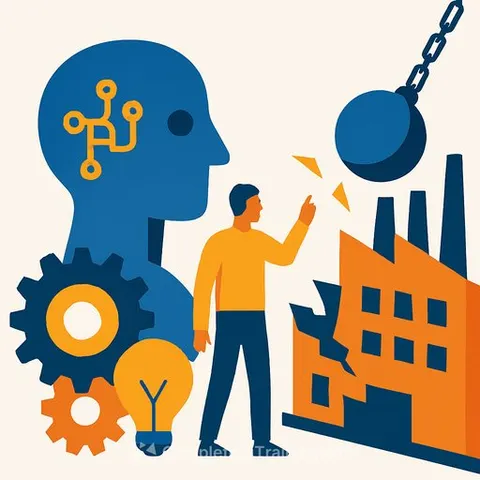
AI Sparks a New Wave of Creative Destruction
In the late 1990s and early 2000s, digital-native companies disrupted established markets, forcing traditional businesses to reinvent themselves. Now, artificial intelligence (AI) is driving a fresh wave of creative destruction. But what exactly is changing, and how does it compare to that earlier digital upheaval?
A recent study of 2,000 business leaders by the IBM Institute for Business Value highlights that AI is dismantling outdated business habits that slow growth. While the end result remains uncertain, this process clears the way for new ideas and approaches to emerge.
Rethinking Core Business Elements
According to the survey, 68% of leaders report that AI is impacting core aspects of their businesses. This shift forces companies to rethink everything—from their products and services to their operational models. Entire markets are being reshaped as a result.
Manufacturers are evolving beyond simply producing goods. They are becoming software-driven businesses, using AI-powered predictive maintenance to optimize product performance and customer satisfaction. Retailers are moving away from just selling products; instead, they focus on creating AI-enabled, immersive, and personalized experiences for customers.
Examples of AI-Driven Creative Destruction
Century Supply Chain Solutions’ CTO, Jim McCullen, observes a shift from AI as a productivity tool to AI enabling autonomous decision-making and self-evolving logistics networks. Imagine supply chains that automatically reroute around global disruptions like tariffs or weather events. AI could design new trade routes and distribution hubs in real-time, bypassing traditional constraints.
Another example is autonomous negotiation systems. AI-powered agents could manage contract negotiations between shippers, carriers, and suppliers without human input. This would optimize freight rates, capacity planning, and trade agreements dynamically, moving logistics from reactive to predictive.
The Three Stages of AI-Driven Change
Amir Barsoum, founder of InVitro Capital, outlines three stages of AI-driven transformation stretching over the next decade:
- Current Stage: Autonomous AI agents extend automation beyond repetitive tasks into complex problem-solving and decision-making. For example, AI fundraising agents could independently prepare pitches, manage investor communication, and close deals, all with human oversight.
- Next 1-3 Years: AI innovation will physically manifest through autonomous technologies like advanced self-driving vehicles and practical robots capable of handling household chores and property maintenance. These systems will learn and adapt in real time.
- Next Decade: Artificial General Intelligence (AGI) will become everyday companions. AGI-powered robots will manage household operations, hold conversations, write creatively, cook meals, and handle finances. These machines will grasp context, emotions, and preferences, seamlessly bridging digital and physical tasks.
A Quiet Evolution in Manufacturing
Not all change will be dramatic. Bryan Sapot, VP of Smart Factory at Nulogy, emphasizes a steady, quiet evolution. He warns against expecting AI to instantly redesign enterprise systems or fully automate factories. Instead, AI will gradually improve individual processes like maintenance, quality control, and diagnostics—making them smarter and faster.
This approach requires solid data and a carefully built framework, which will take time but delivers practical improvements without disruptive overhauls.
Balancing Caution and Boldness
The IBM study also reveals caution among business leaders. Only 25% of AI projects have met expected returns on investment so far. Many companies invest in AI out of fear of falling behind, even without a clear understanding of its value. Just 37% believe it’s better to move fast and risk mistakes than to be slow and precise.
Leaders are encouraged to adopt a start-up mindset: be willing to break from the past and envision what their business could look like in three years, even if it seems impossible now. Transformation should be treated like product development—try new strategies quickly, measure results, and iterate rather than sticking to outdated long-term plans.
Conclusion
For creatives, AI’s wave of creative destruction offers both challenge and opportunity. It demands rethinking core offerings and processes but also opens space for fresh ideas and innovative experiences. Whether through autonomous agents, immersive retail engagements, or smarter manufacturing, AI is reshaping how businesses operate.
To stay ahead, creatives should explore AI learning paths that sharpen relevant skills and provide practical knowledge. For those interested in expanding their AI expertise, resources such as Complete AI Training's latest AI courses offer focused programs designed to build actionable skills in this evolving landscape.