
AI news ·
AI speeds up marketing but cannot fix a bad strategy
AI can draft thirty social posts in minutes, but speed without strategy just produces weak marketing faster. Marketers must supply business context to guide the output.
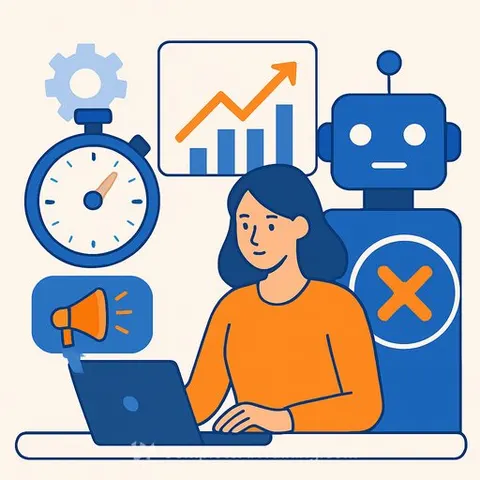
AI tools can now generate a month's social content, draft entire campaigns, or build customer personas in minutes. The risk is that speed gets mistaken for strategy - and weak marketing produced faster is still weak marketing.
"AI can make your marketing faster, but speed and strategy are not the same thing," the original analysis noted. "If the thinking behind your marketing is weak, AI will simply help you produce more weak marketing, faster." The comparison is a faster car with no destination: you cover more ground without heading anywhere useful.
AI is an accelerator, not a decision-maker
AI reduces the time spent on research, administration, and first drafts. It can repurpose a webinar into multiple content pieces, compare competitors, or summarise customer feedback. Business owners have used it to articulate a target audience they had in their heads but never put into words. AI helped them organise and express what they already knew.
That starting point is genuinely useful. But a starting point is exactly what it is. AI cannot decide which audience to pursue, what problem the business solves, or why someone should choose that company over another. These questions remain the hardest part of marketing, and they demand human judgement. Without them, a full content calendar is just a well-organised collection of posts, not a strategy.
Before handing AI a prompt, marketers need to answer: who are we reaching, what job is the customer hiring the product to do, and what are we actually trying to achieve? When a business gives AI real context - such as "we help small hospitality firms manage seasonal cash flow" - the output becomes specific. AI didn't create that strategy; the business supplied it, and AI turned it into content. The distinction matters.
This is where the right training changes outcomes. AI for Marketing Courses teach professionals how to build prompts grounded in genuine customer insight, so the output supports a clear objective rather than filling a calendar with generic material. And for those setting the direction, AI for Executives & Strategy resources focus on the strategic decisions that determine whether speed actually delivers business results.
Bad strategy at greater speed is still bad strategy
Consider a local accountancy firm asking AI to create thirty social posts with little context. It might generate grammatically correct advice about tax deadlines - content that could belong to any firm in the country. Give that same AI the firm's real focus (small hospitality clients, seasonal cash flow struggles, a goal of generating consultations with restaurant owners) and the content becomes specific: managing food costs, preparing for quieter trading periods, cash flow tactics for cafés.
The strategy wasn't created by the machine. The business provided it, and that's what made the output useful. AI simply executed on a direction that was already clear.
Support judgement, don't replace it
AI can make suggestions, but it doesn't sit in customer meetings or know which services are genuinely most profitable. Its outputs can sound confident while being inaccurate or assumption-based, so everything still requires review. The marketer's role is changing, not disappearing - customer understanding, judgement, and the ability to ask good questions have become more important.
Treat AI output as a draft. Give it what a capable human marketer would need: a clear objective, a defined audience, the customer's problem, your point of difference, and any real evidence you have. Then challenge the result, correct it, and add your own experience back in.
Why this matters for marketers
AI can help a small team produce work that once took days, cutting the time from blank page to useful draft. But the goal was never to create the largest possible volume of content. It's to help the right person understand why your organisation is relevant to them. AI can help you get there faster - you still have to decide where "there" is. The professionals who pair tool speed with strong strategic thinking will produce work that actually moves a business forward, rather than just filling a content calendar.