
AI news ·
AI summaries push U.S. hotel paid media click-through rates down 68%
Hotel paid media click-through rates have dropped over 68% where AI search summaries appear, with 77% of mobile hotel searches now ending without a click. Hotels must rebuild digital strategies around structured data and multi-channel campaigns.
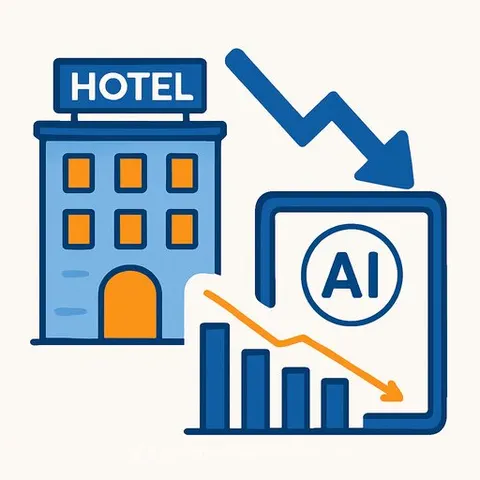
Hotel Paid Media Faces Sharp Decline as AI Summaries Cut Click-Through Rates
Click-through rates on Google, Meta, and other platforms have dropped over 68% where AI search summaries appear, forcing hotel marketers to overhaul digital strategies that once drove direct bookings reliably.
The shift stems from AI-generated search results that answer traveler questions without requiring clicks to hotel websites. Google AI Overviews and Meta Advantage+ now present hotel options, availability, and pricing directly in search results. Mobile users experience the steepest decline, with 77% of hotel searches resulting in zero clicks. Desktop searches show 47% zero-click rates.
Hotels continue spending on paid media while engagement falls. Cost-per-click rates remain stable, but fewer clicks mean lower returns on advertising spend. Travel marketers face a straightforward problem: traditional paid campaigns alone no longer deliver expected results.
The Zero-Click Search Reality
Zero-click searches occur when AI answers satisfy travelers without directing them to hotel websites. This phenomenon has accelerated through 2025 and 2026.
The effect reduces site traffic, weakens lead generation, and cuts direct booking opportunities. Travelers get answers faster, but hotels lose the chance to showcase properties, build brand loyalty, or capture contact information.
Data Accuracy Now Determines Visibility
AI systems pull information from structured data, reviews, and authoritative sources. Hotels with outdated or inaccurate information risk being misrepresented across AI search results, affecting booking decisions.
IOSA-certified and verified hotel content improves trust with search algorithms. Transparent pricing, current availability, and reliable reviews feed AI models more effectively than marketing copy alone.
What Travel Marketers Should Do Now
Single-channel strategies no longer work. Marketers need to combine multiple approaches:
- Optimize websites for structured data and featured snippets
- Improve content quality to influence AI recommendations
- Track AI-driven metrics and adjust paid media spend for measurable ROI
- Test emerging AI ad platforms beyond traditional search and social
- Integrate offline campaigns to maintain broader market reach
Hotels that adapt early can use AI to automate dynamic pricing, personalize messaging, and optimize budget allocation based on real-time analytics. Machine learning insights allow more efficient audience targeting than traditional demographic segments.
Early adopters that shape AI outputs with verified, structured content may maintain higher conversion rates and visibility. Those ignoring AI adaptation risk losing traffic and bookings to competitors who move faster.
The U.S. travel market is shifting from click-based to AI-integrated marketing. Marketers who treat this as a campaign adjustment rather than a fundamental strategy change will fall behind.
Learn more about AI for Marketing and AI Data Analysis to build skills for this changing landscape.