
AI news ·
AI surveillance at work expands as firms track employees minute-by-minute
AI surveillance now grades workers minute-by-minute through keystrokes and mouse movements, with teachers at Euan Blair's firm reporting "horrendous stress" from automated scoring.
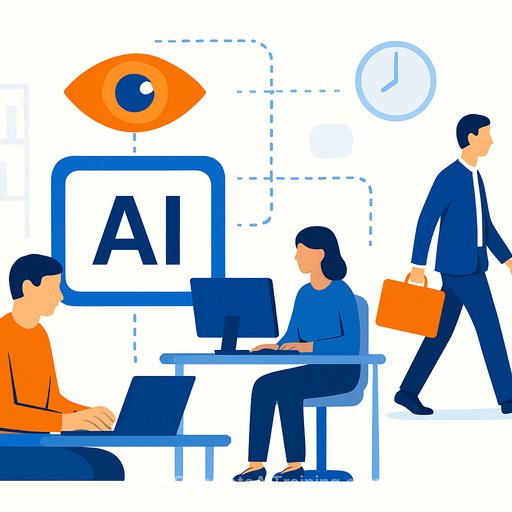
Workplace monitoring has shifted from tracking output to tracking every keystroke. AI-powered surveillance software now processes vast datasets to deliver minute-by-minute accounts of employee activity. UK technology editor Robert Booth told the Guardian's Science Weekly podcast that these systems are spreading across sectors, promising efficiency gains but often producing the opposite effect.
How AI surveillance reaches the office floor
Bosses have always measured workers. Output targets came first. Then came computer software known as "bossware" that logged hours and tracked tasks. What has changed is the volume and granularity of data AI can digest. These tools do not just record when someone logs on. They score productivity by analyzing mouse movements, keyboard patterns, and even the tone of written communications.
Booth highlighted one striking case at a firm run by Euan Blair, the son of former UK prime minister Tony Blair. Teachers reported "horrendous stress" after AI was used to rate their work. The system graded their performance automatically, replacing human judgment with algorithmic scores. Staff described the pressure as relentless and dehumanizing.
The counterproductive cost of constant tracking
Organizations adopt these tools for predictable reasons: they want to cut costs, identify underperformers, and squeeze more output from each hour. Yet the data emerging from early adopters suggests a different outcome. When people know they are being scored minute by minute, they often focus on gaming the metrics rather than doing good work. Creativity and collaboration drop. Stress and turnover rise.
"AI is transforming the capabilities of these systems," Booth explained, processing data flows that no human manager could ever review. But the podcast raised a blunt question: if monitoring becomes so intense that it breaks trust, does the efficiency gain actually materialize? In the Blair firm case, the answer appears to be no.
Which sectors are driving adoption
Remote and hybrid work accelerated demand for AI monitoring. Call centers, financial services, and professional services firms have been early adopters. Logistics and warehousing also rely heavily on these systems to track pick rates and rest breaks. Booth noted that the technology is spreading fastest in environments where work is already digitized and measurable.
For HR leaders, the legal and cultural risks are mounting. European data protection laws impose strict limits on automated decision-making. Employee representatives in several countries have begun challenging the use of AI scoring without transparent appeal processes. The gap between what the software can do and what the law allows is widening.
Why this matters for HR and management professionals
HR leaders face a direct tension: the C-suite may push for granular productivity data, but the people cost is real. If nurses, teachers, or knowledge workers burn out under algorithmic scrutiny, recruitment and retention metrics will reflect it. The Blair firm case is not an outlier - it is a warning that AI monitoring without human oversight can backfire.
Managers who understand the mechanics of these tools can shape procurement decisions before damage is done. Building internal guidelines on acceptable monitoring thresholds, audit rights, and employee consent is now a practical necessity. For those who need to get up to speed on the technology underpinning these systems, structured learning paths like AI HR Strategy Training offer frameworks for evaluating vendor claims and aligning AI adoption with workforce strategy. The core skill is not saying no to AI - it is knowing when the data stops being useful and starts being destructive.