
AI news ·
AI Training Gaps and Change Fatigue Threaten Workplace Transformation, Study Finds
Nearly all HR leaders offer AI training, but only 39% of employees have received it, with just 14% finding it highly effective. This gap risks disengagement and limits AI’s potential benefits.
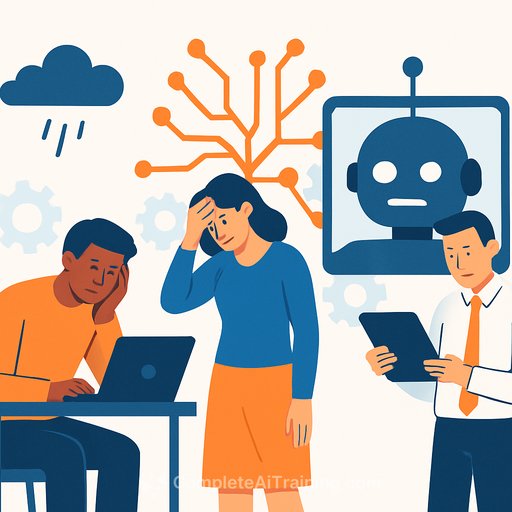
AI Training Gaps Put HR and Employees at Risk
Nearly all HR leaders (97%) say their organisations offer AI training, yet less than half of employees have received it. Research from Corndel’s 2025 Workplace Training Report, surveying 250 HR leaders and 1,000 UK employees, reveals only 39% of employees have undergone AI training. Even more striking, just 14% consider this training highly effective.
Despite 88% of HR leaders feeling confident about their teams’ readiness, only 44% of employees agree their organisation is prepared to adopt AI. This disconnect is even more pronounced among younger employees, 74% of whom use AI regularly, but only 52% have had formal instruction on proper usage.
AI in Performance Reviews and Leadership Engagement
HR managers are increasingly using AI to support performance reviews and feedback. However, a leadership gap is clear: 52% of executives have never used AI tools, while 71% of middle managers have embraced them. This uneven adoption risks creating divisions within organisations.
Without proper training, AI risks becoming a source of anxiety instead of an opportunity. Employees who lack confidence with AI tools may feel sidelined, feeding disengagement and mistrust. When people don’t see how AI enhances their work, adoption stalls and organisations lose out on productivity gains.
Rising Change Fatigue in HR and Employees
Change fatigue is affecting many. Eighty-two percent of HR leaders report their organisations are experiencing it, with 14% considering it a major concern. Employees feel this too: 62% admit to fatigue from frequent workplace disruptions, and 15% say their fatigue is severe.
Younger workers are hit hardest; 67% of those aged 18-34 report high fatigue levels, compared to 52% of employees over 55. Over half of employees (58%) lack confidence in senior leadership’s ability to manage digital transformation and change effectively.
Rapid AI adoption puts intense pressure on HR leaders, often without clear strategies. Layering new tools onto existing workflows without rethinking roles and priorities can feel relentless. This misalignment between technology and the human side of work contributes to exhaustion and resistance.
Training Deficits Undermine AI’s Potential
Two-thirds of employees (65%) did not receive data skills training in the past year, even though 92% of HR leaders say their organisations focus on closing technical and data skills gaps. This mismatch threatens AI initiatives.
Without proper training, HR teams risk misinterpreting AI-generated insights or becoming complacent, relying too much on data without human judgment. This can lead to errors, mishandling of data, and even breaches.
Failing to provide thorough AI training misses an opportunity to maintain a competitive edge. Upskilling across all organisational levels—from leadership down—is key to integrating AI into processes effectively.
Bridging the AI Knowledge Gap
Most HR leaders (77%) plan to increase training budgets, with 80% focusing on technical skills. However, successful AI training goes beyond technical know-how. Organisations should foster broader skills that help employees adapt positively to change.
Starting with leadership is crucial. When leaders understand how AI works and its relevance, they can drive adoption and embed AI use into company culture. This requires clear responsibility, structured learning, and peer support networks.
For HR professionals looking to expand AI skills within their teams, resources like Complete AI Training offer practical courses tailored to various job roles and skill levels.
Key Takeaways for HR Leaders
- Assess the real uptake and effectiveness of AI training among employees, not just its availability.
- Address change fatigue by aligning technology rollouts with people-focused strategies.
- Prioritise broad skill development alongside technical training to build confidence and trust.
- Engage leadership first to champion AI adoption and embed it into organisational culture.
AI is becoming part of everyday work. Ensuring employees feel equipped, supported, and confident with AI tools is essential for sustainable adoption and maximising the benefits for both people and organisations.