
AI news ·
AI turns retail data into near-perfect customer profiles in minutes
AI slashes the time to profile individual shoppers from days to seconds, using vast personal data trails. One expert now rates corporate knowledge of consumers at 9.2 out of 10.
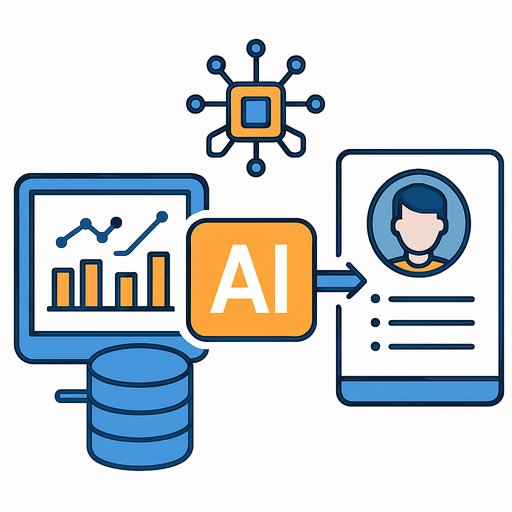
Jeff Gaus spent years advising the pharmaceutical industry, where his firm bought drugstore cash-register data to tell sales reps exactly which doctors to target. That process once took multiple days and several analysts. Now, he says, artificial intelligence can produce the same results in minutes or seconds, using vast troves of customer data to narrowcast advertising down to the individual level.
"A friend of mine who used to be a CEO of a retail organization, his saying was, 'Retail is detail,'" Gaus said. "The more I know about you, the better off I can sell to you."
Targeted marketing has existed for decades. What has changed is the speed and intensity. AI can process mammoth amounts of customer data and personal information from an expanding universe of sources, creating constantly evolving models of specific people or small populations to predict consumer behavior. Some systems build digital twin profiles based on financial and personal data points.
The data you've already given away
The information fueling these systems is not limited to purchase records. It includes the opinions, preferences, personal stories, geolocations, photos, and videos that millions of people have posted to search engines and social media platforms for years. All of it sits online, and AI makes it more useful and less overwhelming for companies to process.
"For a person or a company to process the amount of data that AI collects would require lots of manpower and a lot of time-and you'd have systems in place to decide how to sort it and what you're going do with it," said Callie Schroeder, director of the AI and Human Rights Program at the Electronic Privacy Information Center. "Those factors don't really come into play with AI because it is able to go through that information so fast and sort and parse out what it is it wants to pull from it."
Justin Sherman, founder of Duke University's Privacy and Democracy Project and author of the forthcoming book The Middlemen, pointed out that AI can draw commercially useful information out of even anonymized records. This capability is not new. In 2009, researchers showed they could re-identify supposedly anonymized medical records and AOL searches with ease. Georgetown University law professor Paul Ohm said at the time, "Data can either be useful or perfectly anonymous, but never both." What is different now is the speed.
"It's easier for these AI-advertising technology companies and data brokers to mash it all together and link it back to people," said Sherman, now CEO of Global Cyber Strategies. "A company or a research organization or consumer might share information thinking that it's quote-unquote anonymized."
Convenience versus consent
The trade-off for consumers is immediate convenience. Sherman acknowledged the appeal: "I bought plenty of things through targeted ads I've gotten online, right? So it's not that it doesn't work." He cited music and video streaming recommendations as something he has appreciated. The risk, in his view, is a situation where consumers are not offered a meaningful way to give or withdraw consent for use of their personal data.
Controlling one's own data remains complicated and laborious, even for the tech-savvy. Schroeder described setting up a new phone and manually turning off numerous machine-learning features. "I was looking up what each of those things meant. It's a lot of work and it's unfair that we have to do it," she said. She argued that laws and norms need to catch up to establish a shared approach to what consumers should expect.
Gaus, now CEO of the Provenance Chain Group, explained how retailers decide which goods to stock in which warehouses for same-day delivery. They use purchase patterns, credit-card charges, AI chatbot inquiries, and even voting patterns to understand product preferences down to specific ZIP codes. "How do they know to have certain products pre-positioned that I can get delivered the same day?" he said. "It's because they've studied consumption patterns and have profiled populations and know with a really high probability that this is going to get purchased by somebody nearby in some period of time."
The 9.2 on a scale of 10
Gaus recalled a panel appearance earlier this year where a fellow panelist, formerly in government intelligence, described meetings in Silicon Valley. The panelist asked what information a tech company could access about a person. "He showed us a map," Gaus said, "where he was able to plot all of [this person's] consumer purchases on all of his credit cards over the last 45 days, where his car had driven, what telephone calls he'd been making, off data that is collected by private corporations."
Gaus put the current state of corporate knowledge about consumers on a scale of one to 10. Five years ago, he estimated, companies were at a five or a six. "Today, I think we're at like 9.2, 9.3, something like that," he said. "If I have access to and am willing to, I can acquire pretty much any data that I need about you."
Why this matters for marketing and sales professionals
The tools your customers encounter are not hypothetical. People who search airline prices see matching promotions from tour companies within minutes. Online shoppers ask a chatbot a question and receive uncannily precise ads hours later. Social media users get toy or book recommendations that appear tied to photos they posted of their children. For marketing and sales teams, this means consumer expectations around relevance and timing have shifted permanently. Professionals who want to build these capabilities can find structured training through AI Marketing Manager Courses. The data infrastructure behind these experiences is available to companies of many sizes, not just tech giants. The question for any team is whether their current approach to customer data can match the 9.2 standard your competitors may already be reaching.