
AI news ·
AI use in workplaces breeds distrust among colleagues, survey finds
At least half of U.S. employees use AI at work weekly, mostly self-taught, fueling colleague mistrust and "workslop" content, per a CNBC and SurveyMonkey survey. One in four AI users has told coworkers to "go ask ChatGPT," while AI-driven career advice raises resignation intent by 29%.
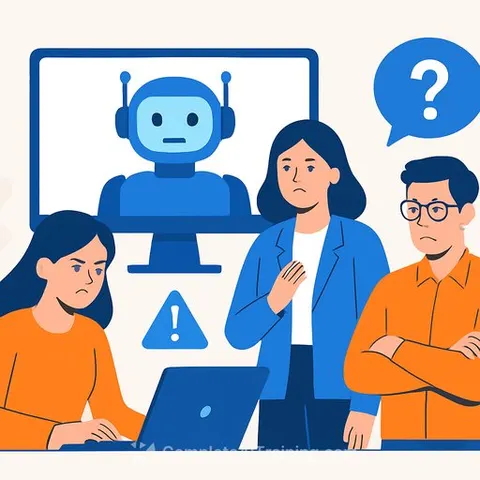
At least half of U.S. employees use AI at work at least once a week, and most of them are entirely self-taught, according to a CNBC and SurveyMonkey survey. That has created a new workplace dynamic where colleagues suspect each other of using AI to cut corners, leaving HR teams to manage the fallout.
The problem surfaced in a CNBC report that interviewed more than a dozen employees and executives about how AI is reshaping workplace relationships. The picture is messy: trust is eroding, output quality is dropping, and employees are increasingly using AI to avoid talking to each other.
Colleagues no longer trust each other's work
Joanna, an HR professional in London, spent half a day carefully drafting an email. Her colleague's response: "Did you write this with ChatGPT?" She had typed every word herself, but the assumption was that AI produced it.
This suspicion cuts both ways. A project manager in Chicago spent a summer working with a so-called AI expert who used an AI agent to manage their inbox. The tool filtered out important emails and client messages, delayed deliveries, and the expert stopped answering calls entirely. The manager said: "I would rather have a sloppy real human than a robot. But here's the problem: How am I supposed to contact a machine?"
"Workslop" is creating extra work
A new term has entered the workplace vocabulary: "workslop." It describes AI-generated content that looks acceptable at first glance but is full of meaningless filler. Research from BetterUp and Stanford found that most white-collar workers in the U.S. have received this kind of material.
Kim, who owns a public relations firm in Michigan, paid a contractor $10,000 to write campaign copy. She received AI-generated generic platitudes and had to rewrite every word herself. The productivity loss from fixing this junk content can easily reach millions of dollars for larger organizations.
AI is replacing human judgment
According to the CNBC survey, one in four AI users has told a colleague to "go ask ChatGPT" when approached with a question. Alison Green, a former chief of staff and management consultant, called the practice out: "This is just like throwing a Google link at someone when they ask you a question. It's both lazy and rude. People come to you because they value your professional judgment, not to make you a search engine relay station."
Some leaders have adopted the same approach, telling employees who ask for career development advice to consult AI. Research indicates this increases resignation intent by 29%, raises burnout rates by 26%, and cuts team coordination efficiency by 12%.
The core issue for HR teams is that AI has amplified existing workplace problems. Laziness, fear, and buck-passing now come wrapped in a high-tech shell. One vice president at SKILLSOFT put it plainly: "If all communication is mediated by AI, there is a psychological cost to pay."
Why this matters for HR professionals
HR teams need to treat AI as a management issue, not just a technology issue. The first step is establishing clear rules about what AI can and cannot be used for, so employees don't have to guess. Companies should also resist using AI as the only cost-cutting lever - in-person communication still matters, especially for sensitive conversations.
For HR professionals dealing with these challenges, structured guidance can help. Resources like AI for Human Resources content and the AI Learning Path for HR Managers offer practical approaches to setting workplace AI policies and addressing AI-induced conflicts.
Trust is easy to destroy and hard to rebuild. AI is just code - the real problem is people using it as an excuse to stop being reliable colleagues.