
AI news ·
AI video works for short, low-stakes enterprise content but fails for emotional communication
AI video works only for short, low-stakes content like employee bios and product explainers. It fails in emotional, brand-critical, or crisis communications where viewer trust matters.
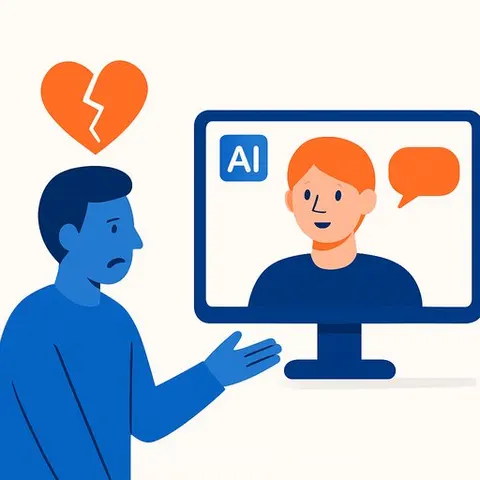
AI video has crossed from novelty to production-grade in enterprise communications, but only inside a narrow band of formats. Short, structured, high-volume, low-emotional-stakes content holds up under scrutiny. Anything depending on emotional range, brand-defining creative, or credibility under pressure does not.
Most failed rollouts are use-case failures, not vendor failures. Teams pick the wrong job for the tool, get an uncanny result in front of a skeptical audience, and conclude the category is broken. The category is not broken. The brief was.
The determining variable is not fidelity, it is emotional stakes. A 25-second employee introduction on a LinkedIn profile survives a little synthetic uncanniness because the viewer's expectation is informational. A CEO explaining a layoff does not, because the entire communicative value is the audience's read on whether the speaker means it. Sort your video inventory by emotional stakes rather than production budget and you will pick correctly.
The honest state of AI video in mid-2026
The median AI-generated presenter is good enough that most viewers will not consciously flag it in a short clip, and nowhere near good enough to survive a two-minute close-up. Both are true at once, and enterprise buyers keep hearing only one of them.
Voice synthesis is close to solved for scripted delivery. Cross-language lip-sync has improved sharply. Identity consistency across a hundred renders is largely handled. What has not moved is coordinated micro-expression, hands interacting with objects, and the anticipatory body movement that reads as a person occupying physical space. That uneven progress explains which use cases work and which fail.
What works now
Four characteristics define working AI video: short runtime, structured script, high volume, and low emotional stakes. All four works. Three usually works. One or two does not.
Employee introductions and bios. A 20-to-40-second clip of a named employee saying who they are and what they do is the strongest reliable AI video format in the enterprise. Runtime is short enough that artifacts do not distort. Framing is medium so hands stay out of frame. The volume - every person in a 3,000-person sales organization - makes traditional production impossible, removing the comparison that kills AI video elsewhere.
Product explainers and sales outreach. Scripted delivery over screen capture or motion graphics works well. The presenter is mitigated rather than centered. The underrated benefit is maintenance: re-recording a human is a scheduling problem, re-rendering a synthetic presenter is a text edit. Personalized video at the top of a sales sequence is better than another text email.
Localized variants. Producing the same asset in eight languages is where the economics stop being interesting. Lip-sync fidelity has improved substantially for scripted content, though quality varies by language pair and none of it removes the need for native-speaker QA before publication.
Where AI video still fails
Emotional range. Current systems approximate strong emotion by exaggerating individual facial regions rather than coordinating the whole face and body. Warmth, gravity, humor, and genuine enthusiasm remain out of reach at a level that survives an executive audience.
Brand-defining creative. The anthem film, the founder story, the campaign hero asset - pieces where a director extracts oratory from a real person on a real day - are wrong for generative systems. They produce the statistically expected delivery, which does not work for rare work you cannot afford to get wrong.
Crisis communication. Do not use synthetic video for a breach notification, a recall, a restructuring, or an apology. The payload of a crisis message is the audience's judgment of sincerity. Any doubt about whether the speaker was physically present destroys it. If the synthetic nature is later discovered, the disclosure becomes the crisis.
Hands, props, and long runtimes. Object manipulation is still often breaking. If the script requires the presenter to hold the product, shoot it. Artifacts compound with length; past roughly 90 seconds of continuous close-up presenter footage, the defects become obvious.
Consent and disclosure laws you cannot ignore
This is a practitioner's map, not legal advice. The regulatory picture is moving quickly and varies by jurisdiction. Involve employment and privacy counsel before your first render, not after your first complaint.
Employee likeness is not a work product. A face and voice are a personal attribute with independent legal protection. California's AB 2602, effective for performances fixed on or after January 1, 2025, voids digital-replica contract provisions lacking a reasonably specific description of intended uses. Broad "all media now known or hereafter devised" language is expressly insufficient in the contexts it covers. Tennessee's ELVIS Act and a growing set of state digital-replica statutes point the same way. In states with biometric privacy regimes - Illinois' BIPA most prominently - the underlying facial data may carry separate notice and retention obligations.
EU AI Act transparency obligations take effect August 2, 2026. Deployers who create or distribute realistic synthetic depictions of people must disclose the artificial nature clearly and at first exposure, via plain-language notices, persistent visual indicators, and audio cues. Service formalities carry a parallel obligation to mark outputs in machine-readable form. Reported penalty exposure runs to EUR 15 million or 3% of worldwide annual turnover, whichever is higher.
What a consent process should include: a separately signed authorization rather than a clause buried in onboarding paperwork; an listed list of permitted uses and channels; a statement of what the likeness will never be used for; a defined retention period; a revocation mechanism the employee can trigger unilaterally; and a specified takedown turnaround. Consent should be genuinely optional - coerced consent is an ethics problem and, in several jurisdictions, a validity problem.
Offboarding is the question most teams skip. When an employee leaves, what happens to their avatar? The defensible default is automatic revocation on the last day and a documented purge from active channels within a defined window. A former employee finding their synthetic self still selling software a year after resignation is heavy and avoidable.
The economics of AI video
The honest comparison is not "AI is cheap and production is expensive." The two have different cost curves, and the crossover point is volume. Current 2026 benchmarks put corporate and training video at roughly $1,000 to $10,000 per finished minute. Localizing one English asset into five additional languages typically adds $3,000 to $10,000. Those costs explain why most organizations have professional video for the CEO and nothing for the other 2,000 employees.
AI video collapses the marginal cost of the hundredth asset toward zero while leaving the first asset's quality below what a crew could deliver. For one high-stakes asset, traditional production wins and the cost gap is affordable. For 500 assets, traditional production is not expensive - it is impossible. The resulting strategy is a barbell: fewer, better human-produced hero assets for top-tier communications, plus a synthetic long tail that previously did not exist.
The cost also explains why the clearest fit for AI video is also the one least glamorous: giving every employee a consistent, on-brand video presence. The mechanic is deliberately narrow. An employee submits a single belonging for headshots; the platform generates studio-style headshots and short video introductions - essentially "living headshots" - plus written content in the employee's voice. Administrators lock brand palette, background, attire, and lighting organization-wide. There is multi-admin support with role-based access control, SOC 2 and GDPR compliance, distribution to LinkedIn and company website, and analytics. Pricing starts around $40 per credit for smaller teams, with a custom annual license at enterprise scale. Companies named Rolling Stone, the New York Post, and Intuit as customers, and report a 30% engagement lift and 6.5x click-through rate improvement - all company-published figures rather than independent findings.
How to pilot without embarrassing yourself
Pick the lowest-stakes, high-volume format you have. Employee bio videos or sales outreach templates. Do not pilot on internal restructuring notices or CEO messages. Get counsel involved before the first render - complete the consent language, retention plan, revocation mechanism, and disclosure posture in writing rather than reworking after tests. Run an opt-in cohort of 20 to 50. Never mandate participation.
Set a disclosure standard and apply it uniformly rather than per-asset. Blind-test internally before publishing. Show 10 clips to people outside the project. Uncorrected feedback will shake wrong assumptions - if your cohort focuses on the video instead of the message, that is a signal. Measure against the honest baseline: nothing you published before. Write the offboarding runbook during the pilot, while it is still simple.
Why this matters for PR and communications professionals
For corporate communications leaders, AI video in 2025 is a useful production tool with a sharply defined working range. Inside that range - short, structured, repetitive, informational - the output ships and the volume economics beat every alternative. For communications that demand emotional range, brand identity, or trust in high-stakes moments, the technology produces content that is technically impressive and functionally product-reference worse than doing nothing. The practical takeaway: use AI to give an entire workforce a consistent, governed, on-brand video presence, but do not deploy it for crisis messages, executive announcements, or brand films. Pair it with a real consent process approved by counsel, a clear disclosure standard, and the discipline to keep your hero creative human. The gain is real, but only inside the boundary - and the cost to get it wrong includes legal liability, damaged trust, and a workforce that sees through the schematics.
For those who want direct, up-to-date training on applying AI tools to PR and communications, AI for PR & Communications resources provide practical guidance on choosing tools and building governance processes. For deeper understanding of the technology itself - including the strengths and limitations of current models - see dedicated training on Generative Video.