
AI news ·
RFK Jr.'s AI push unsettles MAHA allies and medical experts
RFK Jr. is pushing AI to overhaul HHS, a move fracturing his own MAHA coalition and drawing warnings from medical experts.
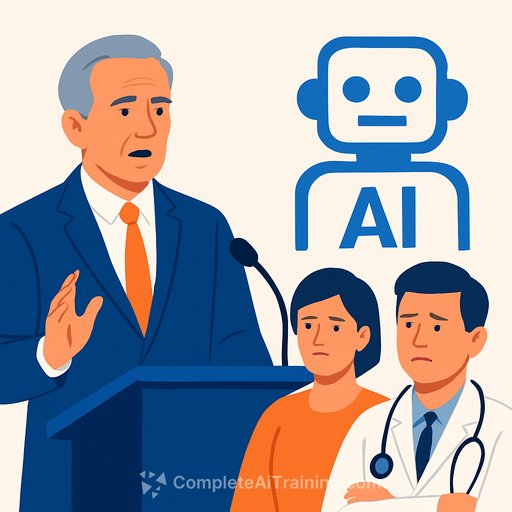
Health and Human Services Secretary Robert F. Kennedy Jr. is pushing artificial intelligence as a central tool for overhauling American healthcare, a position that has unsettled some of his closest allies in the "Make America Healthy Again" movement and drawn warnings from medical experts. His public embrace of the technology marks a sharp pivot from the anti-corporate, sometimes anti-technology sentiment that helped define the MAHA coalition he energized.
Kennedy has said AI could streamline medical research, cut bureaucratic waste, and reshape how the nation's health agencies operate. The stance has created friction within a movement built on skepticism of centralized systems and large institutions. For some longtime supporters in the natural health and wellness community, AI represents exactly the kind of opaque, corporate-controlled decision-making they have long opposed.
Medical experts have raised separate concerns about the technology's reliability in clinical and regulatory settings. AI systems are prone to errors, embedded biases, and a lack of transparency that makes their outputs difficult to audit. These experts argue the technology can assist with data analysis or administrative work but should not replace human judgment in patient care or public health policy.
Fractures inside the MAHA coalition
Kennedy's pivot has exposed a deeper debate within the MAHA coalition about how to achieve systemic change in American health. One faction sees technological innovation as the fastest route to modernizing the Department of Health and Human Services and reducing costs. The other favors a return to traditional, holistic approaches and views AI with suspicion.
Supporters of Kennedy's position point to potential applications in drug discovery, disease surveillance, and personalized medicine. They frame the embrace of AI as a pragmatic decision, not an ideological one. But critics within the movement remain unconvinced, questioning whether the technology can be reconciled with the movement's emphasis on individual liberty and distrust of centralized power.
Kennedy has not yet detailed specific AI initiatives at HHS. His public statements, however, signal that he sees the technology as integral to his vision for the department's future. That vision is now testing the boundaries of the coalition he helped build.
Expert caution on clinical AI use
The medical community's reservations center on the gap between AI's promise and its documented shortcomings. Algorithms trained on narrow or skewed datasets can produce biased recommendations. Even well-designed systems can fail in unpredictable ways when deployed in real-world clinical environments.
Researchers and clinicians have urged a measured approach. They emphasize that AI should augment, not supplant, the expertise of doctors and public health officials. The stakes are particularly high in a department that oversees food safety, drug approvals, and pandemic response.
Why this matters for government and healthcare professionals
For policy makers, legal advisors, and communications professionals working in or with HHS, Kennedy's AI stance signals potential shifts in procurement priorities, regulatory frameworks, and public messaging. Any move to integrate AI into agency workflows will require new governance structures, clear lines of accountability, and strategies for managing public trust - areas where internal teams will need to build expertise quickly. Professionals who understand both the capabilities and the documented limitations of these systems will be better positioned to shape implementation before problems reach scale.