
AI news ·
AI works in facilities management when layered into existing workflows, not bolted on as a replacement
Most facilities teams see AI demos fizzle when they don't fit daily workflows like work orders and vendor dispatch. One retailer cut cancellations by layering AI into a single high-friction process instead of replacing systems.
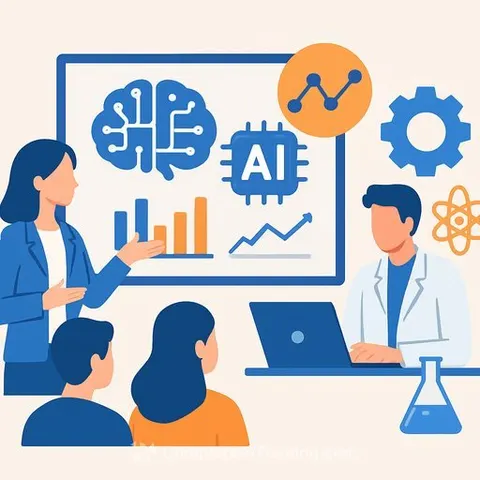
The gap between AI demos and daily facilities work
Most facilities leaders aren't building a grand AI strategy. They're trying to figure out whether AI can make a measurable difference in how work actually gets done. The teams seeing real results take a specific approach: integrating AI as an intelligence layer on top of existing processes rather than replacing systems or rebuilding workflows around new technology.
The pattern of failure is predictable. A demo gets attention. The technology excites people. Then it meets the day-to-day workflow-work orders, dispatching, vendor coordination-and it doesn't come together as expected. This happens when AI is introduced as something separate from how the work already gets done.
Used inside existing processes, AI helps technicians handle jobs faster, makes it easier for vendors to respond to calls, and gives facilities leaders clearer visibility into what's happening. That distinction changes everything.
The shift from manual to augmented
There's a persistent idea that the endgame for AI is complete autonomy, that the system eventually runs itself, decisions included. That's not where facilities management is headed. FM is inherently people-driven. Context matters. Judgment matters. The difference between a routine repair and a business-critical failure is something only a human can recognize.
AI is good at identifying structure and generating options. It doesn't understand the environment it's operating in. It's a powerful assistant, not a human operator. The shift isn't from human to machine. It's from manual to augmented.
When the balance is right, the role of the facilities leader expands. Less time digging through notes and chasing status updates. More time making decisions that require real expertise and hands-on experience. For managers exploring AI for Management, this distinction between assistance and autonomy is the foundation of effective deployment.
What AI working looks like in practice
One national retailer focused on a single problem: work orders getting submitted incorrectly. Store teams were selecting the wrong part types for lighting repairs, which meant providers would arrive unprepared, jobs would get canceled, and the cycle would start over-delays, frustration, and a steady stream of avoidable rework.
When AI was introduced into that workflow, it intervened at the point of strain: using historical data to suggest correct inputs at the moment the request was created. No big transformation. No system replacement. But cancellations dropped, dispatch became predictable, and the people involved spent less time fixing mistakes that shouldn't have happened in the first place.
This is the pattern that works across AI for Operations: targeting a specific workflow with high volume and consistent friction, then applying AI narrowly enough to influence that single process.
Data quality decides whether AI delivers
AI has a reputation for being magical. Feed it enough information and it conjures insights out of thin air. But AI isn't magic. It's pattern recognition. And patterns require a foundation. In facilities management, that usually means three things: location and asset data that reflects the real world, provider data that's complete and reliable, and work orders updated consistently as work progresses.
If the data isn't there, the patterns don't emerge. This is where a lot of AI initiatives stall-not because the technology is incapable, but because the foundation isn't built to support it. The AI can only find what the data can show it. Gaps in structure mean gaps in insight.
Where to start without overthinking it
The biggest mistake is teams trying to define a full AI strategy before testing a single use case. Long planning cycles. Very little actual progress. A better approach is smaller and more deliberate. Pick one workflow that has both volume and consistent friction-something where the same task happens repeatedly, errors or delays are common, and the impact of improvement will be easy to measure.
Baseline what's happening today. How long does it take? Where do things break? What's getting reworked? Then introduce AI in one specific way-just enough to influence that single process. Give it 90 days. Measure what changed. No AI roadmap. No sweeping commitments. One focused experiment. If it works, expand. If not, move on.
This "one workflow at a time" model tends to outperform big, centralized AI initiatives for a straightforward reason: the work itself isn't centralized. It happens across hundreds of locations, with different people, different conditions, and different failure points. That's where AI has leverage-inside the workflows where those decisions actually get made.
Why this matters for managers
Managers in facilities and operations should treat AI as a capability layered into existing workflows, not a system that replaces them. The practical takeaway is to identify one high-friction, high-volume process in your operation, baseline its current performance, and run a 90-day AI experiment at the point where the workflow typically breaks. Measure the result against your baseline. If it works, expand to the next workflow. If it doesn't, move on without sunk-cost hesitation. This approach requires no major system overhaul and produces evidence you can act on-which is more valuable than any strategic plan written before the first test.