
AI news ·
AI Writing Assistants and the Hidden Threat of Cultural Stereotyping and Language Homogenization
AI writing tools help users write faster but may homogenize language, reducing cultural uniqueness. Western biases in AI suggestions risk promoting cultural stereotyping.
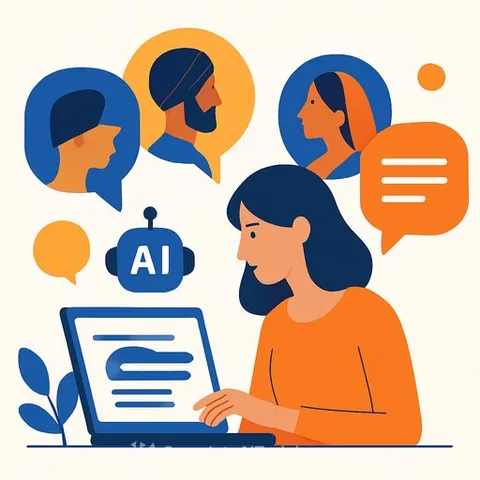
AI Writing Assistants and Their Impact on Cultural Identity
AI-powered writing tools are widely used to help people write faster, clearer, and with more confidence. But recent research reveals a hidden downside: these tools may be influencing cultural identity by making global writing styles more uniform.
How AI Writing Tools Make Global Voices Sound Alike
A study from Cornell University found that AI writing assistants tend to homogenize language. Users from the US and India who wrote with AI produced more similar text compared to those who wrote without assistance. Indian users, in particular, spent extra time editing AI suggestions to better match their cultural context. This editing reduced the AI’s productivity benefits for them.
Cultural Stereotyping Through AI Suggestions
The study highlights a new concern: AI writing tools can lead to cultural stereotyping. As people rely on AI, their writing styles begin to converge, losing unique cultural expressions. This is problematic because cultural diversity in communication is valuable and should be preserved.
Design of the Cornell Study
- The study involved 118 participants split evenly between the US and India.
- Participants wrote about cultural topics, with half using AI writing assistants and half writing independently.
- Indian users accepted about 25% of AI suggestions, while Americans accepted around 19%.
- Indians frequently modified suggestions to better reflect their cultural style, decreasing the AI’s usefulness.
Western Bias in AI Defaults
AI assistants often default to Western cultural references. For instance, when users wrote about favorite foods or holidays, AI suggested American options like pizza and Christmas. Indian users typing “S” received actor suggestions like Shaquille O’Neal or Scarlett Johansson instead of Bollywood stars such as Shah Rukh Khan.
This bias likely stems from the fact that many AI tools are developed by US-based companies and trained on datasets weighted toward Western norms. Despite being used by over 85% of the Global South population, these tools still reflect a Western perspective.
Concerns Over ‘AI Colonialism’
Researchers warn that this bias amounts to “AI colonialism,” where Western culture is presented as the default or superior. This can subtly influence how users from non-Western cultures write and even think. While AI writing assistants offer clear benefits, tech companies must address cultural diversity rather than focusing solely on language mechanics.
For writers interested in exploring AI tools and their impact, understanding these cultural implications is key. Learning how to use AI effectively while preserving authentic voice and cultural identity is a valuable skill.
Explore practical AI writing courses and resources at Complete AI Training to enhance your skills thoughtfully and responsibly.