
AI news ·
Americans trust financial advisers over AI even as 1 in 5 use it for advice, Gallup finds
1 in 5 Americans who sought financial advice in the past year used AI, per a new Gallup survey, yet only 29% trust it at all and 3% a great deal. Meanwhile, 73% relied on their own internet research versus one-third who consulted a professional adviser.
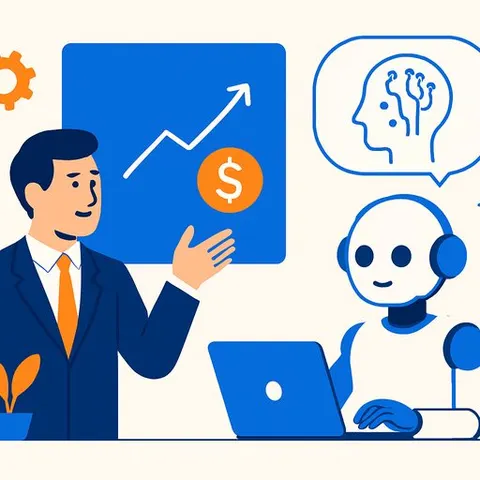
Roughly one in five Americans who sought financial advice in the past year turned to AI for help, according to a new Gallup survey conducted with Edward Jones. Yet only 29% of U.S. adults say they have even "some" confidence in AI's expertise for managing money, and just 3% trust it "a great deal."
The gap between usage and trust points to a practical reality for finance professionals: clients are experimenting with AI tools, but they still view human judgment as the gold standard. The survey, which polled U.S. adults 21 and older in the spring, found that about 8 in 10 respondents have at least "some" confidence in professional financial advisers. But only about one-third of those who sought advice actually consulted one. Far more - 73% - relied on their own internet research.
AI as a starting point, not the final word
Financial experts say the data doesn't mean AI is useless - it means it needs guardrails. Taha Choukhmane, an associate professor at MIT's Sloan School of Management, said AI works best as an educational tool rather than a decision-maker.
"I would encourage people to use AI to explain and define," Choukhmane said. "If you're interested in knowing what the stock market is, what the difference between a mutual fund and an index fund is. Using AI to explain these concepts can be very useful because it can empower people to get the most out of these methods."
He also recommends asking AI to cite trusted sources so users can verify the information. Because AI responds to specific prompts, the quality of the advice can vary dramatically depending on how a question is phrased. For finance professionals, that variability is a reason to treat AI outputs as raw material, not conclusions.
Generation gap in advice sources
Younger adults are far more likely to turn to AI than their older counterparts, often because cost is a barrier to hiring a professional. About a quarter of Gen Z and millennial adults who looked for financial advice in the last year used AI, compared with 16% of Gen Xers and just 7% of baby boomers.
The reverse is true for professional advisers. Only 14% of Gen Z adults and 21% of millennials who sought guidance used a financial professional, while 34% of Gen Xers and 55% of baby boomers did. Among all respondents, 35% went to a parent, sibling, or relative for financial guidance, 26% got information from news or social media, and about 2 in 10 consulted a friend, author, or influencer.
For finance teams serving younger clients, the survey suggests a growing expectation that digital tools can handle basic questions. For those serving older clients, the personal adviser relationship remains central. AI for Finance training can help professionals understand where automated tools fit - and where they fall short.
The fiduciary gap
One key difference between AI and human advisers: legal accountability. Certified financial planners have a fiduciary duty to give advice that serves the client's best interest. AI tools have no such obligation, and the user bears the consequences of any poor decisions made from AI suggestions.
"Fiduciary responsibility is very real," said Bobbi Rebell, a certified financial planner and founder of Financial Wellness Strategies. "There's no AI that is a fiduciary. It doesn't really know your life; it's not asking you all the questions."
That distinction matters for finance professionals who may be asked to clean up problems created by bad AI advice. It also matters for firms weighing whether to deploy AI tools internally. For leaders exploring these questions, an AI Learning Path for CFOs offers a structured way to evaluate where automation can add value without crossing the line into unaccountable decision-making.
Why this matters for finance professionals
Clients are already using AI for financial guidance, whether their advisers know it or not. The survey's trust gap suggests an opening: professionals who can explain what AI does well - defining terms, comparing products, summarizing research - and where it can't replace fiduciary judgment will be better positioned to serve clients who arrive with AI-generated answers in hand. The practical takeaway is to treat AI fluency as a client-service skill, not a threat to the profession.