
AI news ·
Americans unite across political divides in deep concern about AI, poll finds
A new NBC News poll finds AI worry now cuts across age, race, education, and party lines-a rare consensus in a polarized nation. Usage is rising yet comfort is declining, challenging the idea that hands-on experience builds public trust.
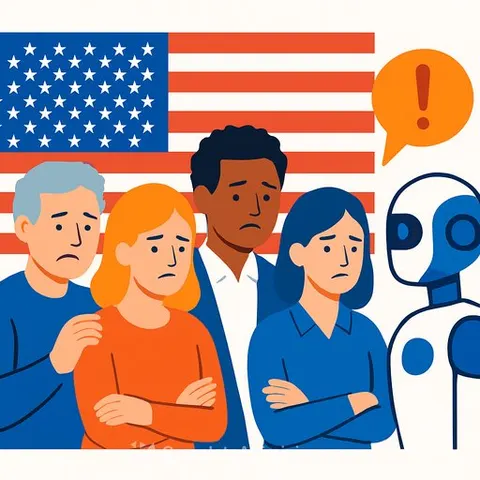
Americans are using artificial intelligence more than ever, but a deep and widespread unease about the technology now cuts across nearly every demographic and political divide in the country. A new NBC News Decision Desk Poll powered by SurveyMonkey, released September 6, 2026, found that worries about AI transcend age, race, education, and partisanship - the typical fault lines that define most national debates.
The poll reveals a rare moment of consensus in a polarized nation: more people are integrating AI tools into their daily routines, yet their comfort level is declining rather than rising with familiarity. This paradox suggests that increased exposure is not easing public skepticism but instead reinforcing concerns about where the technology is heading.
Usage is up, but trust is not following
The survey data paints a picture of reluctant adoption. A growing share of Americans report using AI-powered services for tasks ranging from writing assistance to search, but that usage spike corresponds with hardening negative sentiment. The findings challenge a common industry assumption that hands-on experience naturally builds public confidence.
Instead, the numbers indicate that the more people encounter AI in practice, the more they grapple with its implications for jobs, privacy, and misinformation. The technology's rapid spread into workplaces and schools has turned abstract anxieties into concrete daily realities.
A divide that isn't dividing
What makes this poll striking is the uniformity of the concern. On most issues - climate policy, economic outlook, foreign affairs - survey results fracture neatly along party lines or generational gaps. AI worry does not follow that pattern. Young and old, Democrats and Republicans, college graduates and those without degrees all register similar levels of apprehension.
This broad alignment suggests the anxiety is rooted in something more fundamental than political messaging or media bubbles. It reflects a shared sense that the guardrails around AI development are not keeping pace with the speed of deployment, a sentiment that has implications for educators who are increasingly expected to prepare students for an AI-saturated world while navigating their own misgivings about the tools.
Why this matters for educators
For teachers, administrators, and education professionals, the poll signals a challenging environment ahead. Classrooms are on the front lines of AI adoption, with students using generative tools for assignments and schools weighing policies on everything from plagiarism detection to curriculum design. The broad public distrust documented in the survey means educators will face scrutiny from parents, school boards, and students themselves - all bringing different flavors of the same underlying worry.
Building AI literacy in schools now requires more than teaching technical skills. It demands honest conversations about the risks that the public already senses. Resources like the AI Learning Path for Teachers offer structured ways for educators to develop their own understanding before guiding students. For those tracking the broader conversation, AI for Education coverage follows how these tensions are reshaping policy and practice in learning environments. The path forward is not about uncritical adoption or outright bans - it is about equipping both teachers and students to engage with AI thoughtfully, with eyes open to what the public already knows: this technology brings as many questions as answers.