
AI news ·
Anna Kazlauskas on Data Ownership and Building User-Controlled AI at Consensus 2025
Anna Kazlauskas’s Vana lets users own and control their data, enabling collective use to build better AI models. This approach shifts data power from big tech to individuals.
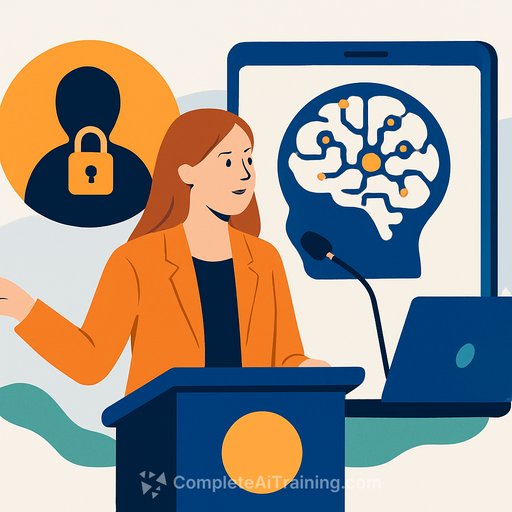
Data Ownership in the Age of AI: Insights from Anna Kazlauskas
Every day, you generate data—steps counted by your health app, bio-metrics tracked by your wearable, social media posts, even the jokes that didn’t get any likes. This data is valuable to AI companies because quality AI depends on quality data. Yet, despite the value, individuals rarely benefit from their own data. You don’t have much leverage as a single user, and companies like OpenAI aren’t buying your old tweets.
That’s where Vana comes in. Founded by Anna Kazlauskas, Vana is building an ecosystem where users own their data and can collectively leverage it to power AI models. The idea is to shift data ownership back to individuals, creating new opportunities for monetization and control.
Why User-Owned Data Matters
Most people assume the platforms they use own their data, but that’s not accurate. Kazlauskas compares data ownership to parking your car: the parking lot doesn’t own your car just because it’s parked there. Similarly, you retain ownership of your data, even if it’s hosted by big tech companies. Those platforms profit heavily from this data, but legally, it belongs to you.
Restoring true ownership of data benefits both users and developers. For users, it means control and potential income. For developers, it means access to diverse, rich data sets needed to build better AI models.
The Developer's Perspective
Developers face challenges accessing quality data because it’s locked within corporate “walled gardens.” This concentration limits innovation to those with access to big tech resources. Kazlauskas points out that many talented AI developers join major labs simply because that’s where the data and compute power are.
Creating a system where users pool and control their data would democratize access, enabling more developers to build and innovate in AI.
What Are Data DAOs?
Data DAOs function like a labor union but for data. When individuals pool their data, they gain collective bargaining power and can make decisions on how their data is used. A lone user’s data has limited value, but combined with millions of others, it becomes powerful enough to train AI models effectively.
Some promising Data DAOs are emerging in health, biometrics, and even automotive data. For example, one DAO facilitates full exports of patient medical records to advance research. Others focus on sleep and biometric data or car data, including Tesla datasets, which users can collectively leverage.
Introducing COLLECTIVE-1: The First User-Owned Foundation Model
Vana’s collaboration with Flower Labs aims to build COLLECTIVE-1, a foundation model owned by users. Traditionally, foundation models are trained centrally by companies with access to huge data and compute resources. Flower Labs specializes in federated, decentralized training, while Vana provides the user-owned data.
The goal is to create a model where users own the AI itself and decide how it can be used. This approach challenges the centralization of AI development and could lead to models that are not just decentralized but also better in performance.
Why Decentralized AI Can Outperform Centralized Models
Decentralized AI isn’t just a philosophical stance; it can deliver practical advantages. Each major company has its own slice of data, but no single company has access to the full picture. When data is pooled across platforms through users, the resulting datasets can be richer and more diverse, enabling the creation of superior AI models.
Data is the key differentiator. By enabling users to control and contribute their data collectively, decentralized AI can surpass centralized players in quality and reach.
Anna Kazlauskas predicts that user-owned data ecosystems will onboard over 100 million users within a few years, and possibly the entire global population in a decade. This vision pushes the AI conversation beyond big tech and toward a future where data ownership is democratized.
For those interested in expanding their AI knowledge and skills, exploring courses on data ownership, AI development, and decentralized technologies can be valuable. You can find relevant training resources at Complete AI Training.