
AI news ·
Anthropic and OpenAI prepare for public backlash against AI advances
Anthropic and OpenAI are drafting contingency plans for a potential backlash against advanced AI. Both labs are expanding policy teams and technical safeguards to preempt restrictive legislation.
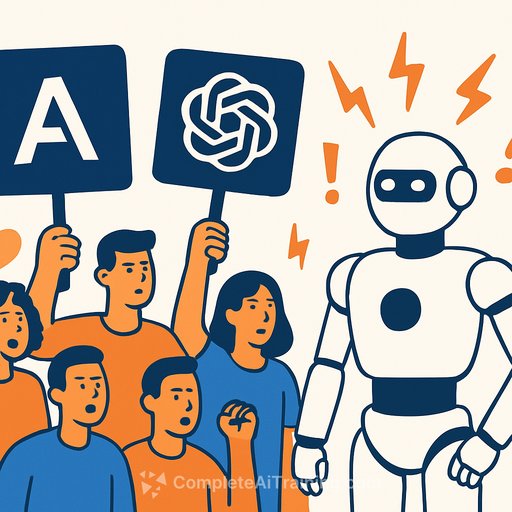
Anthropic and OpenAI are building contingency plans for a potential public and regulatory backlash against advanced AI, Axios reported. The preparation signals that two of the industry's most prominent labs see serious friction ahead, even as they race to deploy more capable systems.
Both organizations face mounting pressure from governments, advocacy groups, and a public increasingly uneasy about job displacement and safety risks. Rather than wait for restrictive legislation to land, the companies are drafting communication strategies, expanding policy engagement, and reinforcing internal ethics reviews.
What the contingency plans include
A central piece of the strategy involves publicly acknowledging the limitations and risks of their models while emphasizing benefits in healthcare, education, and climate science. The firms are also investing in technical safeguards - including improved alignment techniques and robustness testing - designed to catch unintended behaviors before deployment.
Axios noted that the companies view proactive engagement as a way to preserve public trust and avoid rules they consider overly broad. Several countries are already weighing legislation that would govern AI development, raising the stakes for firms that depend on rapid iteration.
Industry reaction and criticism
Some observers believe this coordinated approach could set a template for how technology companies handle governance debates. Others argue that voluntary measures won't satisfy critics demanding independent oversight and legally binding accountability mechanisms.
The tension reflects a broader question facing the AI sector: whether self-regulation can move fast enough to outpace calls for government intervention. Both Anthropic and OpenAI appear to be betting that early, visible action will give them more influence over whatever rules eventually take shape.
Why this matters for executives and strategy leaders
The moves by Anthropic and OpenAI signal that AI governance is shifting from a theoretical discussion to a near-term business risk. For executives, PR professionals, and legal teams, the message is clear: customers and regulators will increasingly expect transparency about how AI tools are built, tested, and deployed. Organizations that wait for mandates rather than building internal review processes now may face steeper compliance costs and reputational damage later. Professionals responsible for policy or communications can study frameworks emerging from the AI Regulatory Compliance Courses and AI Public Policy Courses to prepare for the requirements already taking shape across jurisdictions.