
AI news ·
Aon increases data centre insurance capacity to $5bn as AI demand strains power grids
AI-driven demand could nearly triple global data centre power consumption by 2030, forcing insurers to reassess risks from strained grids and climate hazards.
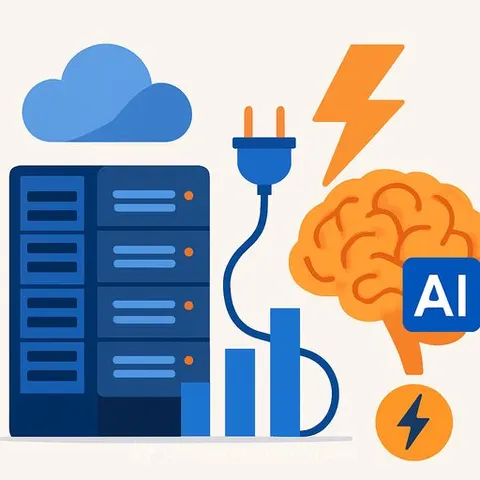
Insurers face mounting exposure as AI-driven demand could nearly triple global data centre power consumption by 2030, forcing carriers to reassess risks from strained electricity grids, climate hazards, and cyberthreats.
Developers are adding power generation, battery storage, microgrids, and hybrid energy systems to address grid constraints. These additions can create fire, equipment failure, and maintenance risks, according to Aon Plc.
Rising power density and equipment values
Higher computing demand is increasing power density, cooling needs, and equipment values at data centre sites, said Terence Williams, head of commercial risk for the Asia-Pacific region at Aon.
"AI-driven demand could increase global data centre power consumption by 165% by 2030," Williams said in an August statement. "Power availability and energy resilience have become leading concerns as data centre facilities hyperscale."
Aon increased capacity under its Data Centre Lifecycle Insurance Program from $3.5 billion to $5 billion. The program assesses risks from design and construction through power generation and operations.
Climate risk in Asia-Pacific
Natural hazards and climate conditions are affecting data centre locations and construction standards across the region, HDI Global SE said in an August report. Tokyo faces earthquake, storm, and flood risks. Typhoons can produce wind speeds of as fast as 200 kilometres per hour, while climate projections point to more severe heat and rainfall extremes, the insurer said.
Mumbai and Singapore could experience more than 200 days a year above 35°C from 2081 to 2100, based on climate projections cited by HDI Global. The insurer warned that standard commercial building requirements may not protect data centres facing future climate conditions. It recommended emergency roof overflows, raised floors, elevated critical equipment, and barriers to prevent water or fire damage from spreading.
As operators move into secondary cities for land and electricity, Aon and HDI Global expect insurers to assess climate exposure, water availability, power security, construction standards, and emergency arrangements before providing coverage. Professionals in the field can explore AI for Operations to better understand facility management risks.
Why this matters for insurance professionals
Underwriters now need to evaluate data centre proposals for battery storage and on-site power generation, which carry distinct fire and failure hazards. Standard commercial property forms may not adequately cover electrical damage from grid strain or climate-induced weather. Insurers who develop specialized protocols for these evolving inputs, such as backup power systems and cooling loads, will have a clearer edge in pricing risk and avoiding unexpected losses. To stay current on underwriting developments in this field, see AI for Insurance.