
AI news ·
School districts spend billions on classroom AI despite weak evidence it helps students learn
U.S. school districts are investing heavily in AI products, even as research shows the tools may undermine students' critical thinking. The education AI market is projected to grow from $730 million in 2026 to $18.5 billion by 2036, with few proven safeguards.
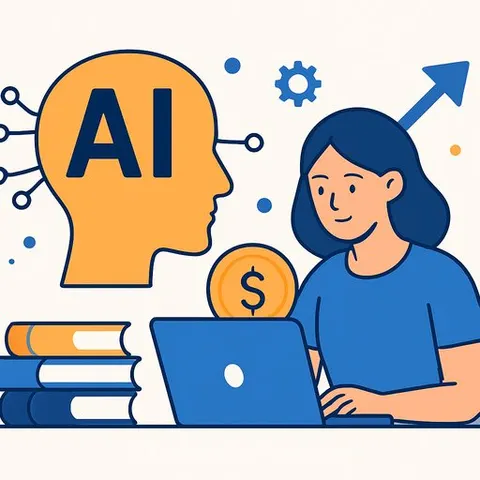
U.S. school districts are pouring hundreds of millions of dollars into AI products for classrooms, even as research suggests the tools can weaken students' critical thinking. The education AI sector, which barely existed before ChatGPT launched in 2022, grew to $730 million in 2026 and is projected to reach $18.5 billion by 2036, according to a report by Future Market Insights prepared for The Monitor.
The market is being driven by a surge of startups - including MagicSchool, SchoolAI, and Buddy - that aim to profit from a dilemma facing educators: students and teachers are already using AI, but not always in ways that support learning.
"My students can put a homework question into Google and the AI summary will give them the answer," said Merek Chang, who teaches chemistry and biology at Los Altos High School in the San Gabriel Valley, outside Los Angeles.
Tech companies argue their specialized products can help teachers write lesson plans, grade papers, and provide "personalized learning" that boosts student performance. But experts say there is little rigorous evidence to back those claims, and some studies point to harm.
"There has been an absolute gold rush," said Kris Hagel, chief information officer at the Peninsula School District, outside Tacoma, Washington.
Free tools, unpaid risks
Frontier AI firms are courting schools with free access. Anthropic and OpenAI have announced they will offer their Claude and ChatGPT products to educators at no cost - but only temporarily. Anthropic's commitment expires June 2027; OpenAI's expires June 2028.
"They want to capture the market. We've seen this many times before," said Chris Agnew, director of the Generative AI for Education Hub at Stanford University.
OpenAI's vice president of education, Leah Belsky, declined to speculate on whether ChatGPT would remain free for educators, but said helping teachers is part of the company's mission. Anthropic did not respond to multiple requests for comment.
An estimated 85% of teachers and 86% of students already use generative AI in their schoolwork, according to the Center for Democracy and Technology.
The Trump administration has pushed districts to adopt AI. In July 2025, the Department of Education issued guidance encouraging educators to "harness the potential of AI" by using "high-quality" AI instructional materials and deploying "AI-enhanced high-impact tutoring." But the department has not set standards to help local officials vet these tools.
Without federal standards, more than 30 states have adopted their own guidelines. Wyoming and North Carolina have provided districts with frameworks to balance the technology's promise with its risks.
Wyoming's guidance includes a video titled "Threat Assessment" that warns AI is "already here" inside "the ed tech tools you're probably already paying for." It cautions that "all the responsibility for checking every single tool for safety, for privacy, for whether it even works, that now falls squarely on you." The state also provides districts with vetting tools, including a chatbot developed by Project Unicorn that evaluates other AI applications.
The lack of clarity has opened the door for corruption, some worry. On June 21, Los Angeles Unified School District Superintendent Alberto Carvalho resigned after his home was raided by the FBI amid an investigation into a district contract for an AI chatbot. Two weeks later, New York Schools Chancellor Kamar Samuels asked principals to pause purchases of AI software after city council members demanded a moratorium until "rigorous guardrails can be developed with public and expert input."
Industry's sunny vision
Silicon Valley founders offer a more optimistic view. Alex Southmayd, a former McKinsey & Company consultant, is building Bloomy, an AI learning bot, at Y Combinator. He argues that personalized AI instruction beats traditional lectures.
"Why have a teacher lecture 30 students at once when each student can receive a customized lesson that's perfect for them?" Southmayd asks. His app gamifies learning through "Bloomy Bucks" that students earn for correct answers and redeem with a teacher.
Southmayd acknowledges parents worry about screen time, but says his app is different from social media.
"Social media, as well as many ed tech platforms ... erodes focus and mental resilience," he said. "We structure the experience so that students ... find satisfaction in effort, patience, and mastery rather than passive consumption."
Bloomy's performance has not been subjected to randomized, controlled trials comparing it to regular instruction. According to Stanford's Agnew, the effectiveness of "personalized learning" chatbots has yet to be independently established.
"I have not seen anything that shows we can replace the human teacher, nor should we," he said.
Agnew's center has documented what he calls a performance cliff: students using unrestricted AI show immediate improvement while using the tools, but their performance drops once the AI is removed. This aligns with a University of Pennsylvania Wharton School study from February that found AI use was "reshaping human reasoning" and leading to "cognitive surrender" among adults.
Robbie Torney, head of Digital and AI Assessments for Common Sense Media, says districts should remember what's known to work in education: "A sense of belonging, connection to a teacher, and connection to community, which motivate students to learn."
Google has integrated its Gemini and NotebookLM AI tools into Google Classroom, which most districts already use. But Common Sense Media rated Gemini for schools "high risk," finding it treats a sixth grader the same as a high school senior, "providing identical responses despite vast developmental differences," and can surface inappropriate content. The group also found students can switch between the school version and the consumer version, which will simply give them the answer.
Google declined to comment on the findings. In a statement, spokesperson Maggie Shiels said: "We know AI raises important questions. That's why we build with educators and experts to ensure our AI is helpful, safe by design, and grounded in pedagogy and how people actually learn."
Uncertainty in the classroom
Research has been more positive on AI as a teacher resource, such as drafting lesson plans or analyzing student needs. Agnew's center found "AI can reduce teacher time spent on routine tasks" with no evidence of quality loss. At the Peninsula School District, Hagel has built AI assistants that help teachers take attendance, write summaries of playground fights, and hone financial analyses.
But even these lower-risk tasks carry concerns. Torney notes AI "can be biased" - studies have found it gives women different salary negotiation advice than men and produces different evaluations of the same resume when only the name changes. Common Sense Media found similar discrepancies when AI grades the same paper repeatedly.
Mr. Chang, the Los Angeles chemistry teacher, said his district has offered no mandatory AI training. He focuses on building "AI literacy" so students understand how the technology works. In a recent class, he asked students to investigate the molecular structure of a substance of their choice. One student picked pomade - asking a bot what allows it to keep hair up - and then worked through questions about double and single bonds.
"Typically the way they use AI, it's like a Google search, you type in your question and you get some kind of output," Chang said. "This way you have to define what your input is and get information from a verified source. So we have to understand what a trustworthy source is and get in that mindset."
Why this matters for educators
Teachers and administrators are on the front lines of an AI experiment with no federal guardrails. The immediate takeaway: do not assume the tools marketed to your district have been proven effective, and do not assume they are safe for all students. Independent vetting, like the frameworks Wyoming provides, is not optional - it's the only protection available. For classroom teachers, the practical move is to build AI literacy deliberately, as Chang does, so students learn to question outputs rather than accept them. The market will keep growing regardless; the question is whether schools will adopt AI with evidence or by default.