
AI news ·
Long-term care is left out of most AI conversations, and that weakens the technology's potential for older adults, an essay argues
Long-term care has been largely excluded from AI development in healthcare, weakening the technology's potential for older adults. The omission persists despite long-term care clinicians possessing a unique perspective on gradual changes in cognition and function that hospital settings cannot...
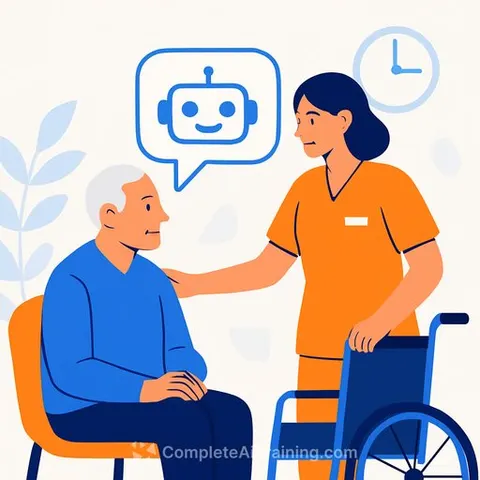
Long-term care has been mostly absent from conversations about artificial intelligence in healthcare, and the omission weakens the technology's potential for older adults, according to an essay published Aug. 5, 2026. The piece argues that nurses and other clinicians who care for residents over months and years have a perspective that hospitals and technology companies cannot replicate.
Most AI activity in healthcare centers on hospitals and academic medical centers. Technology companies keep introducing tools for documentation, predictive analytics, and clinical decision support, while long-term care rarely enters the conversation. The essay calls that absence surprising, noting that few settings have more to contribute to thoughtful AI development than the clinicians who care for older adults every day.
The argument rests on continuity. Clinicians in long-term care observe residents for years, tracking gradual changes in cognition, mobility, behavior, medication response, and functional status while building relationships with families and care teams. That record of change is unlike anything produced in a short hospital stay.
No other healthcare setting follows individuals through aging, chronic illness, dementia, rehabilitation, and end-of-life care in quite the same way, the essay argues. "If AI is going to improve care for older adults, it should be informed by the setting that understands those experiences most completely."
Care questions before technology questions
The essay asks whether subtle changes in condition can be detected earlier and whether unnecessary hospitalizations can be reduced. It asks whether documentation can become more efficient without compromising clinical judgment, and whether technology can cut administrative burden so clinicians spend more time with residents and families.
Those questions cannot be answered by software developers alone, the essay says. They require input from professionals who understand the realities of caring for older adults. Similar priorities run through AI for Healthcare more broadly, but they take specific shape in long-term care.
A seat at the table for long-term care
The essay stops short of arguing that every nursing home should become an AI research center or adopt every new tool. Instead, it argues that long-term care deserves a stronger voice in healthcare innovation. Technologies are too often designed and evaluated in settings that look nothing like a nursing home, and when long-term care is left out, opportunities to address the realities of aging services are missed.
"Innovation should not happen around long-term care. It should happen with long-term care."
Why this matters for healthcare professionals
For healthcare professionals, the essay makes a specific case: the usefulness of AI in caring for older adults will be determined by who contributes to its design. Long-term care clinicians can use the essay's questions - earlier detection, fewer hospitalizations, lighter documentation - to evaluate tools brought by vendors or built in-house. The essay's central claim is that the professionals closest to the work are the right people to judge whether a tool fits the realities of aging services.