
AI news ·
AtkinsRéalis pilots voice-based fatigue assessment and AI safety tools on Middle East construction projects
AtkinsRéalis is testing AI tools in the Middle East to predict safety risks, including a voice-analysis pilot that measures worker fatigue before shifts begin. A study cited in the initiative found occupational noise-induced hearing loss in 20.4% of 3,474 industrial workers.
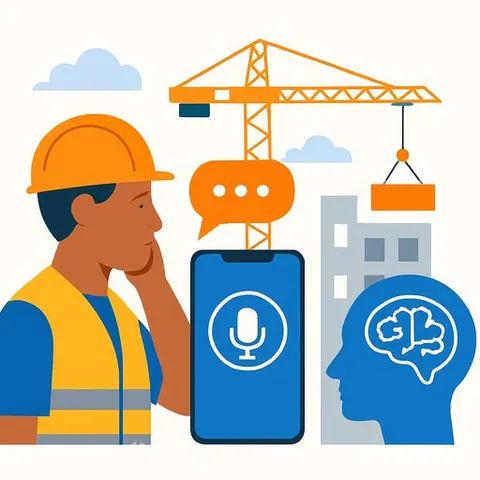
AtkinsRéalis is piloting AI-driven tools across Middle East construction projects to identify safety risks before they cause harm. The initiatives target three areas that have resisted traditional safety programs: workforce fatigue, communication in high-noise environments, and the speed at which safety information reaches multilingual teams.
Voice analysis before the shift begins
Fatigue and impairment have long been difficult to measure objectively. Supervisors typically rely on self-reporting or visual checks, methods that often catch problems only after performance has already degraded. AtkinsRéalis is now testing a pre-shift voice assessment with Vocadian in the UAE. Workers complete a short voice task, and the system combines speech science, circadian science, and AI to generate readiness insights before work starts.
The pilot is designed as an additional leading indicator, not a replacement for existing HSE controls. It gives supervisors information about a risk category that, as the company describes it, "has traditionally been difficult to measure."
Solving the hearing-protection trade-off
On industrial sites, workers face a persistent conflict: the equipment that shields them from harmful noise also blocks the verbal warnings and instructions that keep them safe. A recent study of 3,474 industrial workers found occupational noise-induced hearing loss in 20.4% of cases, underscoring the need for solutions that protect hearing without sacrificing communication.
Through a collaboration with Prototypes for Humanity, AtkinsRéalis is evaluating SpeechSense, a concept developed at Universiti Teknologi PETRONAS. The technology uses acoustic engineering to filter out damaging industrial noise while allowing speech frequencies to pass through clearly. Early tests in operational environments showed improved communication compared with conventional hearing protection. A future pilot will assess its suitability for wider deployment and collect end-user feedback.
Turning procedure documents into video briefings
Identifying risk early has limited value if the people who need to act cannot access the information quickly. Construction teams across the Middle East span multiple locations, languages, and technical backgrounds. Lengthy procedure documents often contain the right details but fail as communication tools. AtkinsRéalis has adopted Synthesia, an AI for Real Estate & Construction video platform, to convert safety procedures, alerts, and guidance into short video briefings.
The approach proved its worth during a period of heightened geopolitical uncertainty in the region. Teams needed timely access to safety updates, contingency guidance, and operational information as circumstances shifted rapidly. Concise video briefings delivered consistent messages across multiple locations without adding complexity to an already strained communication chain. For safety engineers looking to build similar capabilities, an AI Learning Path for Safety Engineers provides structured training on applying these technologies in operational settings.
Why this matters for construction and real estate professionals
The common thread across these pilots is not technology adoption for its own sake. Each addresses a risk that has resisted conventional safety management: fatigue that remains invisible until it causes an incident, hearing protection that isolates workers from their teams, and safety guidance that sits unread in document folders. Project leaders who treat these as information problems rather than compliance problems will be better positioned to reduce serious incidents on large, fast-moving sites. The tools are still being evaluated, but the direction is clear - safety programs that wait for incident data are reacting to the last job. The next generation uses operational data to get ahead of the next one.