
AI news ·
Australian tribunal bans AI use in workplace bullying case correspondence
Australia's Fair Work Commission banned an employee and their workplace from using AI in correspondence after ruling the caretaker was bullied. The order, issued during a bullying complaint, is one of the first tribunal restrictions on AI in internal communications.
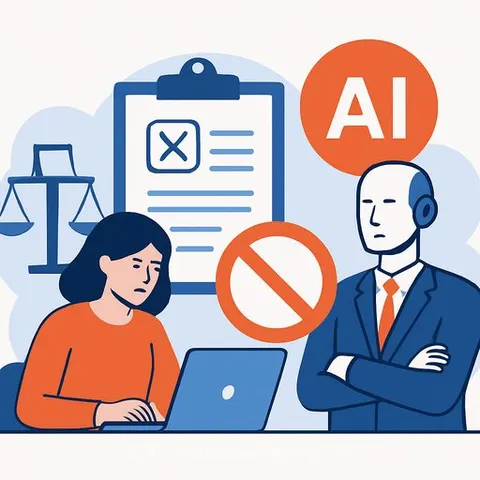
Australia's Fair Work Commission has ordered an employee and their workplace to stop using artificial intelligence tools in any correspondence with each other. The ruling, issued at the end of July while considering a bullying complaint, marks one of the first times a workplace tribunal has directly restricted AI use in internal communications.
The case involved a caretaker for a body corporate organization in Queensland who told the Commission that his workplace repeatedly refused to clearly explain his duties, provided confusing and changing instructions, and committed other violations. Commissioner Sarah McKinnon ruled that the employee had been subjected to bullying.
McKinnon also reviewed emails from both parties during the proceedings. In her assessment, the caretaker's correspondence was unhelpful and appeared to have been prepared using an AI tool. She described the messages as long, broad in scope, filled with generalizations and repetitions, and often worded in an accusatory tone.
The commissioner noted that the workplace's eventual decision to stop engaging in communication meant many of the issues raised by the employee were not substantively considered. In her view, this harmed all parties.
What the order requires
To prevent further bullying, the Commission ordered both parties to correspond accurately and respectfully and not to use AI tools to prepare correspondence between them. The parties must also seek to express their thoughts concisely and to the point. The decision took effect immediately.
Daniel Angus, a professor of digital communication at Queensland University of Technology, said AI may appeal to users because of its ability to make text more persuasive or more insistent. He warned that delegating correspondence to AI agents could lead to a situation in which the agents effectively communicate with each other, while employees do not fully understand the content of that communication.
Griffith University researcher Mai Nguyen advised AI users to check whether the text of an email is clear, accurate, and reflects what the sender intended to communicate. She stressed that an email is sent in the name of a specific sender.
Why this matters for PR and communications professionals
This ruling is a direct signal that AI-generated correspondence can carry professional and legal consequences, especially when tone or clarity becomes a point of dispute. For communicators, the takeaway is practical: review AI-assisted drafts for accuracy, conciseness, and tone before sending, and keep a clear record of what you actually intended to say. The case also raises a broader question for teams adopting AI tools - who is accountable when an AI-generated message escalates a conflict? For those building communication workflows, this is a reminder that AI can shape perception as much as content. Training in AI for PR & Communications can help professionals understand where automation helps and where human judgment must take over. Similarly, AI Productivity Courses offer guidance on using these tools without losing control of the message.