
AI news ·
Automation of entry-level marketing work threatens the industry's future judgment
The share of marketing job postings mentioning AI nearly doubled in a year, from 8% to 15%. As AI automates entry-level execution work, the apprenticeship path that builds senior marketers' judgment is disappearing.
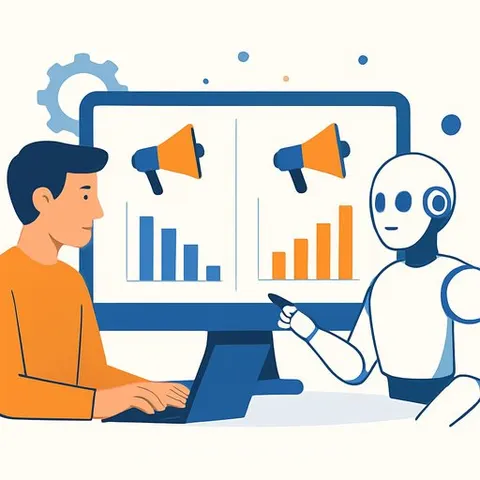
The American Marketing Association's 2026 State of Marketing Careers Report contains one line every business leader should read twice: "Companies are not hiring less judgment. They are hiring less execution."
That sounds like progress, and in the short term, it is. AI now handles a growing share of the routine work that used to take up a marketer's week - pulling the weekly report, gathering the data, monitoring campaigns, drafting the first version of everything. The report found that the share of marketing job postings mentioning AI nearly doubled in a single year, from 8 percent last January to 15 percent by December.
Employers increasingly want people who can direct the technology, not people who do the tasks it now automates. But the real problem sits one level further down, in the very work AI is now taking off everyone's plate. It's the kind of thing you only notice once it has already cost you.
The layer being automated away
Think about how a marketer actually becomes good at marketing. They spend a few years on the unglamorous work: building the reports, writing the drafts nobody sees, chasing the campaign details, running the research. That work is tedious, but it's also where good marketing judgment gets built.
You learn what a good number looks like by producing a thousand ordinary ones. You learn to spot a weak headline by writing plenty of them. Those early years are effectively an apprenticeship, and the tasks themselves are the curriculum.
As AI absorbs that bottom rung, the entry points into the profession are narrowing. The question isn't whether AI can do the work - it can. The question is where the next generation of senior marketers will learn the judgment that AI can't yet replicate.
What employers are actually asking for
The shift in job postings tells a clear story. Employers still need marketers, but they're describing the role differently. They want people who can direct AI tools, interpret outputs, and make decisions at a higher level than before. For those already in the profession, that's an opportunity to move up faster.
For anyone trying to break in, it's a barrier. The traditional path into marketing ran through the execution work that no longer needs a human. That has real consequences for the talent pipeline, and for the quality of judgment at the top of the field years from now.
Marketers who want to stay relevant need to build the skills that AI doesn't provide: strategic thinking, pattern recognition, and the ability to make calls with incomplete information. Training programs focused on AI for Marketing can help professionals understand what the tools can and can't do. For managers, learning to lead AI-driven marketing teams is becoming a core competency rather than a differentiator.
Why this matters for marketing professionals
If you're early in your marketing career, the old apprenticeship model is disappearing. You can't count on grinding through entry-level tasks to build judgment over time. You need to be intentional about seeking out the strategic work, asking for exposure to decision-making, and studying why certain campaigns work while others fail.
If you're a manager, the report carries a warning. The people you hire today won't have the same training ground you had. That means you need to build judgment-building into your team's workflow deliberately - through reviews, post-mortems, and direct involvement in strategy - or you'll find yourself with a team that can execute but can't decide.