
AI news ·
Bastion Insights launches Bastion Vantage to combine AI analysis with human interpretation
Bastion Insights launched Vantage on July 30, pairing AI with human interpretation. The tool targets data overload and AI's 62% sarcasm detection rate.
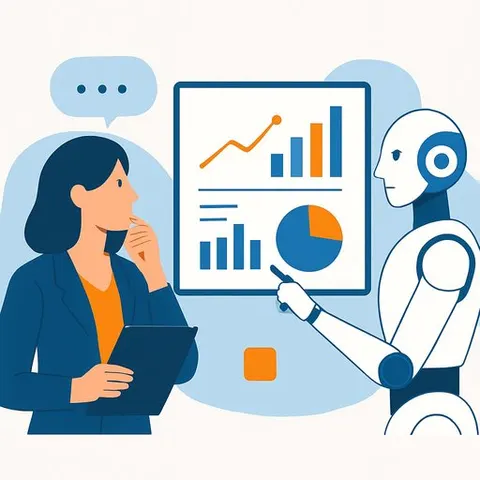
Bastion Insights has launched Bastion Vantage, a digital intelligence tool that pairs AI analysis of online conversations with human interpretation. The release, announced 30 July 2026, directly targets a problem that managing director Joanne Norton describes as endemic among marketers: too much data and too little meaning.
"We're focused on turning data into actionable outcomes and ensuring that instead of having a plethora of data at your fingertips, you have insights that unlock action for the business," Norton said. "Marketers are starving for meaning."
What Bastion Vantage does
Bastion Vantage is sold as a standalone product, not tied to the agency's broader services. Norton sees it delivering the most value alongside existing qualitative and quantitative research, not as a replacement. On its own, the tool suits narrow, urgent questions. The deeper payoff arrives when the AI's output is combined with direct consumer conversations.
"The benefit is when we not only understand that social discourse, but are then able to speak directly with consumers to understand other questions and then dig deeper to pull both elements together," Norton said.
The tool draws from publicly available sources-social media, search, news, and blogs-and steers clear of gated or private data. It is pitched for brand strategy, campaign development, and reputation management, operating from category-wide behaviour down to individual product analysis.
Where social listening falls short
Norton was direct about the distinction between Bastion Vantage and conventional social listening tools. "Social listening tells you what people are talking about. Bastion Vantage actually tells you what those conversations mean," she said.
AI-driven listening tools have long been criticised for missing nuance. A 2025 Findings of ACL paper introduced BESSTIE, a benchmark for sentiment and sarcasm classification across Australian, Indian, and British English. Large language models detected sarcasm in Australian English only 62% of the time. Norton did not claim the technology has closed that gap. Instead, she argued that the human read remains essential.
"The human interpretation is still absolutely paramount. We need to understand it from a human perspective in order to pick up nuances, differences and the things that are more leading edge versus mainstream," she said.
Combining structured and unstructured data
Norton pointed to a structural shift in how insights are built. Structured research-surveys and interviews-captures what people say when asked. Unstructured behavioural data includes everything people post, react to, and discuss unprompted. The two haven't been properly combined, she argued, and Vantage is designed to bring them together in one synthesised location.
For market research analysts, this means having a single environment where AI surfaces patterns and human researchers interpret them, an approach that moves beyond the limits of AI for Market Research Analysts who rely on a single data stream. The tool's output is not a final answer but a starting point for human-led questioning.
Why this matters for marketers
Bastion Vantage enters a crowded field of AI insights platforms. Norton's bet is that the next competitive advantage won't come from better AI models, but from what the AI is asked to sit alongside. The tool's design reflects a growing pressure on agencies to diversify their revenue models. Howatson+Company's Plus Also Studios recently launched a standalone SaaS product for campaign rollout, and Bastion's move signals a similar push toward productised insights.
For marketing teams, the practical takeaway is not about adopting a new platform immediately. It's about re-evaluating how research data is combined. AI can surface patterns from unstructured chatter, but the difference between noise and insight still depends on a human interpreter. AI for Marketing is moving toward frameworks that pair machine speed with human judgment, and Bastion's approach is a direct example of that shift.