
AI news ·
Big Tech shapes classrooms through corporate training and curriculum
Microsoft and Google are embedding AI chatbots into U.S. classrooms through teacher workshops that double as product marketing, reaching some 200 educators at a single New York session. The training shapes curricula and student data flows, with no independent vetting required.
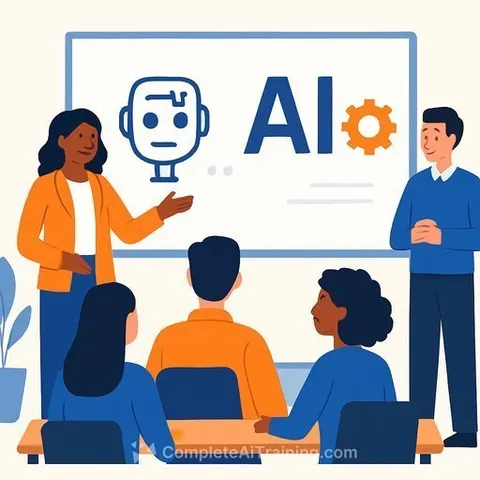
On a humid afternoon in the summer of 2025, representatives from Microsoft stood waiting as some 200 teachers filed into a conference hall in downtown Manhattan. The educators had come for a workshop on the school technology of the moment: artificial intelligence chatbots. The Microsoft team presented their Copilot chatbot and asked teachers to practice using it for tasks like generating emails to parents and customizing lesson plans.
Microsoft instructors also screened an A.I. explainer video that their Minecraft Education division had produced for children. The animated clip, based on the company's blockbuster world-building game, featured a cheerful narrator and a cute Minecraft duck. Even if some schoolchildren weren't old enough to use A.I., one of the Microsoft workshop leaders told the teachers, at least they could start learning about it.
This scene is part of a broader pattern. Companies like Google and Microsoft have used their money, their might, and their massive reach to influence nearly every step of the education supply chain - from teacher training to classroom software to student curricula.
Workshops that double as marketing
As a journalist covering technology in schools, I had observed similar workshops for teachers and students funded or led by corporate giants like Amazon, Apple, Meta, OpenAI, and Alphabet, the parent company of Google. Taking in this one, at the headquarters of the United Federation of Teachers, I was struck by how similar the sessions were to training I'd seen years earlier while reporting on the health care industry: seminars for doctors, organized by pharmaceutical companies, that aimed to get physicians to prescribe the latest brand-name drugs.
"Industry funds what helps industry," Dr. Adriane Fugh-Berman, a pharmacology professor at Georgetown University Medical Center who studies drug industry influence on medicine, told me recently.
These workshops have upsides. Big Pharma seminars can keep physicians up-to-date on the latest patient remedies, and Big Tech workshops can similarly help educators stay current on the newest software tools. But Silicon Valley's efforts to capture the attention of education professionals and provide student training materials can also double as marketing or indoctrination. They enable some of the most powerful corporations on the planet to spin rosy technology stories for administrators, teachers, and students, giving them a sanitized view of industry practices and product risks.
Many parents would likely object if Exxon Mobil wrote their children's environmental science curriculum, or if Purdue Pharma trained their children's biology teachers. Yet over the last decade, schools have often embraced the technology industry in similar ways with few questions asked.
For educators seeking independent guidance on these tools, resources like AI for Education and AI for Teachers offer training that is not tied to vendor interests.
The pattern behind the pitches
The Microsoft workshop was not an isolated event. It reflects a systematic approach by tech companies to embed themselves in the daily operations of American public schools. By funding teacher training, supplying classroom hardware, and writing curriculum materials, these corporations gain early access to students and the trust of the adults who teach them.
That access comes with a cost that is rarely discussed openly. When a company provides the training, it also controls the narrative - what problems matter, which tools solve them, and what risks deserve attention. Teachers who attend these sessions learn to use specific products, not to evaluate whether those products are the right fit for their students.
The stakes extend beyond individual classrooms. As A.I. tools become more common in schools, the decisions made by administrators and teachers today will shape how a generation of students understands technology - and how much of their personal data flows into corporate systems.
Why this matters for educators
Teachers and school administrators are making choices about A.I. tools right now, often with limited time and limited independent information. The workshops offered by tech companies can be genuinely useful - but they are not neutral. They are sales presentations dressed as professional development.
Before adopting a new tool, ask who funded the training, what the company gains from your classroom, and whether independent evaluations exist. The goal is not to reject corporate involvement outright, but to approach it with the same healthy skepticism you would apply to any vendor who wants access to your students.