
AI news ·
Bill Gates' AI warning pushes CX leaders to define human accountability as agents scale
Bill Gates warns AI will either be the greatest equalizer or the worst source of injustice, and customer support sits directly in that divide. A single AI agent can handle thousands of interactions at once, but poorly governed deployments can mask service failures behind automation metrics.
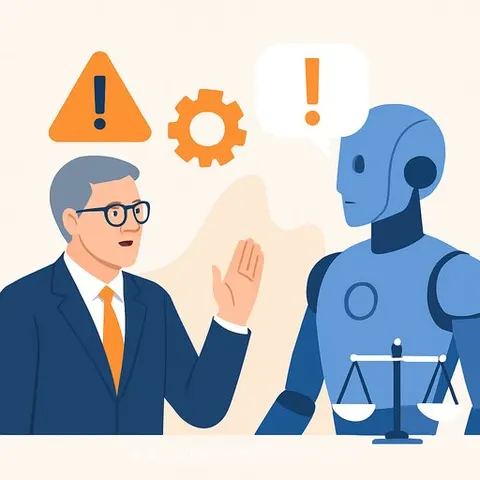
Bill Gates' AI warning puts CX leaders on the spot
Bill Gates has issued a warning about artificial intelligence that lands squarely on the desks of customer experience leaders: AI will either expand access to essential services or deepen social and economic inequality. Customer support sits directly inside that tension, and the decisions CX teams make now will determine which outcome they get.
In a recent Gates Notes essay, Gates argued that AI differs from earlier workplace technologies because people can adopt it through natural language. Workers don't need to learn code or master a new technical interface before using it. That lowers the barrier to adoption and raises the risk of uncontrolled deployment. In customer service, a single AI agent can interact with thousands of customers while a human agent typically handles one interaction at a time.
Gates put the stakes bluntly: "AI will either be the greatest equalizer ever invented, or the worst source of injustice."
Customer experience teams are already testing that divide. AI can summarize calls, retrieve knowledge, route customers, draft responses, support agents, and resolve routine issues without human intervention. Poorly governed AI can also produce inaccurate answers, mishandle vulnerable customers, hide service failures behind deflection metrics, and shift accountability away from the people responsible for the journey.
AI in CX is a governance decision, not just a technology decision
CX leaders face a scale problem as much as a staffing problem. A faulty script, hallucinated answer, or poorly designed escalation rule can move through the customer base before operations teams spot the pattern. The most dangerous CX deployment is the fast one that masks weak data, unclear ownership, and unresolved customer pain behind automation rates.
Kathy Ross, VP Analyst at Gartner, warned against placing AI agents into human management structures: "If we treat this technology like human talent in a service and support organization, it's gonna be a mistake. It could lead to unnecessary organizational disruptions as we think about placing AI oversight potentially in the wrong hands."
AI agents may take on service tasks, but they remain technology systems that require testing, monitoring, ownership, and clear failure paths. The danger for CX leaders is that service organizations redesign work around AI before they redesign accountability around AI.
Customer support shows the workforce trade-off first
Gates said many jobs may disappear forever, with customer support, sales, software engineering, and paralegal work among the immediate areas of exposure. In CX, that creates a difficult workforce question because customer service has long combined cost pressure with human empathy.
AI vendors often position automation as a way to remove repetitive work from agents. Gates' argument doesn't rule that out. He points to healthcare and education as areas where AI could expand access when human expertise is scarce or unevenly distributed. Customer service has a similar access problem. Long wait times, fragmented knowledge, and inconsistent routing can make customers work too hard for basic answers. AI can reduce that burden when it handles simple requests accurately and moves complex issues to the right person quickly.
Yet Gates' warning about economic upheaval forces CX leaders to look past the efficiency case. If AI removes lower-level work from the service organization, fewer people may get the entry path that once helped them build product knowledge, customer judgment, and operational experience. A contact center that automates too much junior work without rethinking training may struggle to develop the experienced human specialists it still needs for complaints, escalations, retention, and high-emotion customer moments. Teams exploring AI for Call Center Supervisors will need to address this talent pipeline question directly.
Deployment reality will slow the simplest AI story
Gates presents AI momentum as difficult to stop because the economic and geopolitical incentives are too strong. In CX, buying pressure already reflects that momentum, with enterprises under pressure to cut costs, improve resolution, and show visible AI progress.
Implementation remains less simple than the demo environment suggests. Contact centers depend on legacy systems, fragmented knowledge bases, compliance rules, workforce planning, and customer data that often sits across multiple platforms. Irwin Lazar, President and Principal Analyst at Metrigy, told CX Today that enterprise AI adoption may prove more difficult than many forecasts suggest: "We're going to realize AI adoption was slower and harder than we expected."
Knowledge quality, integration depth, analytics visibility, and escalation design will determine whether AI improves the journey or simply makes poor service faster. Teams building skills in AI for Customer Support need to treat these operational foundations as prerequisites, not afterthoughts.
Why this matters for customer support professionals
Gates' warning leaves CX teams with a practical test: use AI to expand customer access and agent capability, or allow it to become another layer between people and the help they need. For support professionals, that means defining which interactions require human judgment - a refund request may suit automation, but a bereavement-related account issue, fraud complaint, medical billing dispute, or repeated service failure may require a human who can understand context and make exceptions. Organizations that treat automation as part of service design rather than a shortcut around it will benefit most.