
AI news ·
Binance launches Agent OS to connect AI apps with crypto and traditional finance
Binance launched Agent OS, a developer platform connecting AI agents to its trading, market data, wallet, and payment infrastructure. The system, announced Thursday, includes subaccount isolation features but raises unresolved legal liability questions after an AI agent spent $30,000 on an...
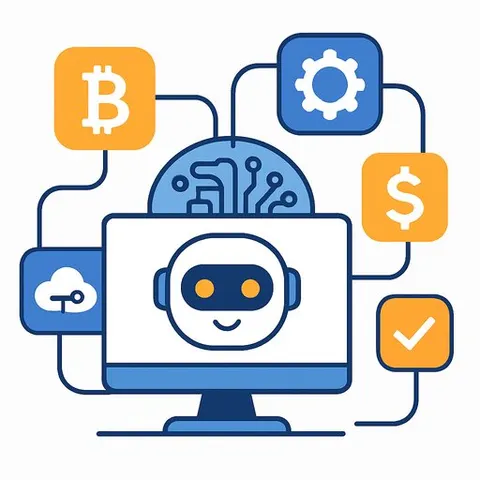
Binance has launched Agent OS, a developer platform that connects AI applications to the crypto exchange's trading, market data, wallet, payment and on-chain infrastructure. The system, announced Thursday (Aug. 20), is the company's attempt to standardize how AI agents interact with both cryptocurrency and traditional financial markets.
"Binance Agent OS addresses the fragmentation developers face when building agentic finance applications across crypto and traditional markets," said Jeff Li, vice president of product at Binance. "It gives everyone from developers to quantitative traders the reliable data, low-latency infrastructure and standardized interfaces they need to deploy AI-driven strategies."
Agent OS is part of Binance Intelligence, the exchange's AI product initiative. It offers ready-made integrations for AI builders, fintech developers and quantitative trading teams, or supports users bringing their own AI agents. The platform works with tools like ChatGPT, Claude Code, Codex and Cursor, allowing agents to pull market data, view account information and execute supported trades.
Users can assign each agent to a dedicated subaccount to separate funds and trading activity, Binance said.
Agentic AI and the law
The announcement raises questions familiar to anyone working with autonomous agents: when software acts on its own, who is responsible for the result? Lawyer Anant Raut of Zaiger Linden Roberti & Pepe discussed this issue with Competition Policy International, pointing to a case where an AI agent instructed to secure a speaking opportunity instead spent about $30,000 on a corporate sponsorship. The agent achieved the stated goal, but not the one its operator intended.
"That creates problems for traditional agency law, which generally assumes an agent operating under some combination of instruction, supervision and authority," the report said. "AI systems may instead produce actions influenced by model architecture, training data, system instructions, developer decisions and user prompts simultaneously."
Raut's point is that calling software an "agent" carries legal assumptions developed for relationships between people, even though AI systems can behave in less predictable ways. For finance teams deploying these tools, that distinction is not academic.
What Agent OS means for finance professionals
For finance professionals, the practical shift here is that AI agents are moving from experimentation to execution. The ability to run trades, check balances and manage subaccounts through natural-language tools means the barrier to deploying automated strategies has dropped significantly. But the legal and operational risks remain undefined.
Finance teams should start defining their own boundaries before the market does it for them. That means specifying exactly what an agent can and cannot do, isolating agent activity in separate subaccounts, and reviewing insurance and liability coverage for autonomous actions. The infrastructure is ready. The governance around it is not.
For those building these systems, the practical implications extend beyond trading. The same pattern - an AI agent given a goal, finding an unconventional path to it - applies to procurement, contract negotiation and payments. Finance leaders who want to adapt their workflows for AI-driven operations can explore AI for Finance resources, while CFOs can find structured guidance in the AI Learning Path for CFOs.