
AI news ·
Boston to become first major US city with mandatory AI classes in public high schools
Boston will become the first major US city to add AI courses to its standard public high school curriculum this September, with more than 20 schools offering classes.
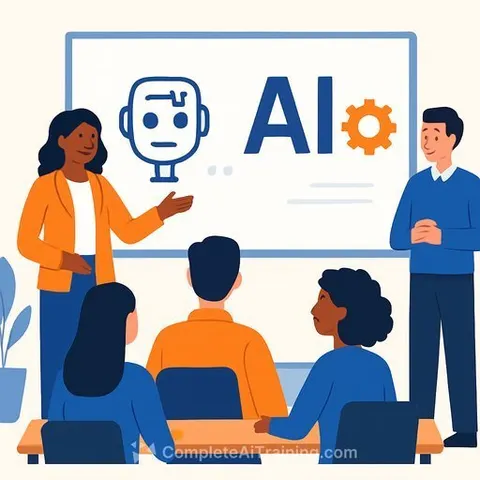
Boston leads US public schools into AI curriculum
Boston will become the first major US city to fold artificial intelligence courses into its standard public high school curriculum this September. More than 20 high schools will offer classes covering AI operating principles, data and algorithm fundamentals, and critical and ethical usage-a shift that puts public education, not private institutions, at the front of AI literacy instruction.
Mayor Michelle Wu announced the policy in March, saying the goal is to help students apply AI during their school years and after graduation. The move arrives as pressure builds for public schools to take the lead on AI instruction. An Ipsos poll found that 78% of teachers believe responsible AI usage education should be part of school curricula.
A shifting national and global landscape
Until now, AI education in the US has largely stayed within select private schools. New York City's plan to open an AI-specialized high school was scrapped in April after parents and educators raised concerns about student focus and critical thinking. Boston's rollout marks a break from that hesitation.
The push is also international. Hangzhou and Shanghai have mandated 10 to 30 hours of annual AI education starting in elementary school. The UAE has made AI a required subject across its public system beginning at age four. Estonia and Singapore are expanding AI literacy and critical evaluation training. For educators tracking curriculum trends, AI for Education resources are becoming a practical reference point.
China's campus experiment with AI-driven learning
Zhejiang University in Hangzhou operates a Future Learning Center where AI breaks down student questions and presents personalized learning pathways instead of a fixed curriculum. The center's "AI Knowledge Tree" runs on a self-developed large language model. When a student enters a question, the system visualizes related subtasks and required knowledge in a branching tree format.
The university, known as the alma mater of DeepSeek founder Liang Wenfeng, completed the facility last October. One third-year student who studied through the method developed an ultra-compact wireless guitar and drew 20 million yuan (about $3.0 million) in investment. The center also runs a VR simulation facility for training robot dogs and a program where students converse in English with AI-generated experts, including Isaac Newton, to acquire knowledge.
Zhejiang University's graduate entrepreneurship rate reaches 20%. Beyond Liang Wenfeng, it has produced founders including Zhu Qiuguo of robotics company DeepRobotics. Center director Bai Hao said the decision to invest an entire building in entrepreneurship education "was not easy, but they pushed forward to the end."
Geopolitics and trade pressure in parallel
The education developments sit alongside broader US-China friction. US Treasury Secretary Scott Bessent urged G20 members to review trade terms with China, saying the world can no longer sustain China's $1.2 trillion trade surplus. President Trump, in a Fox News interview, singled out South Korea over trade grievances and said the US "could extract benefits" going forward.
President Xi Jinping attended the Shanghai Cooperation Organisation summit in Bishkek, Kyrgyzstan, holding talks with leaders from 17 countries including Vladimir Putin. Attention focused on whether Xi would take a mediator role in the Iran conflict and what China-Russia discussions on Ukraine might produce.
Why this matters for educators
Boston's decision signals that AI literacy is moving from optional enrichment to core curriculum in public schools. Teachers and administrators should expect similar proposals in their districts within the next one to two years. The practical question is preparation: AI for Teachers training can help staff who will be asked to teach AI concepts without having learned them in their own education. Districts that start building instructor capacity now will face less disruption when the mandate arrives.