
AI news ·
Breztri's AI-generated llama ads target younger asthma patients with a weirdly humorous office setting
AstraZeneca used AI-generated llamas and goats as office co-workers to promote its Breztri inhaler for asthma. The drug is a 3-in-1 therapy containing a LAMA, which inspired the animal wordplay.
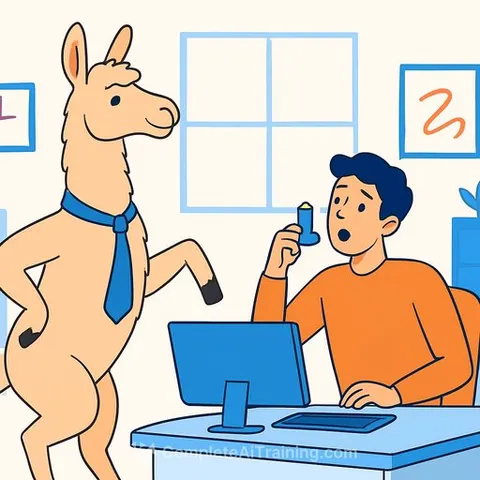
AstraZeneca is launching its Breztri inhaler for a new audience - asthma patients - with a campaign that replaces the usual lifestyle footage with AI-generated llamas, goats, and oryx acting as office co-workers. The push, created by Edelman, marks the drug's first marketing aimed at asthma maintenance after prior FDA approval and promotion exclusively for COPD.
The shift targets a younger demographic. Katie Pansegrau, AstraZeneca's senior director of marketing, said the asthma population skews younger than COPD patients, which means more spend on social media advertising. The COPD campaigns had relied on settings like cruise ships and RV trips.
Why llamas took over the office
The animal concept came directly from the drug's mechanism. Breztri is a "3-in-1" therapy, and one component is a LAMA - a Long Acting Muscarinic Antagonist. "What a fun play on words,' we thought," Pansegrau said. "We can make something that seems very scientific more light-hearted, more accessible and more educational, so patients feel like they understand the treatment."
Edelman's team saw the wordplay as a way to avoid pharma advertising tropes. Brian Wood, senior vice president-group creative director at Edelman, said the team had "a very clear goal to not make just another pharma campaign." He added, "The last thing we wanted to do was make more slop that's filling everyone's feeds these days."
AI as a production shortcut - and creative tool
No animals were used in the production. The entire office environment and its animal cast were built with AI, a choice Wood said gave the team "more creative freedom to try a lot of different ways to bring each of the scenes to life. We even went as far as to do multiple takes for each scene." This approach to generative video let the agency iterate quickly without the cost and logistics of traditional CGI or live shoots.
Wood described the campaign's tone as "wonderfully weird," saying the team "embraced what it could mean to be really bold by being wonderfully weird and letting the entertainment value help drive home the memorability of the message." The work is a practical example of how agencies are using AI for creatives to move faster and take visual risks that might otherwise be too expensive.
Breaking through the noise
The campaign, with media buying by Omnicom's HealixGlobal, runs across connected TV, YouTube, display, and social. Pansegrau said the humor and AI-driven visuals are designed to cut through a crowded ad environment. "There are a lot of different ads out there, not just in pharma, but across every engagement point," she said. "The challenge was, 'How do we break through that noise to make sure that we are advocating for those patients and reaching them?'"
AstraZeneca has also updated its existing COPD advertising to note that Breztri is now approved for asthma.
Why this matters for marketers
This campaign shows a pharma brand deliberately rejecting the category's default visual language - smiling patients, golden-hour park walks - in favor of absurdist, AI-generated humor. The takeaway is not that AI makes things cheaper. It is that AI let the team try more variations and commit to a weirder idea without the production penalty that usually kills weird ideas in regulated industries. For marketing teams stuck in formulaic creative, the lesson is that a tight connection between product detail (LAMA) and creative concept (llama) can make an educational message feel like entertainment rather than a lecture.