
AI news ·
Bridging the AI Governance Gap: Empowering Data Protection Professionals for Ethical and Compliant AI Adoption
Emerging AI models highlight the need for clear governance to avoid ethical and legal risks. Data protection pros must build frameworks ensuring responsible, compliant AI use.
The Imperative for AI Governance
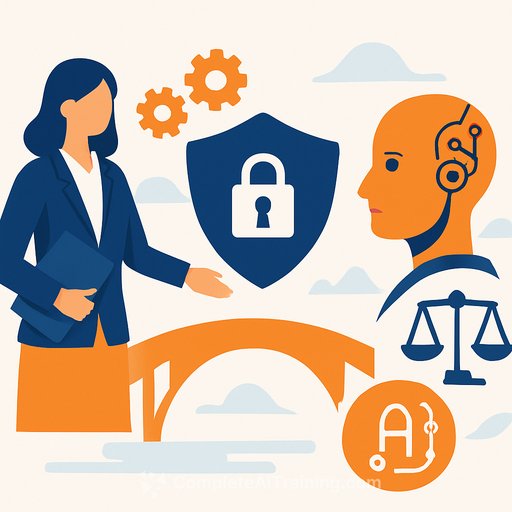
Emerging AI models like DeepSeek have pushed the conversation beyond AI democratization to highlight critical governance challenges. Without clear data usage policies and compliance certifications, organizations face a governance gap that could lead to ethical and legal pitfalls. Data protection professionals have a crucial role in building governance frameworks that ensure AI is deployed responsibly and ethically.
Adopting generative AI can accelerate productivity and innovation, but many organizations overestimate their readiness for sustainable digital transformation. Success demands more than just technology—it requires clear guardrails and compliance with evolving regulations. For those managing data privacy and compliance, keeping pace with AI policies can be complex. AI governance training equips these professionals with the knowledge to evaluate risks, develop mitigation strategies, and implement guidelines that align with local and international standards like ISO/IEC 42001 AI Management System.
It’s important to distinguish personal expertise from organizational capability. Governance professionals must link their regulatory knowledge to specific AI use cases and organizational goals. This approach ensures AI initiatives comply with legal and ethical standards while supporting broader digital transformation strategies.
AI Policies and Governance in the Philippines
While the Philippines has yet to finalize AI-specific policies for 2025, the proposed Artificial Intelligence Act (HB 10944) introduced in 2024 signals the direction of regulation. The Act suggests creating the Philippine Artificial Intelligence Board (PAIB) to oversee AI system development, research, and compliance. It also aims to maintain a centralized database of AI companies and labs within the country. Violations could result in penalties, particularly for AI uses causing unjustifiable harm.
Data Protection Officers (DPOs) and compliance teams should prepare proactively by leveraging existing laws such as the Data Privacy Act, Consumer Act, and Cybersecurity Law. This preparation involves crafting company policies that prioritize human oversight, transparency, and accountability in AI use. Staying informed through updates from regulators like the Department of Trade and Industry (DTI) and Bangko Sentral ng Pilipinas (BSP) will help organizations align with the government’s push for innovation, as seen in the DTI’s National AI Strategy 2.0.
AI for Competency-Building
Generative AI offers new possibilities for education by supporting personalized learning experiences. Data professionals can benefit from AI-enabled learning that encourages engagement and deeper comprehension of AI governance topics. For instance, interactive AI tutors can assist learners before and during classes, offering explanations specific to their needs and helping prepare for certifications.
Scenario-based AI learning enhances critical thinking by simulating real-world governance challenges. These AI-blended courses can also educate management and staff on AI risks and responsible use, encouraging buy-in for governance guardrails. Ultimately, this supports building the skills necessary for successful digital transformation.
Generative AI in Data Protection
Organizations can leverage generative AI to strengthen data protection efforts. Custom chatbots can help employees identify suspicious emails and recommend next steps. AI can automate repetitive tasks like vulnerability scanning and patching, freeing up human analysts to focus on strategic challenges.
However, these AI tools must be developed in secure environments to protect sensitive data and maintain control over the training data. Ensuring confidentiality and security is key to integrating AI into data protection programs effectively.
Shaping the Future
AI governance training goes beyond compliance—it empowers professionals to lead with responsibility in an AI-driven environment. The success of AI integration hinges on data protection teams’ ability to conduct due diligence, uphold ethical standards, and stay current with regulations.
Professionals who combine regulatory expertise with practical AI knowledge can close the governance gap. Their leadership helps create transparent, accountable AI deployments that deliver societal benefits while minimizing risks.