
AI news ·
Bridging the Gap: Medical Students and Academics' Knowledge, Attitudes, and Challenges Toward AI Integration in Saudi Arabia's Medical Education
Saudi medical students and academics show positive attitudes toward AI in education but face training, ethical, and infrastructure challenges. Formal AI curricula are needed.
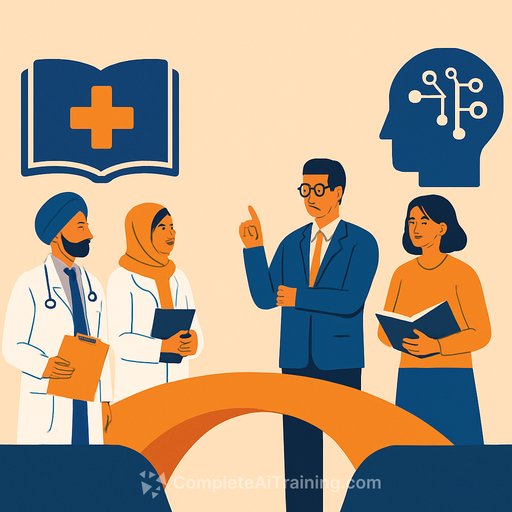
Knowledge, Attitudes, and Practices Related to Artificial Intelligence Among Medical Students and Academics in Saudi Arabia
This article systematically reviews research on artificial intelligence (AI) applications in medical education within Saudi Arabia from January 2020 to February 2025. It examines the types of AI applications, research quality, challenges faced, and gaps in current knowledge among medical students and academics.
Abstract
The review highlights AI's role in personalized learning, interactive simulations, and real-time feedback in medical education. Most studies report positive attitudes about AI enhancing student engagement and clinical decision-making. However, key challenges include faculty training deficits, data privacy concerns, and uneven technological infrastructure. The need for structured AI curricula and further research on long-term educational impacts is emphasized.
Introduction & Background
Artificial intelligence, first conceptualized in 1956, now encompasses technologies like machine learning, natural language processing, and virtual learning environments that perform tasks such as diagnosing diseases and supporting decision-making.
Globally, countries like the US and China have invested heavily in AI for education. Saudi Arabia has aligned with this trend through Vision 2030 and the National Transformation Program, aiming to boost AI innovation in education. Despite this, research on AI in Saudi medical education remains fragmented and lacks a standardized framework.
Challenges include ethical, legal, and privacy issues, as well as limited faculty preparedness and concerns about AI's impact on human judgment. Previous reviews found most research focuses on early AI adoption, often neglecting long-term educational effects.
Research Questions
- What is the focus and extent of research on AI tools in Saudi medical education?
- What types of evidence syntheses exist regarding AI integration?
- What is the geographical distribution of this research?
- What is the quality of research on AI tools in Saudi medical education?
- What concerns do students and academics express about AI implementation?
- What research gaps remain in integrating AI within medical education?
Methods
The review followed PRISMA 2020 guidelines and was approved by the King Abdullah Medical Research Center IRB. Databases searched included PubMed, ProQuest, Web of Science, and Google Scholar, using terms focused on AI, medical education, and Saudi Arabia. Eligible studies examined knowledge, attitudes, and practices of medical students and academics toward AI tools.
Data extraction covered study details, populations, objectives, and findings. Quality was assessed using the Joanna Briggs Institute critical appraisal checklist, scoring studies on methodological rigor. Due to heterogeneity, meta-analysis was not performed; instead, thematic synthesis summarized key findings.
Results
From 2,843 articles identified, 18 met inclusion criteria after screening. Most studies were cross-sectional surveys; a few used qualitative methods like interviews and focus groups. Research mainly involved undergraduate medical students, with some including academics and practitioners.
Geographically, studies were concentrated in Riyadh, Jeddah, and the Eastern Region. Participant numbers ranged from 13 to over 1,200, totaling 5,404 subjects. Gender distribution averaged about 44% female and 56% male.
Attitudes: Most participants showed positive attitudes towards AI integration, with females generally more enthusiastic. Benefits noted included improved learning outcomes and clinical skills. However, ethical concerns such as academic integrity and professional value were also expressed.
Knowledge: While AI tools were commonly used, formal training was rare. Knowledge largely came from informal sources like social media. Participants understood AI limitations but emphasized the need for human oversight. Confidence in using AI was mixed, highlighting a gap in formal education.
Applications: Students used AI mainly to access medical information, answer clinical questions, support research, and grasp complex concepts.
Discussion
The review reveals a generally favorable view of AI in Saudi medical education but identifies significant knowledge gaps and concerns. The predominance of cross-sectional studies limits insights into long-term impacts. Most participants recognized AI's potential benefits but stressed the importance of human judgment and ethical considerations.
Formal AI training is scarce, with many students relying on informal learning. Integrating AI education into medical curricula could improve understanding of AI capabilities, limitations, ethics, and data security, ultimately benefiting patient care.
Quality assessment showed methodological weaknesses in many studies, such as unvalidated questionnaires, small sample sizes, and lack of stratification among participant groups. This affects the reliability and generalizability of findings.
There is a clear need for more rigorous, mixed-methods research combining quantitative and qualitative data to explore institutional and faculty influences on AI adoption in medical education.
Conclusion
AI holds promise for enhancing medical education in Saudi Arabia, but challenges remain. Addressing faculty training gaps, privacy concerns, and infrastructure disparities is critical. Embedding standardized AI curricula into medical education will equip future healthcare professionals with essential skills to effectively and ethically use AI tools.
For those interested in expanding their AI knowledge and skills, exploring structured courses on AI applications in healthcare can be valuable. Resources like Complete AI Training's latest AI courses offer comprehensive learning pathways tailored for health professionals and researchers.