
AI news ·
Britannica and Merriam-Webster sue OpenAI over alleged verbatim copying of their content
Encyclopedia Britannica and Merriam-Webster sued OpenAI Friday, claiming ChatGPT was trained on their copyrighted content without permission. The suit includes side-by-side comparisons of GPT-4 outputs matching Britannica text word-for-word.
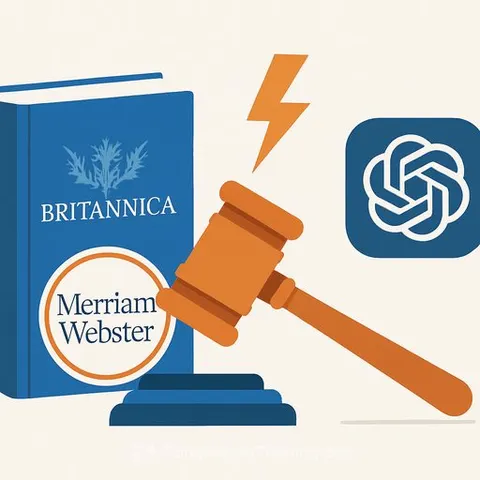
Britannica sues OpenAI over alleged copyright infringement in ChatGPT training
Encyclopedia Britannica and Merriam-Webster filed a lawsuit against OpenAI on Friday, claiming the company used their copyrighted content to train ChatGPT without permission and then generated responses that matched their original text word-for-word.
Britannica alleges that GPT-4 has "memorized" substantial portions of its content and will output near-verbatim copies when prompted. The lawsuit includes side-by-side comparisons showing entire passages matching Britannica's text identically.
The company also claims OpenAI is "cannibalizing" its web traffic. Instead of directing users to Britannica's website like a traditional search engine would, OpenAI's models generate responses that directly compete with and substitute for Britannica's content.
Part of a broader pattern
This lawsuit joins an expanding wave of copyright cases against AI companies. The New York Times filed similar claims against OpenAI, accusing it of copying mass amounts of copyrighted content. In September, Anthropic settled a class action lawsuit over using copyrighted books for AI training, paying $1.5 billion to authors.
What this means for writers
Writers working with AI tools should understand the copyright implications emerging from these cases. As lawsuits establish clearer boundaries around training data and output similarity, the legal risks of using AI-generated content-or training on others' work-will likely become more defined.