
AI news ·
Carnegie Mellon researchers use AI to predict how the brain responds to images
Researchers at Carnegie Mellon University's Neuroscience Institute are using AI models to predict brain responses to images, backed by an $80 million, ten-year collaboration. The NeuroAI field now maps neural circuitry at massive scale, bridging brain function with computational theory.
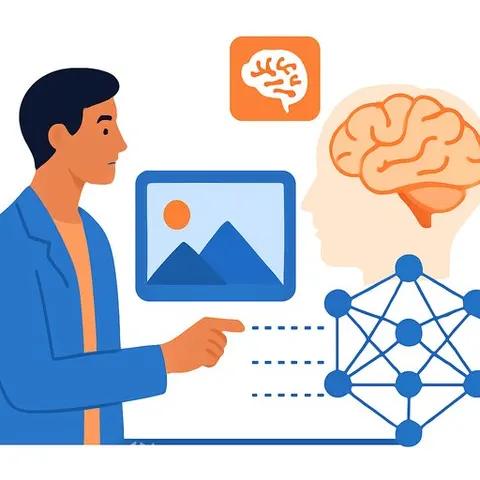
Researchers at Carnegie Mellon University's Neuroscience Institute are using artificial intelligence to build models that predict how the visual cortex responds to images, part of a broader push to understand intelligence in both biological and artificial systems. The work spans multiple multi-year, multimillion-dollar collaborations and reflects a growing convergence between two fields that long pursued the question of how intelligence emerges on separate tracks.
Maggie Henderson's team at the institute is collecting functional magnetic resonance imaging (fMRI) data to train models that forecast how the human visual cortex reacts to specific images. "For years, that was a difficult challenge," said Henderson, who studies how the brain transforms complex perceptual input into meaningful representations of objects and scenes.
Deep neural networks, initially built for computer vision tasks, have proven central to this effort. The internal representations these systems generate closely mirror patterns of activity observed in human brains processing visual information, allowing researchers to move beyond observing brain activity to proactively predicting it.
This reciprocal relationship is the foundation of NeuroAI, an emerging field where insights from both disciplines reinforce progress on each side.
Large-scale brain mapping projects
The research is backed by substantial collaborative initiatives. The Simons Collaboration on Ecological Neuroscience (SCENE) is a ten-year, $80 million effort dedicated to developing mathematical theories of how brains transform perception into action. Carnegie Mellon professor Xaq Pitkow participates in SCENE, combining neural recording technologies with computational modeling to test brain function theories.
The Machine Intelligence from Cortical Networks (MICrONS) project has produced detailed reconstructions of neural circuitry, mapping a cubic millimeter of mouse brain tissue containing approximately 200,000 cells and over 500 million connections. A central aim was to measure anatomical connectivity and neural activity within the same tissue, allowing researchers to directly link brain structure to behavioral function.
"By combining these incredibly comprehensive measurements of the brain's structure and function, understanding some fundamental mechanisms of thought may now be within reach," Pitkow said.
David Badre, the Neuroscience Institute's director, noted that the institute's work aligns with federal funding priorities in AI and neurotechnology. Those priorities seek new theoretical frameworks for understanding the human brain while accelerating innovations in technology, medicine, and brain health.
Mathematical models bridge perception and computation
Pitkow is developing mathematical frameworks to bridge the gap between brain information processing and the principles that underpin computational systems. His approach centers on how the brain represents information, identifies opportunities for action, and makes decisions under uncertainty, then formalizes those processes in mathematical terms.
Aran Nayebi, assistant professor at the Machine Learning Department and a faculty member in the Neuroscience Institute, studies animal learning to identify what AI systems still lack. "The brain tells us what behaviors AI has yet to reach to survive in the real world," Nayebi said. "And it supplies us with concrete engineering targets as to what intelligence is." His NeuroAgents Lab develops AI systems that adapt to changing circumstances, prioritizing learning and flexibility over rigid programming.
Feather's lab focuses on models that predict auditory neural responses directly from physical inputs like sounds. The work has a translational dimension: high-fidelity models of the healthy auditory system could let researchers simulate hearing impairment and observe how the neural code is affected.
"Imagine having a high-fidelity model of the healthy human auditory system," she said. "In this model, one could yet simulate different types of hearing loss. Going further, this impaired model could be used to design more personalized algorithms for hearing aids or cochlear implants that would help restore the neural code to be closer to what it is in the healthy space."
Carnegie Mellon is uniquely positioned for this work, according to Michael J. Tarr, the Kavčić-Moura University Professor of Cognitive and Brain Science. "Through the department of Psychology, the Neuroscience Institute and the School of Computer Science, Carnegie Mellon has established itself over many decades as a world leader in the study of intelligence in all its forms," he said.
The institute is training doctoral students to work across biology and computation, with researchers coming from machine learning, psychology, mathematics, and engineering. This interdisciplinary training path is also central to AI for Sciences & Research career development, and to AI for Education, programs that address the same skills gap in AI. Not just lending computers to neuroscientists. "You need knowledge in both areas in order to work in neuroengineering," Badre said. "We're training students to be cross disciplinary with a foundation in both areas. This is precisely the type of interdisciplinary science and innovation that thrives at CMU that thrives at the Neuroscience Institute."
From brain data to practical applications
The convergence of AI and neuroscience is producing concrete goals: models that predict neural activity, engineering languages that restore sensory processing, and mathematical techniques that define the computational rules of intelligence. The field is led by the same scalable themes - large grants, government alignment, and an emphasis on training - available to running.
For neuroscience researchers, the practical implication is reflected in the structure of the $80 million project and the MICrONS-reconstruction work: the tools to build bridges between anatomy and computational theory are available now, and the field will reward collections of people from multiple fields.
The challenge now is carrying these models from the lab to the intelligence test. The specifics - which neural computations are fundamental to intelligence, how these change-are open questions. They're not yet fully answered-but the era when AI and neuroscience are separate is over.