
AI news ·
China builds nearly 200 AI standards as computing power reaches 2,185 EFLOPS
China has developed nearly 200 AI standards and will accelerate AI adoption in manufacturing during its 2026-2030 plan, with intelligent computing power reaching 2,185 EFLOPS. The push targets real-world industrial use cases while expanding safety and security measures.
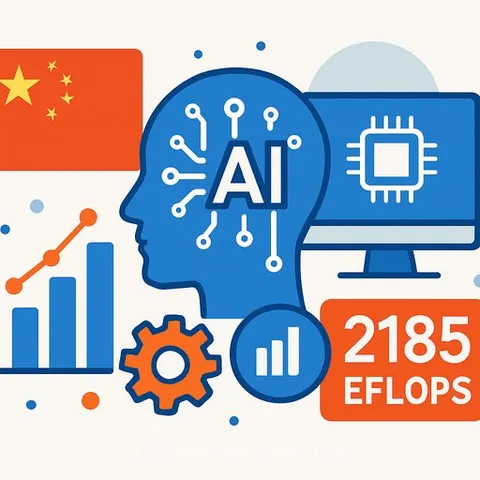
China has developed nearly 200 key artificial intelligence standards and plans to accelerate AI adoption in manufacturing during its 15th Five-Year Plan period (2026-2030), according to a Ministry of Industry and Information Technology official speaking at a press conference on Wednesday. The announcement signals a continued national push to build the infrastructure and regulatory framework needed to support AI at industrial scale.
As of the end of June, China's intelligent computing power reached 2,185 EFLOPS, and more than 70 major computing corridors had been built around national computing hubs, the ministry said. Those figures reflect a sustained focus on the data center and chip infrastructure that large-scale AI applications depend on.
Application-driven strategy for manufacturing
Vice Minister Xin Guobin said China will pursue an application-driven strategy to take "AI+manufacturing" to new levels of speed, sophistication and effectiveness during the plan period. The approach pairs supply-side investment with a push to find real-world use cases across industries.
On the supply side, the ministry will support frontier research and development in high-end training chips, humanoid robots and intelligent terminal upgrades. On the application side, authorities will identify high-value scenarios across industries and nurture application service providers, with the goal of making AI tools more accessible, affordable and effective for enterprises.
Standards and security measures
China will also expand its AI standards work, covering foundational technologies, application-specific requirements and safety ethics. These standards will be tailored to different levels and categories, according to the ministry.
Security remains a stated priority. Authorities plan to monitor AI security risks, share information and strengthen notification and response mechanisms. They will also build and use a security vulnerability database for AI products, and continue work on deep-synthesis detection, model algorithm security protection and value alignment.
"Our focus is on effectively mitigating risks," Xin said. He added that the measures are intended to ensure AI serves humanity and remains under human control.
Why this matters for IT and Development
For IT and development professionals, the practical signal here is that China is standardizing AI interfaces and safety requirements at the national level. That means developers building for Chinese markets - or for global clients with Chinese operations - will increasingly need to design around documented standards rather than ad-hoc integrations. The computing infrastructure figures also point to continued demand for professionals who can build and operate AI systems at scale, not just prototype them. If you work in this space, tracking these standards as they publish is a concrete way to stay ahead of compliance requirements. For a structured path into AI work, the AI Learning Path for Software Developers covers the core skills. Broader resources for AI for IT & Development can help you track how these shifts affect your role.