
AI news ·
China's open AI models gain global users
China's open-source AI attracts millions of users but poses domestic security risks. Beijing now struggles to balance global tech influence with strict internal censorship.
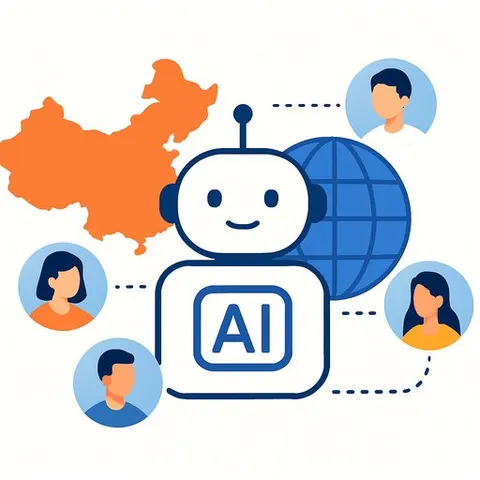
China's aggressive push to dominate open-source artificial intelligence has created an unexpected dilemma for the Communist Party. The low-cost, freely available models that have attracted millions of global users, including major Silicon Valley companies, now pose significant security risks and potential threats to the government's tight control over information.
Unlike closed systems such as OpenAI's ChatGPT and Anthropic's Claude, open models can be downloaded, modified, and run by anyone - even with safety safeguards removed. This approach has turned Chinese AI systems from companies like Alibaba and start-up Moonshot into global hits, with firms like Airbnb and DoorDash adopting them. But Beijing now faces the reality that the same openness that builds influence abroad also makes it difficult to prevent misuse at home.
Open Models Win Global Influence
China has framed itself as a champion of accessible AI technology, accusing the United States of "A.I. hegemonism" as the Trump administration considers regulating Chinese open-source models. The open-source strategy has helped Chinese developers win converts in the developer community, where the ability to inspect and customize code is prized. The lower cost of these models has also appealed to businesses seeking alternatives to expensive proprietary APIs.
Beijing Grapples with Security Risks
In a speech earlier this month, Chinese leader Xi Jinping acknowledged the tension. While China supports openness in AI, he said, the government needs to "constantly refine measures to forestall loss of control."
The party's concerns are threefold: the technology could be weaponized by hackers, scammers, or terrorists to cause harm inside China; the models could bypass the country's strict censorship filters; and Beijing could face international blame if Chinese systems cause chaos elsewhere. This balancing act is not unique to China. For government professionals, debates over AI governance increasingly mirror the same challenges: how to foster innovation while maintaining security. AI for Government resources explore these issues in depth.
Kimi K3: A New Benchmark
The urgency of these questions was underscored this week with the public release of Kimi K3 by Moonshot. The model performs some tasks as well as the best systems from OpenAI and Anthropic. Models like K3 can help companies write code and improve cybersecurity, but they can also accelerate the discovery and exploitation of vulnerabilities by malicious actors.
For policy makers, the rapid release of powerful models like Kimi K3 underscores the need for clear frameworks. An AI Learning Path for Policy Makers provides insights into balancing innovation with security.
Why this matters for Government, IT, and Development Professionals
For government professionals, China's dilemma is a preview of the global governance challenges that open-source AI will bring. The tension between influence and control will shape future regulations. IT professionals must recognize the dual-use nature of advanced models like Kimi K3: tools that can build secure systems can also be repurposed to break them. Development professionals, meanwhile, should note the growing adoption of Chinese open-source frameworks, which are likely to influence the AI stack in many organizations. Understanding these models and their implications is becoming a critical skill.